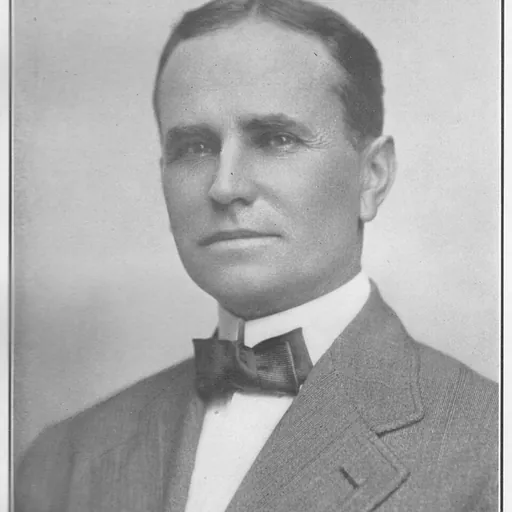
About Carleton B. Gibson
Lived 1863 – 1927 (aged 63). Carleton B. Gibson was an American classical scholar and university president.
Carleton Bartlett Gibson (September 18, 1863 – May 22, 1927) was a 19th– and 20th-century American industrial educator and university president. He notably served as the third president of Jacksonville State Normal School from 1886 until 1892; followed by serving as the first president of the Rochester Athenæum and Mechanics Institute from 1910 until 1916.
Early life and education He was born in Mobile, Alabama in the year before the Battle of Mobile Bay. His father was a Scotsman and his mother was a New Yorker. As a child, he attended school at the Barton Academy and the Mobile Military Academy. He graduated from the University of Alabama with bachelor's and master's degrees in the Classics in 1884 and 1885, respectively and married the former Martha "Mattie" Goodwin Newcomb in 1889. While still in college he became principal of the public school in Mulberry, Alabama.
Career After graduation, he took a job as the 3rd President at the Jacksonville State Normal School (now Jacksonville State University), serving from 1886 until 1892. He also helped establish the University Military School of Alabama starting in 1892. He briefly served as president of the Alabama Central Female College in Tuscaloosa in 1893.
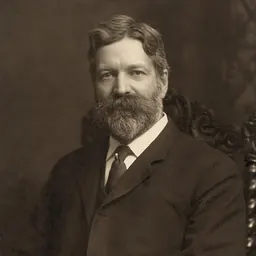
Also in 1893, he left to become the principal of the Columbus, Georgia High School and within the year became Superintendent of the Columbus City Schools. With the financial support of George Foster Peabody, he established the first school for industrial education in the South, the Primary Industrial School of Columbus in 1900. The school introduced the children of mill workers to two dozen different handicrafts that would prove useful for their later employ in the local textile factories.
Gibson was hired to oversee the Rochester Athenæum and Mechanics Institute (now Rochester Institute of Technology) in June 1910 by the then board of directors which included George Eastman. He instituted the Institute's Cooperative education program in 1912, as part of his focus on industrial education. The program required students to study half time and to work half time in shops at Eastman Kodak, Gleason Works, and the German American Button Company.
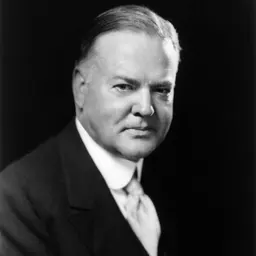
Gibson took a leave of absence from the Institute in 1914, joining Herbert Hoover's American Commission for War Relief in Belgium with tours of duty in Belgium, France, and Russian Poland. He died suddenly in Norfolk, Virginia in 1927.
After his death his wife delivered lectures on international affairs before succumbing to pneumonia.
Don’t just read it —
keep it.
Full-length biographies made to live with: read them, listen on the way to work, watch them tonight.
- E-book
- Audio
- Video
Instant download · yours to keep · every purchase keeps this site free
Important facts
People in Carleton B. Gibson's life
Named in this biography and alive at the same time

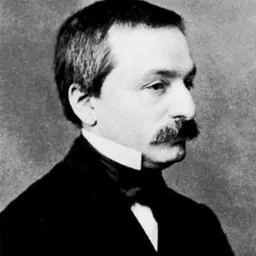
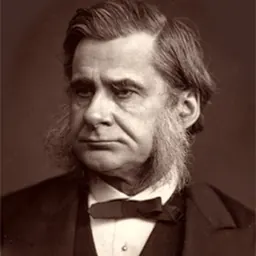
Related people
Same field, nearest in time



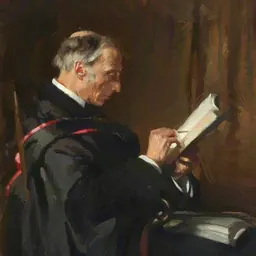
Contemporaries
People whose lives overlapped Carleton B. Gibson's


Frequently asked questions
Who was Carleton B. Gibson?
American academic
When was Carleton B. Gibson born?
Carleton B. Gibson was born on 18 September 1863 in Mobile.
When did Carleton B. Gibson die?
Carleton B. Gibson died on 22 May 1927 in Norfolk, Virginia.
What was Carleton B. Gibson's occupation?
Carleton B. Gibson was a classical scholar and university president.
What nationality was Carleton B. Gibson?
Carleton B. Gibson was American.
Sources & further reading
· Wikipedia: Carleton B. Gibson
Cite this page
APA: Biography.guide. (2026). Carleton B. Gibson. https://biography.guide/carleton-b-gibson/
MLA: "Carleton B. Gibson." Biography.guide, https://biography.guide/carleton-b-gibson/.
Chicago: "Carleton B. Gibson." Biography.guide. https://biography.guide/carleton-b-gibson/.
Data last updated: 2026-09-20 · Spot an error? Report a correction.
Portrait: Wikimedia Commons · author & licence
Page generated 2026-09-27 04:58 UTC