
About Carl von Liebermeister
Lived 1833 – 1901 (aged 68). Carl von Liebermeister was a German physician, internist, pathologist and university teacher.
Carl von Liebermeister (2 February 1833, Ronsdorf, Prussia – 24 November 1901, Tübingen, German Empire) was a German internist and professor of internal medicine.
Liebermeister is notable for his research on fever, body-temperature regulation and antipyretic treatment, particularly in typhoid fever. He formulated Liebermeister's rule, relating changes in body temperature to pulse rate. He is also a significant figure in early attempts to bringing statistical inference methods into clinical medicine, having published a Bayesian method for evaluating comparative therapeutic data. The method calculated the probability that one treatment was superior using studies of any size and has been described as anticipating, by more than half a century, an exact-test approach comparable in mathematical structure to Fisher's exact test.
Training Liebermeister studied medicine at the Universities of Bonn, Würzburg and Greifswald. At Würzburg he attended lectures by Rudolf Virchow, and he later worked with Felix von Niemeyer, who became an important mentor. Liebermeister received his medical degree at Greifswald in 1856. He moved with Niemeyer from Greifswald to Tübingen in 1862 and qualified there as a university lecturer after publicly defending 25 theses. . In 1865, Liebermeister became professor of internal medicine at the University of Basel, where the hospital became a centre for scientific medicine.
Fever research While still a student, Liebermeister became interested in body-temperature regulation, and went on to investigate the physiology of fever and the regulation of body temperature at a time when characteristic febrile courses were being associated with particular infectious diseases. He regarded fever as a regulated elevation of body temperature and developed biophysical and pharmacological antipyretic treatments, especially for typhoid fever. His work included the use of cold-water treatment and his 1875 Handbuch der Pathologie und Therapie des Fiebers (“Handbook of the Pathology and Therapy of Fever”).
He was also the author of a comprehensive work on cholera called Cholera Asiatica und Cholera Nostras, a treatise that was included in Hermann Nothnagel's Specielle Pathologie und Therapie.
Liebermeister's rule Liebermeister's rule describes the approximate relation between body temperature and pulse rate in febrile adults. It conventionally holds that a rise of 1 °C in body temperature is associated with an increase of approximately eight beats per minute in pulse rate. The rule is an empirical clinical guide, rather than a universal physiological constant: the response varies with age, resting pulse rate, medication, cardiac disease, and the cause of fever.
A pulse rate lower than expected for the degree of fever is termed relative bradycardia, or pulse–temperature dissociation, and is also known as Faget sign. It may occur in several infectious and non-infectious conditions, but is not specific to any one diagnosis and must be interpreted in its clinical context.
Historical analysis has noted that Liebermeister’s own observations yielded an average increase of about 4.6 beats per minute per degree Celsius, rather than the eight beats commonly attributed to the rule. The latter figure should therefore be treated as a later clinical convention, not as an exact result established by Liebermeister’s original data.
Contribution to medical statistics In 1877, Liebermeister published Über Wahrscheinlichkeitsrechnung in Anwendung auf therapeutische Statistik (“On probability theory applied to therapeutic statistics”), which was remarkably modern in its approach. He rejected the use of fixed probability thresholds to classify therapeutic findings as conclusive or inconclusive, arguing instead that each study should be assigned its particular evidential value. He also put forward a sophisticated Bayesian analysis based on the hypergeometric distribution with a flat prior that could be used to convert trial outcomes into (posterior) probabilities that a treatment was effective. Liebermeister's use of the hypergeometric distribution also freed the analysis of clinical trials from their reliance on the Central Limit Theorem, which underpins the (asymptotic) validity of the Normal distribution as sample sizes become infinitely large. This was a major practical advantage that had eluded statisticians up until this point, allowing reliable inferences to be made from small trials of a dozen or so patients. Liebermeister also stressed that statistical analysis could assess the role of chance but could not itself establish the clinical cause of an observed difference; comparability of treatment groups remained necessary.
Later life and death He returned to Tübingen in 1871 to succeed Niemeyer as professor and head of the university’s medical hospital, a post he held until his death. He promoted and designed a new hospital building, and reportedly declined professorial appointments at Bonn, Freiburg and Leipzig. As physician to King Karl of Württemberg’s royal household, he was ennobled and became known as Carl von Liebermeister.
Associated eponym "Liebermeister's grooves": Developmental grooves on the surface of the liver.
Don’t just read it —
keep it.
Full-length biographies made to live with: read them, listen on the way to work, watch them tonight.
- E-book
- Audio
- Video
Instant download · yours to keep · every purchase keeps this site free
Important facts
People in Carl von Liebermeister's life
Named in this biography and alive at the same time
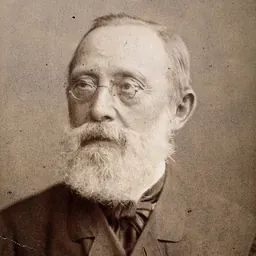


Related people
Same field, nearest in time
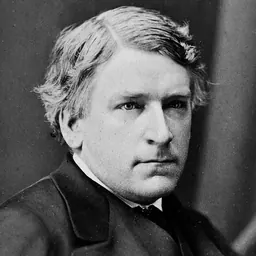


Contemporaries
People whose lives overlapped Carl von Liebermeister's
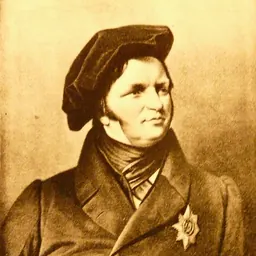
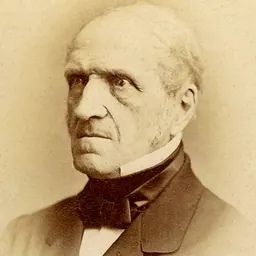




Frequently asked questions
Who was Carl von Liebermeister?
German physician (1833–1901)
When was Carl von Liebermeister born?
Carl von Liebermeister was born on 2 February 1833 in Ronsdorf.
When did Carl von Liebermeister die?
Carl von Liebermeister died on 24 December 1901 in Tübingen.
What was Carl von Liebermeister's occupation?
Carl von Liebermeister was a physician, internist, pathologist and university teacher.
What nationality was Carl von Liebermeister?
Carl von Liebermeister was German.
Sources & further reading
· Wikipedia: Carl von Liebermeister
· DBpedia: Carl von Liebermeister
Cite this page
APA: Biography.guide. (2026). Carl von Liebermeister. https://biography.guide/carl-von-liebermeister/
MLA: "Carl von Liebermeister." Biography.guide, https://biography.guide/carl-von-liebermeister/.
Chicago: "Carl von Liebermeister." Biography.guide. https://biography.guide/carl-von-liebermeister/.
Data last updated: 2026-09-20 · Spot an error? Report a correction.
Page generated 2026-09-27 05:26 UTC