
About Carl Schorlemmer
Lived 1834 – 1892 (aged 57). Carl Schorlemmer was a German chemist and university teacher.
Carl Schorlemmer FRS (30 September 1834 – 27 June 1892) was a German and British chemist who did research on hydrocarbons, particularly paraffins, and was a pioneer in the study of the history of chemistry. He was a professor of chemistry at Owens College, Manchester and a fellow of the Royal Society and the American Philosophical Society (1878). He was also a revolutionary of 1848, an early Communist, and a personal friend of Karl Marx and Friedrich Engels who was one of the thirteen people to attend Marx's funeral; he is sometimes known as "the red chemist."
Early life and education Schorlemmer was born on 30 September 1834 in Darmstadt, German Confederation, the son of a joiner. He was able to visit Realschule and later — against the will of his poor father — trade school. As a teenager, he participated in the German revolutions of 1848–1849 in Baden.
Schorlemmer started his training to become a pharmacist in 1853 in Groß-Umstadt. During his training he made own chemical experiments in the laboratory and was interested in astronomy and botany. After two and a half years he passed his exam, became an assistant pharmacist and worked in the Schwanen pharmacy in Heidelberg. Having attended some lectures of Robert Wilhelm Bunsen, he studied pharmacy and chemistry in Heidelberg and in Giessen (where he attended lectures of Heinrich Will and Hermann Franz Moritz Kopp, a historian of chemistry).
Career At age 24 he moved to Manchester as a private assistant to chemist Henry Roscoe. Three years later, c. 1860, he became demonstrator at Owens College in Manchester. His first research was on the distillation of halide acids, and in 1861 he began the work on paraffins, now known as alkanes, for which he would become known best. This followed up the work of Hermann Kolbe and Edward Frankland introducing alkane isomerism from 1848–1850. In 1868 he developed a method to convert a secondary alcohol into a primary alcohol. and in 1878, he was elected as a member of the American Philosophical Society. He became a citizen of Britain on 20 May 1879.
Connections with Marx and Engels Schorlemmer was a friend of Karl Marx and Friedrich Engels, who asked him for advice on scientific questions. Schorlemmer was one of the thirteen people at Marx's funeral. His sociological analysis of the history of chemistry had a significant influence on Engels and Marx's views on the development of natural sciences. He met Marx in 1868 after meeting Engels in or before March 1865. in Vorwärts, the central organ of the Social Democratic Party of Germany. Engels said that Schorlemmer spent his holidays regularly in London with Marx and Engels when he did not visit Germany. Engels also claimed in his obituary that Schorlemmer was open about his allegiance to the Communist cause, and that Schorlemmer was unusual in that he held the German philosopher Hegel in high regard at a time when the latter was "much despised". Engels added that, "What we know today about paraffins, we owe mainly to Schorlemmer... Thus he became one the joint founders of today's scientific organic chemistry." For this connection with Marx and Engels, Schorlemmer is sometimes referred to as the "red" chemist.
Writings Schorlemmer wrote several books about organic chemistry, the most important one being A Treatise on Chemistry (1874), which he co-authored with Henry Roscoe. Schorlemmer is considered to have made an essential contribution to the history of chemistry as an academic field in his later works, culminating in his book Rise and Development of Organic Chemistry (1879).
Towards the end of his life, Schorlemmer began to write a book about the history of chemistry from antiquity to the 17th century. He died before finishing his work, so it was never published. The manuscript covers about 1,100 pages and is stored in John Rylands Library. Selected writings A Manual of Chemistry of the Carbon Compounds; or, Organic Chemistry (1874) A Treatise on Chemistry (1877) - with Henry Roscoe Rise and Development of Organic Chemistry (1879)
Don’t just read it —
keep it.
Full-length biographies made to live with: read them, listen on the way to work, watch them tonight.
- E-book
- Audio
- Video
Instant download · yours to keep · every purchase keeps this site free
Important facts
People in Carl Schorlemmer's life
Named in this biography and alive at the same time

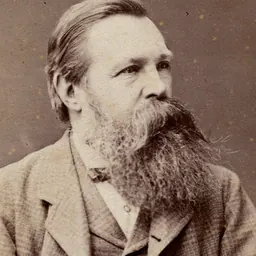

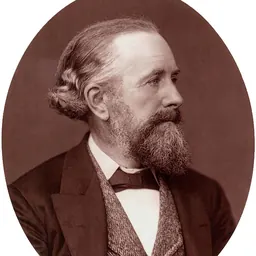


Related people
Same field, nearest in time




Contemporaries
People whose lives overlapped Carl Schorlemmer's


Frequently asked questions
Who was Carl Schorlemmer?
German chemist (1834-1892)
When was Carl Schorlemmer born?
Carl Schorlemmer was born on 30 September 1834 in Darmstadt.
When did Carl Schorlemmer die?
Carl Schorlemmer died on 27 June 1892 in Manchester.
What was Carl Schorlemmer's occupation?
Carl Schorlemmer was a chemist and university teacher.
What nationality was Carl Schorlemmer?
Carl Schorlemmer was German.
Sources & further reading
Cite this page
APA: Biography.guide. (2026). Carl Schorlemmer. https://biography.guide/carl-schorlemmer/
MLA: "Carl Schorlemmer." Biography.guide, https://biography.guide/carl-schorlemmer/.
Chicago: "Carl Schorlemmer." Biography.guide. https://biography.guide/carl-schorlemmer/.
Data last updated: 2026-09-20 · Spot an error? Report a correction.
Page generated 2026-09-27 05:30 UTC