
Carl Haller von Hallerstein
German architect
About Carl Haller von Hallerstein
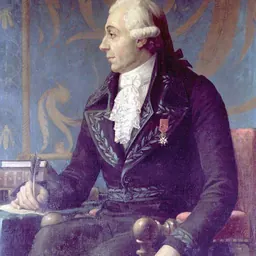
Lived 1774 – 1817 (aged 42–43). Carl Haller von Hallerstein was a German building researcher, architect, classical archaeologist and building inspector.
Johann Carl Christoph Wilhelm Joachim Haller von Hallerstein (10 June 1774, Burg Hilpoltstein, Hiltpoltstein, Principality of Bayreuth – 5 November 1817, Ampelakia, Thessaly, Ottoman Greece) was a German architect, archaeologist and art historian. The Aphaia marbles were acquired by Crown Prince Ludwig of Bavaria for the Glyptothek in Munich, and in 1815 the British Museum purchased the Bassae frieze at a London auction from Haller von Hallerstein and his associates.
Biography He was born into a famous Nuremberg noble patrician family, as son of Freiherr (Baron) Karl Joachim Haller von Hallerstein and Sophie Amalie von Imhof. Hallerstein studied architecture at the Carlsakademie in Stuttgart and then at the Berliner Bauakademie under David Gilly. He was then engaged in 1806 as a royal building inspector in Nuremberg.
He visited Rome in 1808 to study its early Christian architecture. In June 1810 he accompanied Jakob Linkh (1786–1841), Peter Oluf Brøndsted (1780-1842), Otto Magnus von Stackelberg (1787–1837) and Georg Koës (1782-1811) to Athens, via Naples, Corfu and Corinth. In 1811 in Athens he met the English architects Charles Robert Cockerell and John Foster (1786–1846), with whom he studied Athens's ancient buildings.
In 1811 he, Linkh and von Stackelberg discovered the temple of Aphaia on the island of Aegina, a part of whose sculptures are in the Munich Glyptothek as a result. In the same year, von Hallerstein (with Cockerell, Gropius, Linckh, Stackelberg, Bröndsted and Foster) excavated the ruins of the temple of Apollo in Bassae, whose relief frieze was taken to the British Museum by Cockerell. Sadly Haller's drawings were lost at sea. Later he led yet more excavations on Ithaka and in the ruins of the theatre on Milos.
Haller died in Thessaly in 1817 after catching a fever. He was temporarily buried there but then later moved to Athens.
Don’t just read it —
keep it.
Full-length biographies made to live with: read them, listen on the way to work, watch them tonight.
- E-book
- Audio
- Video
Instant download · yours to keep · every purchase keeps this site free
Important facts
more
Johann Carl Christoph Joachim Haller, Karl Haller von Hallerstein, Karl Haller von Hallerstein Freiherr, Christoph Jakob Wilhelm Carl Joachim Freiherr von Haller von HallersteinPeople in Carl Haller von Hallerstein's life
Named in this biography and alive at the same time






Related people
Same field, nearest in time


Contemporaries
People whose lives overlapped Carl Haller von Hallerstein's


Frequently asked questions
Who was Carl Haller von Hallerstein?
German architect
When was Carl Haller von Hallerstein born?
Carl Haller von Hallerstein was born on 10 June 1774 in Hiltpoltstein Castle.
When did Carl Haller von Hallerstein die?
Carl Haller von Hallerstein died in 1817 in Tempi Municipality.
What was Carl Haller von Hallerstein's occupation?
Carl Haller von Hallerstein was a building researcher, architect, classical archaeologist and building inspector.
What nationality was Carl Haller von Hallerstein?
Carl Haller von Hallerstein was German.
Sources & further reading
· Wikipedia: Carl Haller von Hallerstein
· DBpedia: Carl Haller von Hallerstein
Cite this page
APA: Biography.guide. (2026). Carl Haller von Hallerstein. https://biography.guide/carl-haller-von-hallerstein/
MLA: "Carl Haller von Hallerstein." Biography.guide, https://biography.guide/carl-haller-von-hallerstein/.
Chicago: "Carl Haller von Hallerstein." Biography.guide. https://biography.guide/carl-haller-von-hallerstein/.
Data last updated: 2026-09-20 · Spot an error? Report a correction.
Page generated 2026-09-27 05:19 UTC