
About Carl Fischer
Lived 1924 – 2023 (aged 98–99). Carl Fischer was an American photographer and graphic designer.
Carl Fischer (May 3, 1924 – April 7, 2023) was an American art director and autodidact magazine photographer. His work for covers and picture stories in Esquire and other magazines were controversial, original prints of which, and published copies, are held in a number of international museums.
Early life Carl Fischer was born on May 3, 1924, to Irma (Schwerin) and Joseph Fischer, and raised in Brooklyn. He took painting at Cooper Union but majored in graphic design, graduating in 1948 with the Augustus St. Gaudens Medal. He worked as an art director before receiving a Fulbright Scholarship in 1951 and went to England where he studied book design and typography at the Central Saint Martins College of Art and Design in London, and used their darkroom to teach himself photography from library books.
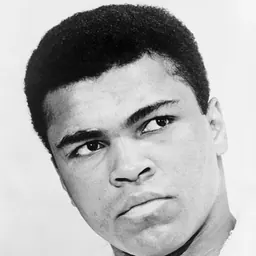
Esquire Fischer began his career as an advertising agency art director in New York working with Paul Rand and Herb Lubalin then began photographing for Esquire magazine when Harold Hayes became its editor in chief in 1963 and was commissioned throughout the 1960s and early 1970s for covers and their accompanying photo-reportage. Working with the magazine's creative consultant George Lois, who thought Fischer was one of the few photographers who understood his ideas, they devised what became amongst the most famous and provocative Esquire covers of the 1960s decade; Muhammad Ali as a martyred St Sebastian, an image so popular that it was used as a protest poster, and a montage of Andy Warhol drowning in a giant can of tomato soup. The magazine's audience, which had been flagging, was regenerated by these covers and by 1967 Esquire was achieving a $3M profit. By 1968 all of the covers for that year featured Fischer's photographs. His studio was a townhouse on East Eighty-third Street, New York City, where he lived. Interviewed by the magazine in 2015 he recalled; One of the first assignments Hayes gave me was a series of portraits of Southern segregationists. He said, 'Look, we don't want to be seen as editorializing. We want to be fair and we want to give their point of view, so don't use your goddamn wide-angle lens.' He thought that lens would make them look bad, so while I didn't use it, I did make some little changes that I think made [the segregationists] look as ugly as we all thought they were.
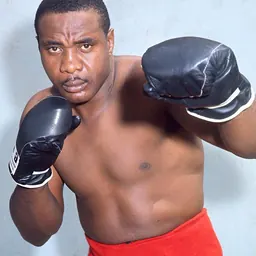
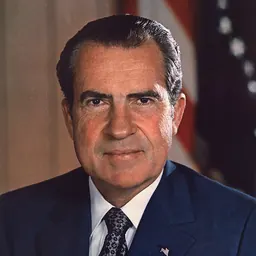
In that instance Fischer had recopied the pictures on his enlarger to increase their contrast and thus coarsen the skin texture, with unflattering results. but the covers were often politically charged, and included war criminal William Calley surrounded by Vietnamese children, or during the peak of the civil rights movement, Sonny Liston as an angry black Santa Claus. Hayes, in a 1981 article in Adweek, recalled the response to the cover which cost the magazine dearly in lost advertising revenue;Sonny Liston was a bad black who beat up good blacks, like Floyd Patterson; there was no telling what he might do to a white man. In 1963, when this was the sort of possibility that preyed on white men's minds everywhere, [Carl Fischer's and] George Lois's Christmasy cover was something more than an inducement for readers to buy Dad extra shaving soap. In the national climate of 1963, thick with racial fear, Lois's angry icon insisted on several things: the split in our culture was showing; the notion of racial equality was a bad joke; the felicitations of this season-goodwill to all men, etc.-carried irony more than sentiment. and ironically included May 1968 cover showing Richard Nixon with closed eyes submitting to having his face made up for television, over the cover line; "Nixon's last chance. (This time he'd better look right)." went their separate ways in the early 1970s.
Fischer directed television commercials and taught as an adjunct professor at the Rochester Institute of Technology. A member of the Directors Guild of America, he also served as President of the Art Directors Club.
Fischer died on April 7, 2023, at the age of 98.
Awards Mark Twain Journalism Award Cleo Award Art Directors Club gold and silver medals Augustus St. Gaudens Medal George Eastman House (Rochester) Spencer Museum of Art (Lawrence) Victoria and Albert Museum (London) Tel Aviv Museum of Art (Tel Aviv) Metropolitan Opera Archives (New York) Library of Congress (Washington)
Don’t just read it —
keep it.
Full-length biographies made to live with: read them, listen on the way to work, watch them tonight.
- E-book
- Audio
- Video
Instant download · yours to keep · every purchase keeps this site free
Important facts
People in Carl Fischer's life
Named in this biography and alive at the same time





Related people
Same field, nearest in time





Contemporaries
People whose lives overlapped Carl Fischer's


Frequently asked questions
Who was Carl Fischer?
American photographer
When was Carl Fischer born?
Carl Fischer was born in 1924 in New York City.
When did Carl Fischer die?
Carl Fischer died on 7 April 2023.
What was Carl Fischer's occupation?
Carl Fischer was a photographer and graphic designer.
What nationality was Carl Fischer?
Carl Fischer was American.
Sources & further reading
· DBpedia: Carl Fischer (photographer)
Cite this page
APA: Biography.guide. (2026). Carl Fischer. https://biography.guide/carl-fischer/
MLA: "Carl Fischer." Biography.guide, https://biography.guide/carl-fischer/.
Chicago: "Carl Fischer." Biography.guide. https://biography.guide/carl-fischer/.
Data last updated: 2026-09-20 · Spot an error? Report a correction.
Page generated 2026-09-27 05:13 UTC