
Carl Borgmann
American educator and chemical engineer
About Carl Borgmann
Lived 1905 – 1998 (aged 93). Carl Borgmann was an American chemical engineer, scientist, academic administrator and university teacher.
Carl Williams Borgmann (June 3, 1905 – November 29, 1998) was an American chemical engineer, research scientist, academic administrator at the University of Colorado Boulder and the University of Nebraska, sixteenth president of the University of Vermont (UVM), and director of science and engineering for the Ford Foundation. During the research phase of his career, Borgmann studied both metal corrosion and fructose extraction. He took an interest in astronomy and was friends with astronomers Joe Pawsey and Walt Roberts.
As president of UVM, Borgmann brought a Midwestern approach to the democratization of education, running a successful campaign that raised state funds and cut the cost of tuition almost in half for resident students, who in the early 1950s were paying the highest in-state tuition in the country. McCarthyism was at its height in the United States at the time, and the Novikoff Affair became a major controversy at UVM regarding academic freedom during his presidency.
Borgmann was recruited by the Ford Foundation during the Sputnik crisis and left UVM to serve as its director, helping to advance science and technology for Western nations by disbursing funds in the areas of engineering, atmospheric science, and space science. He was an early proponent of anthropogenic climate change and wrote several speeches and articles focusing on the importance of nature conservation towards the end of his career.
Early life and education Borgmann was born on June 3, 1905, in Mount Washington, Missouri, but was raised in Evergreen, Colorado. He was a student at Denver West High School and later did his undergraduate work at the University of Colorado Boulder (BS, 1927; MS, 1931). After receiving his Bachelor of Science, he spent four years at Bell Labs in New York as a research chemist. Borgmann was awarded a fellowship to study in Norway and Sweden by The American-Scandinavian Foundation in May 1931.
He and his wife sailed to England in late September of that same year, where he began studying abroad at the University of Cambridge in pursuit of "the mechanism of the corrosion of zinc". Borgmann obtained his doctorate in chemical engineering (PhD, 1934) He documented his experience in an essay titled "A Colorado Engineer at Cambridge", an article published for his alma mater. Borgmann continued his studies as a postdoctoral fellow at the Karolinska Institute and the Metallographic Institute (Metallografiska institutet) in Stockholm, Sweden,
Academic career Borgmann began lecturing at the University of North Carolina as an assistant professor of chemical engineering in 1934. The National Tube Company, then a subsidiary of U.S. Steel, hired him as a research scientist in 1937. Borgmann started working for the University of Colorado Boulder (CU Boulder) as head of their chemical engineering department and later their Engineering Experiment Station from 1938 to 1946. He supervised a pilot project that used ion-exchange to extract fructose from sugar in large quantities.
At this time, Borgmann struck up a friendship with astronomer and atmospheric physicist Walt Roberts. During World War II, Borgmann was part of the Chemical Warfare Service and was on the National War Labor Board. In 1947, he left CU Boulder to become dean of faculties at the University of Nebraska (NU), where he stayed until 1951. While at NU, Borgmann was awarded a grant by the Research Corporation to investigate how environmental conditions affect the "cathodic polarization of common metals and alloys".
He left NU to become the sixteenth president of the University of Vermont (UVM) in 1952, succeeding William S. Carlson in the role and serving for six years. During his presidency, Borgmann cut tuition costs for students, helped to rewrite the university charter, raised new funding, and made plans for the future development of the university. When Borgmann arrived, the school had multiple charters and was in a legal grey zone somewhere between a private and a public university due to the historical merge of the Vermont Agricultural College and UVM.
In 1983, thirty years after Novikoff was dismissed, the University of Vermont issued an apology. Novikoff later recalled that Borgmann "did not press him to testify" at the time.
Borgmann announced his resignation suddenly in October 1957 when he accepted an offer to direct the science and engineering division at the Ford Foundation. He continued his duties at the university until June 1958. He was succeeded in his role as president of the university by John T. Fey, a former law clerk for the Warren Court.
Ford Foundation Henry Heald, the first president of the Ford Foundation, recruited Borgmann in 1957 as the new program director for science and engineering. Borgmann came to the Foundation during the Sputnik crisis when the Soviet Union launched the world's first artificial satellite and Western nations were caught on the back foot. President Heald spoke directly to the Sputnik crisis and concerns about education within the opening pages of the Ford Foundation Annual Report for 1958, referring to the problem as "The World Imbalance in Education". With $500 million available to disburse given the crisis, the Ford Foundation began to direct the funds towards training new engineers at various universities. Engineering departments at the Massachusetts Institute of Technology, the Case Institute of Technology, and the University of Toronto received tens of millions from the Foundation.
Borgmann's "personal interest" in astronomy and friendships with various astronomers led in part to increased funding for space science. From 1959 to 1967, Borgmann approved the initial seed funding for the European Southern Observatory (ESO), According to astronomer Frank K. Edmondson, Ford Foundation grants were the "catalyst" that led to the creation of the ESO.
Climate change and nature conservation Borgmann gave a commencement address to the graduating class at the University of Tennessee on August 26, 1965. In the address, he discussed the risks of anthropogenic climate change before they became more widely known by the public. The speech, titled "Man's Use of Science: Some Deferred Costs", was cited in the Third Proceedings of the Society of Engineering Science (SES) at their technical meeting at the University of California, Davis, in November of that same year. Excerpts from the speech were published in the conservation magazines Massachusetts Audubon and Wyoming Wildlife in 1966.
At the time of Borgmann's original warning, the amount of carbon dioxide in the atmosphere was only at 320 parts per million. In his speech, Borgmann laid out the problem to the students: "But even if we could afford devices which allowed for our fuels to be completely burned to water and carbon dioxide, another change in our environment is likely. Carbon dioxide, as it becomes a greater proportion of the atmosphere, behaves somewhat like the glass of a greenhouse. It traps heat from the sun, and climatic change results – not overnight, but slowly and surely. This process appears to be already under way, in fact." Again, pursuing the same idea, Borgmann collaborated with program officer Thomas E. Cooney of the Ford Foundation in the 1973 article "The Conservation of Matter—Automotive Style", published in the journal Biological Conservation.
Climate historian Marc Hudson believes Borgmann was drawing on multiple sources, including a 1963 workshop held by the Conservation Foundation, which was also funded by the Ford Foundation, as well as a 1964 Popular Mechanics article on the same topic. President Lyndon Johnson had given a similar address to Congress several months earlier in February 1965. In that speech, Johnson spoke about the "steady increase in carbon dioxide from the burning of fossil fuels". Almost a decade earlier, Roger Revelle raised the same issue in his testimony before the House Committee on Appropriations in 1956. The topic had been circulating in the scientific community for some time before Borgmann made his remarks so he was likely aware of the background. They had five children, including four daughters and one son. She was appointed as a Member of the Order of Canada. Borgmann's wife Mabel died in 1993 and a scholarship fund was later set up in her name. That same year, CU Boulder honored Borgmann by naming the School of Engineering computer lab after him. He also received a total of five honorary degrees. Borgmann later died at the age of 93 on November 29, 1998, in Livermore, Colorado. A memorial was held in his honor at CU Boulder a month later.
In just five years time, Borgmann helped to revise the original university charter to increase state funding; expanded the advanced degree programs of the Graduate College; doubled the number of research grants; helped to construct new women's dormitories; planned for a new library, gymnasium, and medical college; raised faculty salaries; and expanded the scope and offering of the school.
Selected work "A Colorado Engineer at Cambridge" (1933) "The Conservation of Matter—Automotive style" (1973)
Don’t just read it —
keep it.
Full-length biographies made to live with: read them, listen on the way to work, watch them tonight.
- E-book
- Audio
- Video
Instant download · yours to keep · every purchase keeps this site free
Important facts
People in Carl Borgmann's life
Named in this biography and alive at the same time






Related people
Same field, nearest in time

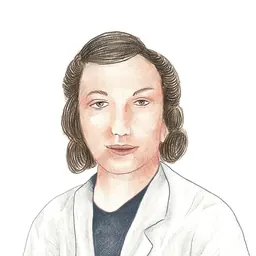


Contemporaries
People whose lives overlapped Carl Borgmann's
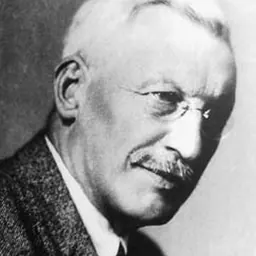
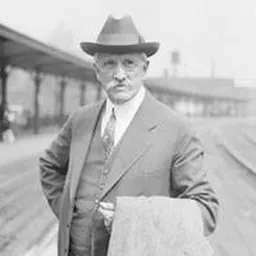

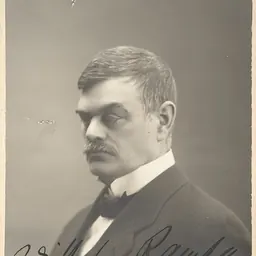

Frequently asked questions
Who was Carl Borgmann?
American educator and chemical engineer (1905–1998)
When was Carl Borgmann born?
Carl Borgmann was born on 3 June 1905.
When did Carl Borgmann die?
Carl Borgmann died on 29 November 1998 in Livermore.
What was Carl Borgmann's occupation?
Carl Borgmann was a chemical engineer, scientist, academic administrator and university teacher.
What nationality was Carl Borgmann?
Carl Borgmann was American.
Sources & further reading
Cite this page
APA: Biography.guide. (2026). Carl Borgmann. https://biography.guide/carl-borgmann/
MLA: "Carl Borgmann." Biography.guide, https://biography.guide/carl-borgmann/.
Chicago: "Carl Borgmann." Biography.guide. https://biography.guide/carl-borgmann/.
Data last updated: 2026-09-26 · Spot an error? Report a correction.
Page generated 2026-09-27 05:15 UTC