
About Carl Beam
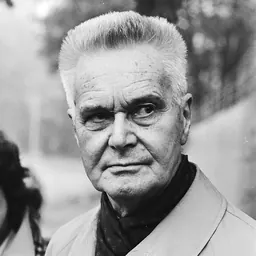
Lived 1943 – 2005 (aged 62). Carl Beam was a Canadian painter and artist, known for Graphic artist.
Carl Beam (May 24, 1943 – July 30, 2005), born Carl Edward Migwans, was an Indigenous Canadian multi-media artist whose career confronted Canada's colonial legacy through innovate means of creativity. His work engaged with the contemporary issues and experiences of the Indigenous peoples of Turtle Island. Beam made Canadian art history as the first artist of Indigenous Ancestry (Ojibwe), to have his work purchased by the National Gallery of Canada as Contemporary Art. A major retrospective of his work was organized by the National Gallery of Canada in 2010. He worked in various photographic mediums, mixed media, oil, acrylic, spontaneously scripted text on canvas, works on paper, Plexiglas, stone, cement, wood, handmade ceramic pottery, and found objects, in addition to etching, lithography, and screen process.
Personal life Carl Beam was born Carl Edward Migwans on May 24, 1943, in M'Chigeeng First Nation, to father Edward Cooper and mother Barbara Migwans. His mother was the daughter of Dominic Migwans, Ojibwe West Bay Chief (later renamed M'Chigeeng First Nation). "The Beam family's true name derives from miigwaans which means little feather or bird." His father was an American soldier stationed in Philadelphia, Pennsylvania. He served in the 77th Armor Regiment during World War II; he died as a prisoner-of-war in 1945 Bad Soden, Germany.
He recounted to his daughter, artist Anong Migwans Beam, that he was mainly raised by his grandparents. His exceptional qualities were observed by his elders, and he was given the name "Ahkideh", derived from the Ojibwe word for "one who is brave"."
Early work The direction of Carl Beam's visual style was firmly established by the late seventies. In 1979, Beam met and married his wife, Ann Beam. "In developing his work over the years, Beam has been accompanied by his wife, Ann, herself an artist and a former teacher at the Art Gallery of Ontario. Often they have worked as collaborators". At this time he incorporated multiple photographic images onto a single picture plane. "He disregarded the illusory deep space of Renaissance depiction, in favour of a flat tableau, where a dialogue of multiple images could take place".
Return to Canada Although he had achieved a level of success in the United States, with art dealers in both Taos, and Santa Fe, Beam returned to Canada, where he felt his work had an important contribution to make. "A return to Canada in 1983 at first meant no change in format: one ceramic work by Beam of a shaman family, in the collection of the Woodland Cultural Centre in Brantford, Ontario, has the central image Beam favoured in New Mexico, though now one that represents his current situation. Here a shaman figure holds the hands of a figure to either side, likely a veiled reference to his wife, Ann, and his daughter, Anongonse, born in 1980."
In 1986, the National Gallery of Canada purchased Beam's iconic work The North American Iceberg, 1985. Beam was asking $60,000 when selling the piece, but the National Gallery's negotiations resulted in the purchase price ending up at $16,000. Even though Beam was not paid the full asking price, this was a historic acquisition. It was the first piece of contemporary art created by an Indigenous artist bought by the National Gallery. Its first stage had exhibition venues in Peterborough, Ontario at both ArtSpace (curated by Shelagh Young), and also the Art Gallery of Peterborough. The second phase of the Columbus Project was an exhibition at The Power Plant in Toronto, curated by Richard Rhodes entitled the Columbus Boat. The exhibition continued on to venues in Italy and the United States. Beam's imagery for the Columbus Project was cross-culturally vast, and contained the primary images of Columbus, and Native peoples, but also images of Martin Luther King Jr., John F. Kennedy, Albert Einstein, and Abraham Lincoln, Italian Christian iconography, diverse animal species, self-portraits and technology (stop lights, rockets). There were two sculptural elements, Voyage a partial reconstruction of the Santa Maria, and the Ampulleta, a hourglass, with one obstructive stone within the sand, as well as several installations, and a video performance of Beam in the Dominican Republic, making a representational graveyard on the beaches where the landing could have taken place.
In 1992, Carl Beam and Ann Beam built an adobe house on Manitoulin Island. "Their adobe house became to a certain extent, a large-scale project which evolved naturally out of their earlier experiences with Native American pottery and the building vernacular of the American southwest." The exhibition, featuring large photo emulsion works on canvas, constructions, large-scale paper works, and ceramics, titled Carl Beam: The Whale of Our Being, was curated by Joan Murray for the Robert McLaughlin Gallery, in Oshawa in 2002. Murray wrote of the way Beam's imagery had become vast and all-inclusive: "Compared to earlier work, The Whale of Our Being exhibits a positively baroque complexity, a dizzying assortment of references, sometimes printed in overly saturated, fluorescent colour. Mystery, for instance, is pink-Day-Glo-coloured pink. The colour in Summa ranges from Day-Glo yellow-green to orange; the images from Einstein and the Hubble Telescope, and astronaut, and Sitting Bull to and image of the First Nations, and more besides."
Crossroads His last body of work was in process until the time of his death in 2005. It was titled Crossroads from the blues song by Robert Johnson. The work included images of pop stars, gangsters, scientists, native leaders, politicians, writers and poets, musicians (Robert Johnson, Bob Dylan, Marilyn Manson, Jerry Garcia, Britney Spears, John Lennon), TV personalities (Martha Stewart), animals, and birds. He had completed Plexiglas works, and 22"x 30" paper works for Crossroads and was in the middle of a suite of etchings at the time of his death.
It's All Relative exhibition In 2004, the Canadian Clay and Glass Gallery in Waterloo, Ontario, created a traveling exhibition, curated by Virginia Eichhorn, of 50 ceramic pieces by Carl Beam, Ann Beam, and Anong Migwans Beam. This marked the first time all three exhibited together. It was his last exhibition during his lifetime and was a touring exhibition.
Legacy Carl Beam was the first artist of Indigenous ancestry to have his work purchased by the National Gallery of Canada as contemporary art (1986), thus opening the door for a generation of Indigenous artists to enter. "Despite Beam's reluctance to be defined as a "Native Artist", his art deals with the struggles of his people."
Beam brought an innovative approach to all the media he worked in. "Technically Beam is regarded as an innovator for his intentional blurring of diverse art practices, thereby enabling certain methodologies and techniques to acquire new contexts. His innovative techniques, in fact, have been emulated by a new generation of artists-Native and not."
On May 24, 2020the 77th anniversary of his birthdaythe Art Canada Institute posted that it will be publishing a book on Beam, written by his daughter, Anong Migwans Beam. The Art Canada Institute published the book, Carl Beam: Life & Work, in 2024. It explores the artist's biography, key works, style, and legacy.
Awards and honours
In 2000 Beam was inducted into the Royal Canadian Academy of Arts Beam received the Governor General's Award in Visual and Media Arts in 2005.
Don’t just read it —
keep it.
Full-length biographies made to live with: read them, listen on the way to work, watch them tonight.
- E-book
- Audio
- Video
Instant download · yours to keep · every purchase keeps this site free
Important facts
Family & relationships
People in Carl Beam's life
Named in this biography and alive at the same time






Related people
Same field, nearest in time



Contemporaries
People whose lives overlapped Carl Beam's




Frequently asked questions
Who was Carl Beam?
Anishinaabe painter and potter (1943-2005)
When was Carl Beam born?
Carl Beam was born on 24 May 1943 in M'Chigeeng First Nation.
When did Carl Beam die?
Carl Beam died on 30 July 2005 in Ottawa General Hospital.
What was Carl Beam's occupation?
Carl Beam was a painter and artist.
What was Carl Beam known for?
Carl Beam was known for Graphic artist.
What nationality was Carl Beam?
Carl Beam was Canadian.
Sources & further reading
Cite this page
APA: Biography.guide. (2026). Carl Beam. https://biography.guide/carl-beam/
MLA: "Carl Beam." Biography.guide, https://biography.guide/carl-beam/.
Chicago: "Carl Beam." Biography.guide. https://biography.guide/carl-beam/.
Data last updated: 2026-09-22 · Spot an error? Report a correction.
Page generated 2026-09-27 05:19 UTC