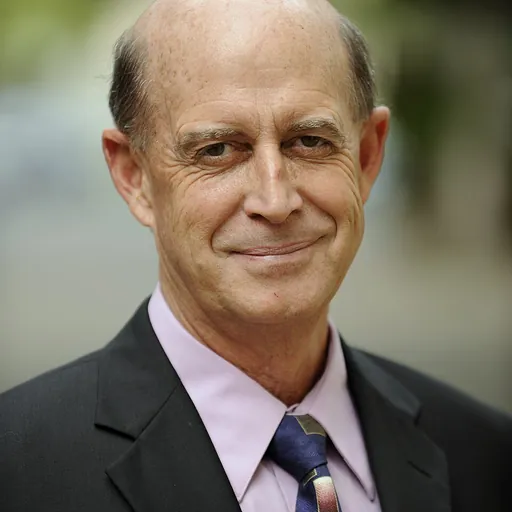
About Campbell Cavasso
Born 1950. Campbell Cavasso is an American politician.
Political career Legislative tenure In 1984, Cavasso was first elected to the Hawaii State House of Representatives, representing District 20, which included Waimanalo in Honolulu County. The district had previously been represented by Democrat (and future US Senator) Mazie Hirono, constituting a pickup for the GOP. he eventually decided not to run, and was succeeded by Democrat Jackie Young.
2002 lieutenant gubernatorial election
In 2002, he sought the Republican nomination for Lieutenant Governor of Hawaii. He finished third with 10,085 votes (13.88%), behind television news anchor Dalton Tanonaka, who took 27,142 votes (37.36%), and former Circuit Court judge Duke Aiona, who won the primary with 35,422 votes (48.76%).
2004 U.S. Senate election
In 2004, Cavasso ran for the Republican nomination to challenge eight-term Democratic senator Daniel Inouye. He stated that he decided to run in July 2004, following Inouye's vote against the Federal Marriage Amendment, which would ban gay marriage at the federal level. He prevailed in the Republican primary, winning 21,645 votes for 49.2 percent of all ballots cast, against three competitors. He also argued that Inouye had made Hawaii too dependent on federal funding, and promised that if elected, he would seek to position the state as "a technology center and a bridge between Asia and the mainland". Exit polling by CNN found that Cavasso won a majority among Republicans and self-identified conservatives, as well as losing by only one point among those who strongly approved of Bush's job performance, while significantly trailing Inouye among most other demographics. Despite his loss, Cavasso speculated that he nonetheless impacted the balance of power in the Senate, by forcing Inouye to devote resources to his own campaign and therefore lessening his ability to help fellow Democrats, such as Senate Minority Leader Tom Daschle, who narrowly lost re-election the same year. Cavasso had a severe fundraising deficit compared to Inouye, having raised $220,000 (much of it self-funded) to Inouye's $5.2 million. Polling found Cavasso trailing Inouye by a large margin, although one poll — conducted by Rasmussen Reports the month before the election — found him only thirteen points behind his Democratic opponent, regarded as a much closer-than-expected margin.
Cavasso ultimately received 79,939 votes, or 21.6 percent of all ballots cast; Inouye received over 277,000 votes, winning by over 53 percentage points. The poll which had indicated a significantly closer contest was later deemed by Fivethirtyeight the "worst poll" since at least 1998 in terms of disparity between polling data and election result. Cavasso later reported that Inouye had phoned him after the election to tell him that he had "enjoyed" Cavasso's campaign.
2014 U.S. Senate election
In December 2012, Senator Daniel Inouye died. His ninth term was not filled out, so Hawaii governor Neil Abercrombie had to appoint a replacement until a special election could be held in 2014. Inouye's dying wish was that his successor be Representative Colleen Hanabusa; however, Abercrombie instead appointed lieutenant governor Brian Schatz to Inouye's seat, citing Hanabusa's seat on the House Armed Services Committee and "the overall best interest of the party" as his considerations. By October 2013, Cavasso had indicated that he planned to run for the seat, and he officially announced his candidacy in April 2014. Cavasso easily won the Republican nomination in the August primary, receiving over 72 percent of the vote and leading his nearest competitor, John P. Roco, by 60 percentage points.
This set up a general election matchup between Cavasso and Schatz, as well as Libertarian nominee Michael Kokoski, a social worker. Schatz was widely regarded as the presumptive victor, given the state's heavy Democratic lean as well as polls that showed him leading by between 25 and 50 percentage points. Bloomberg Businessweek included the race among its list of the "7 Least Competitive Races" of the cycle. However, Cavasso argued that he was in a better position to win the election than in his two prior campaigns, because Schatz had been appointed by an unpopular governor (Abercrombie lost the Democratic nomination for re-election in 2014 to an underfunded opponent, state legislator David Ige) and because Schatz's nomination had gone against Inouye's dying wish. He also emphasized his socially conservative positions on issues such as gay marriage, marijuana legalization, and abortion. Cavasso also called for a series of debates between himself and Schatz, although Schatz declined the invitations, leading Cavasso to at one point inquire, "Where is Schatz? Is he ill?"
In the general election, Schatz prevailed with 246,827 votes (69.78 percent) to Cavasso's 98,006 and Kokoski's 8,941. Despite his loss, Cavasso's vote total and vote share were both higher than in either of his previous Senate campaigns. This created an open seat in Hawaii's 1st congressional district for the 2018 election. In the August 11 primary, Cavasso prevailed with 10,564 votes, about 82 percent of all ballots cast. Cavasso told KHON that his objective was to form a winning coalition of Republicans, independents, and conservative Democrats. In an interview with Hawaii News Now, he remarked that "there is a sense we got this one" (election) and that he believed Hawaiians wanted a stronger Republican Party. He stated that, if elected, he would support Representative Jim Jordan of Ohio for Speaker of the House. The two candidates also both attended a forum hosted by the Grassroots Institute of Hawaii at the Pacific Club, where Cavasso criticized Senator Hirono for her handling of the Kavanaugh allegations, calling her "entirely out of order" for telling men to "shut up and step up" on issues of sexual assault. Cavasso reiterated his opposition to the legalization of marijuana, arguing that the opioid epidemic demonstrated that legalization would be counterproductive. He has been a consistent critic of the legalization of same-sex marriage, stating that Inouye's opposition to the Federal Marriage Amendment was what motivated him to challenge the Senator in 2004. At a 2018 candidate forum, Cavasso expressed his opposition to marijuana legalization, responding that "it's taking a chance" and opining that marijuana use can lead to other drugs. He also supports repealing or revising the Jones Act, which regulates international commerce and stipulates that 75 percent of all crew members on shipping vessels must be American, arguing that it contributes to a higher cost of living in the state. He has suggested that, if the law remains in place, Hawaii should receive an exemption. During his 2018 run for the House of Representatives, Cavasso was critical of proposals for the creation of a Hawaiian nation; he argued that it would be inappropriate for them to receive federal recognition similar to that received by Native Americans, and positing that doing so would be divisive and create a "race-based nation".
2004
2010
2014
2018
Don’t just read it —
keep it.
Full-length biographies made to live with: read them, listen on the way to work, watch them tonight.
- E-book
- Audio
- Video
Instant download · yours to keep · every purchase keeps this site free
Important facts
People in Campbell Cavasso's life
Named in this biography and alive at the same time
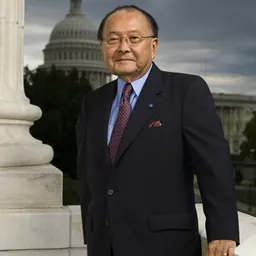
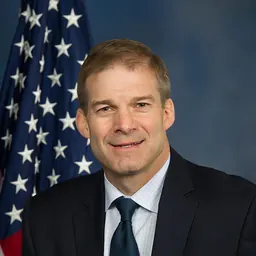
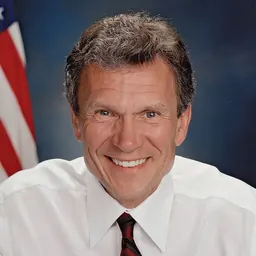



Related people
Same field, nearest in time




Contemporaries
People whose lives overlapped Campbell Cavasso's

Frequently asked questions
Who is Campbell Cavasso?
American politician
When was Campbell Cavasso born?
Campbell Cavasso was born on 14 October 1950 in San Francisco.
What is Campbell Cavasso's occupation?
Campbell Cavasso is a politician.
What nationality is Campbell Cavasso?
Campbell Cavasso is American.
Sources & further reading
Cite this page
APA: Biography.guide. (2026). Campbell Cavasso. https://biography.guide/campbell-cavasso/
MLA: "Campbell Cavasso." Biography.guide, https://biography.guide/campbell-cavasso/.
Chicago: "Campbell Cavasso." Biography.guide. https://biography.guide/campbell-cavasso/.
Data last updated: 2026-09-22 · Spot an error? Report a correction.
Portrait: Wikimedia Commons · author & licence
Page generated 2026-09-27 05:01 UTC