
About Camillo Sbarbaro
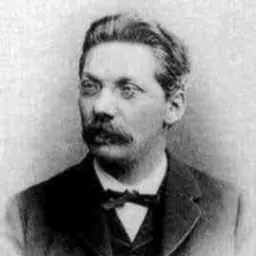
Lived 1888 – 1967 (aged 79). Camillo Sbarbaro was an Italian poet, writer, botanist, translator, botanical collector and scientific collector.
Camillo Sbarbaro (1888 - 1967) was an Italian poet, writer and lichenologist. His poetry collection Pianissimo was the start of his reputation. He was awarded the Feltrinelli Prize for literature from the Accademia Nazionale Reale dei Lincei in 1962.
Early life Camillo Sbarbaro was born 12 January 1888, in Santa Margherita Ligure, part of Genoa, in Ligura, Italy. His father, Carlo, was an engineer and architect. His mother, Angiolina Bacigalupo, died of tuberculosis in 1893 when he was about 5. He and his sister Clelia were raised by their aunt Maria, known as Benedetta. He later dedicated poems in his collection Pianissimo and Rimanenze to his father and aunt. In 1894, the family moved to the nearby town of Varazze, where Camillo began elementary school and later secondary school at the Salesian Institute in Varazze. In 1904, they moved to the nearby seaport of Savona. Sbarbaro enrolled at the Gabriello Chiabrera High School. He is known to have read poems by Arthur Rimbaud, who can be seen as an influence on the poems that he began to write at this time. He also met other writers and intellectuals associated with La Voce such as Giovanni Papini, Dino Campana, and Ottone Rosai.
When the Great War broke out, Sbarbaro volunteered for the Italian Red Cross. He was called up for military service in February 1917. In July, he left for the front. During this period, he wrote the series Trucioli, published in 1920. The war made him depressed and disillusioned. He returned to Genoa in 1945. After the war, some of his poetry was re-printed and there was renewed interest in his works. In 1951 he returned to Spotorno, effectively retiring, and remained there for the rest of his life. His last collection of poems, Rimanenze was published in 1955.
Prose Sbarbaro began writing prose contributions for magazines while he was quite young. For example, his pieces appeared in La Riviera Ligure between 1912 and 1919. In 1955 he shared the international Etna-Taormina prize for poetry with Jules Superville. In 1962 he was a recipient of a quinquennial Feltrinelli Prize for literature from the Accademia Nazionale Reale dei Lincei, the national academy for the arts and sciences of Italy. In 1928 he sold his first collection of mosses in Stockholm. Another collection, of about 2700 lichens is held by the Natural History Museum in Genoa. Further lichens collected by him are held at the Field Museum of Natural History, Chicago, USA as well as other museums. Between 1928 and 1933, as well as collecting in Italy, he travelled extensively in northern and southern Southern Europe as well as North and South America to collect specimens and meet with lichenologists.
He is estimated to have collected at least 127 new species of lichens and 20 species were named after him.
Death He died 31 October 1967 in Savona.
Works Poetry Resine, Caimo, Gênes 1911 Pianissimo, Edizioni de La Voce, Florence, 1914 Trucioli (1914–1918), Vallecchi, Florence, 1920 Liquidazione, (1914–1918), Ribet, Turin, 1928 Rimanenze, All'Insegna del Pesce d'Oro, Milan, 1955 Primizie, Scheiwiller, Milan, 1958 Poesie, All'Insegna del Pesce d'oro, Milan, 1961
Prose Fuochi fatui, All'insegna del Pesce d'Oro, Milan, 1956 Scampoli, Vallecchi, Florence, 1960 Gocce, Scheiwiller, Milan, 1963 Quisquilie, Scheiwiller, Milan, 1967
Lichenology Sbarbaro, C. (1967) Licheni (Lichens. A Sample Kit of the World) (posthumous publication) Sbarbaro, C. (1939) Aliquot lichenes oceanici in Cook insulis (Tonga, Rarotonga, Tongatabu, Eua) collecti. Archivio Botanico 15 100–104. Sbarbaro, C. (1932) Contributo alla flora lichenologica ligure. Archivio Botanico 8 207–255. Sbarbaro,C (1930) Licheni italiani nuovi o interessanti. Archivio Botanico 6 9–15.
Don’t just read it —
keep it.
Full-length biographies made to live with: read them, listen on the way to work, watch them tonight.
- E-book
- Audio
- Video
Instant download · yours to keep · every purchase keeps this site free
Important facts
People in Camillo Sbarbaro's life
Named in this biography and alive at the same time
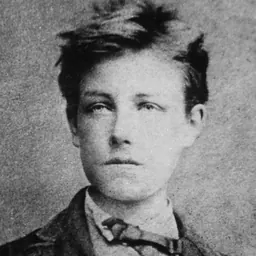
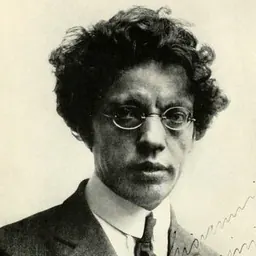
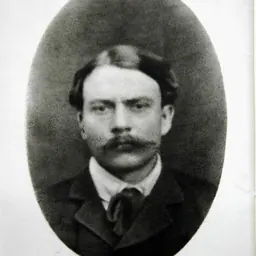

Related people
Same field, nearest in time

Contemporaries
People whose lives overlapped Camillo Sbarbaro's




Frequently asked questions
Who was Camillo Sbarbaro?
Italian poet and writer (1888-1967)
When was Camillo Sbarbaro born?
Camillo Sbarbaro was born on 12 January 1888 in Santa Margherita Ligure.
When did Camillo Sbarbaro die?
Camillo Sbarbaro died on 31 October 1967 in Savona.
What was Camillo Sbarbaro's occupation?
Camillo Sbarbaro was a poet, writer, botanist, translator, botanical collector and scientific collector.
What nationality was Camillo Sbarbaro?
Camillo Sbarbaro was Italian.
Sources & further reading
Cite this page
APA: Biography.guide. (2026). Camillo Sbarbaro. https://biography.guide/camillo-sbarbaro/
MLA: "Camillo Sbarbaro." Biography.guide, https://biography.guide/camillo-sbarbaro/.
Chicago: "Camillo Sbarbaro." Biography.guide. https://biography.guide/camillo-sbarbaro/.
Data last updated: 2026-09-25 · Spot an error? Report a correction.
Page generated 2026-09-27 05:12 UTC