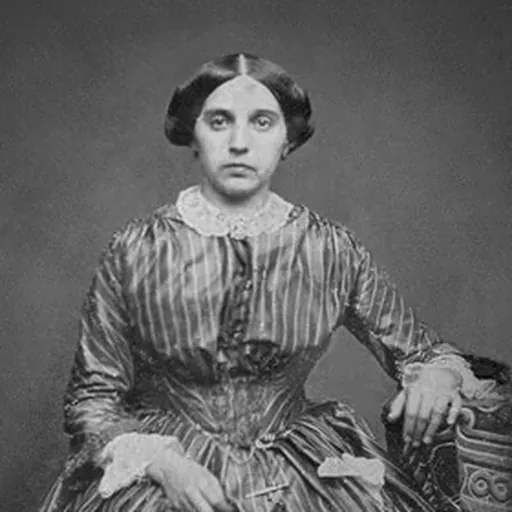
About Camila O'Gorman
Lived 1825 – 1848 (aged 23). Camila O'Gorman was an Argentine socialite.
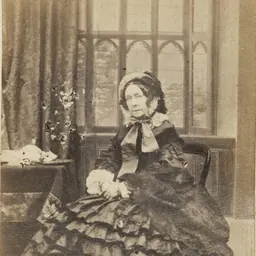
Maria Camila O'Gorman Ximénez (9 July 1825 – 18 August 1848) was an Argentine socialite who was executed over a scandal involving her relationship with a Roman Catholic priest. She was 23 years old and allegedly eight months pregnant when she and Father Ladislao Gutiérrez faced a firing squad.
Biography Camila was born in Buenos Aires, the youngest daughter of Adolfo O'Gorman y Perichón de Vandeuil, and his wife, Joaquina Ximénez Pinto. She was the second-to-last of six children in an upper-class family of mixed Irish Catholic, French aristocratic, and Spanish descent. Typical of powerful families in Argentina's post-colonial era, two of her brothers went on to pursue reputable careers. Fr. Eduardo O'Gorman was ordained as a Roman Catholic priest of the Jesuit Order, and the other as a police officer and the eventual founder of the Buenos Aires Police Academy.
She was also the granddaughter of French noblewoman Ana Périchon de O'Gorman (1776–1847), the mistress of the Santiago de Liniers, First Count of Buenos Aires. When the first British invasion occurred, Liniers masterminded the successful recapture of Buenos Aires from the Royal Navy. For his heroic actions in defence of the city, Santiago de Liniers was appointed Viceroy of the Río de la Plata, and Perichon de O'Gorman became the unofficial first lady. Her influence and power led to intrigues intended to discredit her, including allegations that she was a spy for the French or the English. After Liniers died in 1810 she retired to a quieter life with her sons and died peacefully in 1847, at the age of 72.
From 1829 to 1852, the Argentine Confederation was governed as a single party state by Juan Manuel de Rosas, a General of the Argentine Army and a Federalist Party politician, around whom a pervasive cult of personality had been erected. Camila was considered a pillar of polite society, a close friend and confidante of Rosas' daughter, Manuelita, and a frequent guest at the Governors Residence. In her late teens, Camila was introduced to Father Ladislao Gutiérrez, whose family had persuaded him to enter the Roman Catholic priesthood and who had attended the same Jesuit seminary as Camila's brother Eduardo.
At the time, the Society of Jesus was the only institution within Argentina's Catholic Church which continued to speak out against Rosas' police state tactics. This led Rosas to later banish the Jesuits from Argentina. Father Gutiérrez also came from a similar background; his uncle was the provincial governor of Tucumán, Celedonio Gutiérrez. Father Gutiérrez had been assigned as the parish priest of Nuestra Señora del Socorro (Our Lady of Relief) and was frequently invited to the O'Gorman family's estate. They soon began a clandestine affair.
They escaped from Buenos Aires on 12 December 1847, bound for the United States, where they inaccurately believed, "priests may marry."
Rosas' exiled political opponents and future Unitarian Party President Domingo Faustino Sarmiento declared that Rosas was responsible for the moral corruption of Argentine womanhood. Camila and Ladislao were recognised by an Irish-Argentine priest, Fr. Michael Gannon. Other Irish Argentines, including Father Anthony Fahy and lawyer Dalmacio Vélez Sarsfield "demanded an exemplary punishment of the wayward daughter that was also giving the industrious and well-regarded [Irish] community a bad name".
The couple was abducted from Corrientes Province and returned to Buenos Aires. Camila claimed she had initiated her relationship with Gutierrez and insisted on their elopement, angrily denying rumors that she had been raped. From Buenos Aires, Rosas had given strict orders – the fugitives were to be sent to the prison of Santos Lugares in separate carriages – as indicated by Foreign Relations Minister Felipe Arana in his warrant of arrest.
According to historian John Lynch, "The savage sentence was the responsibility of Rosas alone. The higher clergy and the lawyers seem to have urged severity, but he subsequently denied that he was influenced by any outsider." In the aftermath of their deaths, Sarmiento and the Unitario Party opposition changed their tone drastically and wrote about the executions using terms such as "the beautiful girl", "the doomed couple", and "the repression of love". Camila was 23 years old and eight months pregnant with an illegitimate child. Father Gutiérrez was 24 years old. Historian Manuel Bilbao later commented, "It would have been better for Rosas to have lost a battle than to shoot Camila, such was the damage which he did to his prestige and authority."
Camila's brother, Fr. Eduardo O'Gorman, went into exile in Montevideo after the summary execution of his sister and only returned to his homeland after the 1852 defeat of Rosas at the Battle of Caseros and the Caudillo's subsequent overthrow.
In popular culture Classical music Preludio Sinfónico, Un relato sobre Camila by the Argentinian composer Claudia Montero was first performed in Montevideo, Uruguay on International Women's Day (Día Internacional de la Mujer) 7 March 2019.
The Execution Scene of Ladislao and Camila is a classical organ solo by composer Shannon M. Grama.
In film 1910 – Camila O'Gorman, directed by Mario Gallo and starring Blanca Podestá in the title role. It was one of the first feature films made in Argentina, and is now lost. 1984 – Camila, directed by María Luisa Bemberg and starring Susú Pecoraro as Camila O'Gorman, Imanol Arias as Father Gutiérrez, and Héctor Alterio. It was Argentina's second nomination ever to an Academy Award (the Academy Award for Best Foreign Language Film).
In poetry English poet John Masefield both dramatized and versified the story of Camila and Fr. Gutiérrez in his 1926 poem Rosas.
Don’t just read it —
keep it.
Full-length biographies made to live with: read them, listen on the way to work, watch them tonight.
- E-book
- Audio
- Video
Instant download · yours to keep · every purchase keeps this site free
Important facts
People in Camila O'Gorman's life
Named in this biography and alive at the same time

Related people
Same field, nearest in time

Contemporaries
People whose lives overlapped Camila O'Gorman's




Frequently asked questions
Who was Camila O'Gorman?
Argentine socialite
When was Camila O'Gorman born?
Camila O'Gorman was born on 9 July 1825 in Buenos Aires.
When did Camila O'Gorman die?
Camila O'Gorman died on 18 August 1848 in San Martín Partido.
What was Camila O'Gorman's occupation?
Camila O'Gorman was a socialite.
What nationality was Camila O'Gorman?
Camila O'Gorman was Argentine.
Sources & further reading
Cite this page
APA: Biography.guide. (2026). Camila O'Gorman. https://biography.guide/camila-o-gorman/
MLA: "Camila O'Gorman." Biography.guide, https://biography.guide/camila-o-gorman/.
Chicago: "Camila O'Gorman." Biography.guide. https://biography.guide/camila-o-gorman/.
Data last updated: 2026-09-22 · Spot an error? Report a correction.
Portrait: Wikimedia Commons · author & licence
Page generated 2026-09-27 05:02 UTC