
About Calpurnia
Lived 76 BC – 44 BC (aged 31–32). Calpurnia was a Roman writer.
Calpurnia (after 44 BC) was either the third or fourth wife of Julius Caesar, and the one to whom he was married at the time of his assassination. According to contemporary sources, she was a good and faithful wife, despite her husband's infidelity; and, forewarned of the attempt on his life, she endeavoured in vain to prevent his murder.
Biography Background Born 76 BC, Calpurnia was the daughter of Lucius Calpurnius Piso Caesoninus, consul in 58 BC. Her half-brother was Lucius Calpurnius Piso, who would become consul in 15 BC.
Marriage Calpurnia married Julius Caesar late in 59 BC, during the latter's consulship. although there is some uncertainty as to whether they were ever formally married. According to Suetonius, he was obliged to break off their engagement when, at the age of sixteen, he was nominated Flamen Dialis, a high-ranking priestly office whose holders had to be married by confarreatio, an ancient and solemn form of marriage that was open only to patricians. Cornelia died in 69 or 68 BC, as her husband was preparing to set out for Spain.
On his return, Caesar married Pompeia, a granddaughter of Sulla. Their marriage ended in scandal. In 63 BC, Caesar had been elected Pontifex Maximus, receiving as his official residence a house on the Via Sacra. Here the sacred rites of the Bona Dea, from which all men were excluded, were celebrated in the winter of 62. But an ambitious young nobleman named Publius Claudius Pulcher entered the house disguised as a woman, ostensibly for the purpose of seducing Pompeia. His subsequent discovery shocked the Roman aristocracy, and rumors swirled about Pompeia's fidelity. Caesar felt that he had no choice but to divorce Pompeia, not because he personally believed the rumors, but because the wife of the Pontifex Maximus had to be above suspicion.
Caesar then married Calpurnia. Her contemporaries describe Calpurnia as a humble, often shy woman. By all accounts Calpurnia was a faithful and virtuous wife, and seems to have tolerated Caesar's affairs: and he had for some time been intimate with Servilia, a relationship that was an open secret at Rome. although this is improbable on chronological grounds, and that Servilia attempted to interest Caesar in her daughter, Junia Tertia—who according to other rumors, was also Caesar's daughter. No children resulted from Calpurnia's marriage to Caesar.
Premonition According to the Roman historians, Caesar's murder was foretold by a number of ill omens, as well as the Etruscan haruspex Spurinna, who warned him of great personal danger either on or by the Ides of March in 44 BC. The night before his assassination, Calpurnia dreamed that Caesar had been wounded, and lay dying in her arms. In the morning, she begged him not to meet the senate, as he had planned, and moved by her distress and entreaties, he resolved not to go. But Decimus Junius Brutus, one of Caesar's closest friends, whom he had recently appointed Praetor Peregrinus, and secretly one of the conspirators against him, came to the house and persuaded Caesar to ignore the omens, and go to the senate.
Widowhood Following her husband's assassination, there is a story of her rushing out of her house in grief accompanied by several women and slaves. Calpurnia delivered all of Caesar's personal papers, including his will and notes, along with his most precious possessions, to the consul Mark Antony, one of Caesar's most trusted allies, who had not been involved in the conspiracy.
Calpurnia is peculiarly absent in Octavian propaganda, which has been regarded by historians as somewhat mysterious. The only later attestation to her is an inscription by a freedwoman named Anthis which states "She was the wife of Caesar, the great divinity" which puts its dating to at least 42 BC when Caesar was deified.
Coinage There has been some speculation that Calpurnia may have stood as a model for the goddess Victory on coins struck by Caesar for his triumph after returning from Spain, but this is not generally accepted. The goddess Venus on the aureus minted by Caesar for his fifth consulship has also been interpreted to have been modeled on Calpurnia.
Legacy The Roman tribe Calpurnia was named in her honor.
Cultural depictions
In Shakespeare's Julius Caesar, Calpurnia has a dream that a statue of Caesar was flowing with blood as many Romans wash their hands in the blood. She also sees in her dream that Julius Caesar would die in her arms. Calpurnia was portrayed by Gertrude Michael in Cleopatra (1934), Greer Garson in the 1953 adaptation of Shakespeare's Julius Caesar, Gwen Watford in Cleopatra (1963), Joan Sims in Carry On Cleo (1964), Jill Bennett in the 1970 adaptation of Julius Caesar and Valeria Golino in the 2002 miniseries Julius Caesar. Calpurnia was shown solving a murder in Mist of Prophecies (2002)—part of the Roma Sub Rosa series by Steven Saylor. She gets Gordianus the Finder to look into a threat to her husband in a later book in this series, The Triumph of Caesar (2008). She is portrayed as a woman of formidable intelligence and efficiency, utterly devoted to her husband's interests, but with an incongruous fascination with trying to foretell the future. Calpurnia was portrayed by Haydn Gwynne in HBO's series Rome. She is depicted as proud and traditional and having had a vision of Caesar's death. Shakespeare's Calpurnia was portrayed by Sylvia Lennick in Wayne and Shuster's comedy sketch "Rinse the Blood Off My Toga", parodied as a hysterical Italian-American housewife, repeatedly wailing "I told him, Julie! Don't go!" in a Bronx accent.
Footnotes
Don’t just read it —
keep it.
Full-length biographies made to live with: read them, listen on the way to work, watch them tonight.
- E-book
- Audio
- Video
Instant download · yours to keep · every purchase keeps this site free
Important facts
Family & relationships
People in Calpurnia's life
Named in this biography and alive at the same time


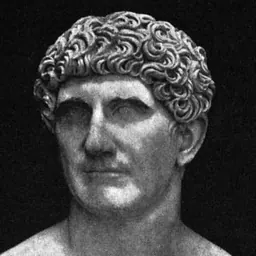

Related people
Same field, nearest in time
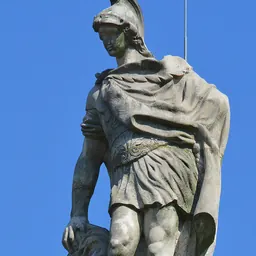

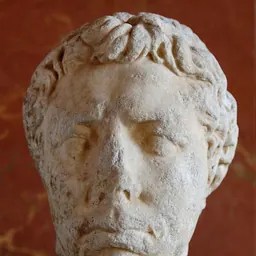

Contemporaries
People whose lives overlapped Calpurnia's
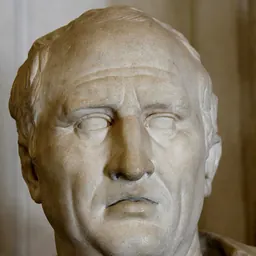

Frequently asked questions
Who was Calpurnia?
widow of Julius Caesar
When was Calpurnia born?
Calpurnia was born in 76 BC in Rome.
When did Calpurnia die?
Calpurnia died in 44 BC in Rome.
What was Calpurnia's occupation?
Calpurnia was a writer.
What nationality was Calpurnia?
Calpurnia was Roman.
Sources & further reading
· DBpedia: Calpurnia (wife of Caesar)
Cite this page
APA: Biography.guide. (2026). Calpurnia. https://biography.guide/calpurnia/
MLA: "Calpurnia." Biography.guide, https://biography.guide/calpurnia/.
Chicago: "Calpurnia." Biography.guide. https://biography.guide/calpurnia/.
Data last updated: 2026-09-25 · Spot an error? Report a correction.
Page generated 2026-09-27 05:11 UTC