
About Çağla Eroğlu
Born 2000. Çağla Eroğlu is a Turkish researcher, academic and university teacher.
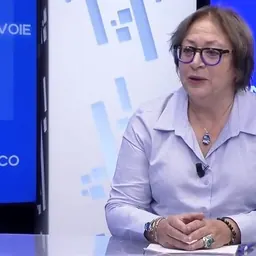
Cagla Eroglu is a Turkish neuroscientist and associate professor of cell biology and neurobiology at Duke University in Durham, North Carolina and an investigator with the Howard Hughes Medical Institute. Eroglu is also the director of graduate studies in cell and molecular biology at Duke University Medical Center. Eroglu is a leader in the field of glial biology, and her lab focuses on exploring the role of glial cells, specifically astrocytes, in synaptic development and connectivity.
Early life and education Eroglu was born in Turkey and pursued her bachelor's degree in chemical engineering from 1992 to 1996 at the Middle East Technical University in Ankara, Turkey. After completing her B.Sc., Eroglu pursued a master's degree in molecular biology at the Bilkent Üniversitesi in Ankara, Turkey, in 1996. After completing her master's degree in 1998, Eroglu moved to Germany to pursue her graduate studies in molecular biology at Ruprecht-Karls-Universität Heidelberg in Germany. Eroglu's Ph.D. was supported by the European Molecular Biology Laboratory Ph.D. program as she studied under the mentorship of Irmgard Sinning, whose lab moved from EMBL to Heidelberg University in 2000. Eroglu's Ph.D. was broadly focused in the study of membrane proteins biology. Using drosophila as a model organism, Eroglu looked at how metabotropic glutamate receptor (mGluRs) affinity is modulated. She found that when mGluRs are associated with cholesterol rich lipid rafts within the membrane, they exist in a high affinity state for glutamate. Eroglu and her team found that an astrocyte derived factor, called Thrombospondin, is important in promoting synaptogenesis in the central nervous system. Eroglu then characterized the receptor to which Thrombospondin binds, called α2δ-1, which happened to also be the receptor to which the drug gabapentin binds. She found that hevin induces the formation of synapses, while SPARC antagonizes the synaptogenic actions of hevin. In 2008, Eroglu joined the faculty at Duke University as an associate professor in the department of cell biology and in the department of neuroscience. Eroglu is also a Faculty Network Member of the Duke Institute for Brain Sciences, an associate of the Duke Initiative for Science and Society, an Affiliate of the Regeneration Next Initiative, as well as a member of the ALICE program within the Duke University School of Medicine.
Eroglu's lab studies the mechanisms underlying synaptic connectivity in the central nervous system. The lab focuses significantly on the cellular and molecular role astrocytes play in shaping synapse development, function, and plasticity. They directly probed the role of Huntingtin protein (htt) in synaptic connectivity and they found that when htt was silenced, excitatory synapses in the cortex and striatum formed at a rapid pace and then started to deteriorate shortly after their rapid development. They further found that critical pruning of spines with multiple excitatory contacts fails to take place when hevin is knocked out. They found that hUTCs could support neural growth specifically through the release of thrombospondin. They further show that the regulation of synaptogenesis is dependent on Rac1, suggesting its role in development and pathology. 2019 Ruth and A. Morris Williams, Jr. Faculty Research Prize 2018 Lead Principal Investigator of Chan Zuckerberg Initiative Neurodegeneration Challenge Network 2016 SFARI Pilot Award 2010 Alfred P. Sloan Fellow
Select publications
Risher WC, Kim N, Koh S, Choi JE, Mitev P, Spence EF, Pilaz LJ, Wang D, Feng G, Silver DL, Soderling SH, Yin HH, Eroglu C. Thrombospondin receptor α2δ-1 promotes synaptogenesis and spinogenesis via postsynaptic Rac1. The Journal of Cell Biology. PMID 30054448, doi:10.1083/jcb.201802057. Singh SK, Stogsdill JA, Pulimood NS, Dingsdale H, Kim YH, Pilaz LJ, Kim IH, Manhaes AC, Rodriguez-Junior WS, Pamukcu A, Enustun E, Ertuz Z, Scheiffele P, Soderling S, Silver DS, Ji R-R, Medina AE, Eroglu C (2016). Astrocytes assemble thalamocortical synapses by bridging neurexin1-alpha and neuroligin-1 via hevin. Cell, Jan 14:164(1–2):183-196. Chung WS, Allen NJ, Eroglu C. Astrocytes Control Synapse Formation, Function, and Elimination. Cold Spring Harbor Perspectives in Biology. PMID 25663667, doi:10.1101/cshperspect.a020370. Koh S, Kim N-S, Yin HH, Harris I, Dejneka N and Eroglu C (2015). Human Umbilical Tissue-Derived Cells Promote Synapse Formation and Neurite Outgrowth via Thrombospondin Family Proteins. J. Neurosci. 2015, Nov 25: 35(47):15649 –15665. Risher WC, Patel S, Kim IH, Uezu A, Bhagat S, Wilton DK, Pilaz L-J, Singh JA, Calhan OY, Silver DL, Stevens B, Calakos N, Soderling SH and Eroglu C (2014). Astrocytes refine cortical connectivity at dendritic spines. eLife Dec 17, 17:3. McKinstry S.U., Karadeniz Y.B., Worthington, A.K., Hayrapetyan V.Y., Ozlu M.I., Serafin-Molina K., Risher W.C., Ustunkaya, T., Dragatsis, I., Zeitlin S., Yin H.H., Eroglu C. (2014) Huntingtin is required for normal excitatory synapse development in cortical and striatal circuits. J. Neurosci. 2014 Jul 9:34(28):9455-72. Kucukdereli, H., Allen, N.J., Lee, A.T., Feng, A., Ozlu, M.I., Conatser, L.M., Chakraborty, C., Workman, G., Weaver, M.S., Sage, E.H., Barres, B.A., Eroglu, C. (2011). Control of excitatory CNS synaptogenesis by astrocyte-secreted proteins Hevin and SPARC. Proceedings of the National Academy of Sciences of the United States of America 108, E440-449. Eroglu, C, Barres, B.A. (2010). Regulation of synaptic connectivity by glia. Nature, Nov 11;468(7321):223-31. Eroglu C (2009). Astrocyte-Secreted Matricellular Proteins in Central Nervous System Development and Function. Journal of Cell Communication and Signaling 3:167-176. Eroglu C, Allen NJ, Susman MW, O'Rourke NA, Park CY, Ozkan E, Chakraborty C, Mulinyawe SB, Annis DS, Huberman AD, Green EM, Lawler J, Dolmetsch R, Garcia KC, Smith SJ, Luo ZD, Rosenthal A, Mosher DF, Barres BA (2009). Gabapentin receptor alpha2delta-1 is a neuronal thrombospondin receptor responsible for excitatory CNS synaptogenesis. Cell 139: 380–392.
Don’t just read it —
keep it.
Full-length biographies made to live with: read them, listen on the way to work, watch them tonight.
- E-book
- Audio
- Video
Instant download · yours to keep · every purchase keeps this site free
Important facts
People in Çağla Eroğlu's life
Named in this biography and alive at the same time

Related people
Same field, nearest in time




Contemporaries
People whose lives overlapped Çağla Eroğlu's


Frequently asked questions
Who is Çağla Eroğlu?
Turkish researcher (born 2000)
When was Çağla Eroğlu born?
Çağla Eroğlu was born in 2000 in Ankara.
What is Çağla Eroğlu's occupation?
Çağla Eroğlu is a researcher, academic and university teacher.
What nationality is Çağla Eroğlu?
Çağla Eroğlu is Turkish.
Sources & further reading
Cite this page
APA: Biography.guide. (2026). Çağla Eroğlu. https://biography.guide/cagla-eroglu/
MLA: "Çağla Eroğlu." Biography.guide, https://biography.guide/cagla-eroglu/.
Chicago: "Çağla Eroğlu." Biography.guide. https://biography.guide/cagla-eroglu/.
Data last updated: 2026-09-20 · Spot an error? Report a correction.
Page generated 2026-09-27 05:15 UTC