
About Byron Quinby Jones
Lived 1888 – 1959 (aged 70). Byron Quinby Jones was an American aircraft pilot and military officer.
Byron Quinby Jones (April 9, 1888 – March 30, 1959) was a pioneer aviator and an officer in the United States Army. Jones began and ended his career as a cavalry officer, but for a quarter century between 1914 and 1939, he was an aviator in the various organizations that were the Army's air arm. He appeared to be on track in the 1930s to becoming one of the senior commanders of the Air Corps, but his views on the role of airpower diverged from those of his Air Corps peers and he returned to the Army's ground forces at the beginning of World War II.
Early life Jones was born on April 9, 1888, near Henrietta, New York, to Samuel Titus Jones and Sarah Minerva Quinby. His family moved to Rochester, where he graduated from Public School 24 and East High School.
Following an unremarkable fourth class (plebe) year, Jones performed summer training duties in 1908 between June 16 and July 11 for the incoming Class of 1912, out of which eight upperclassmen, including Jones and five other third class cadets, were accused of hazing violations, some of which involved the beating of the new plebes, prohibited by law since March 1901. As a result of three days of disciplinary hearings convened July 17, 1908, the eight cadets were recommended for dismissal from the academy. The specification against Jones, that he "inaugurated" a new form of punishment for plebes in which they were required to double time, was found to be "conclusive" by the testimony of all cadets called before the board. Jones affirmed that he had double-timed every plebe in his company, but denied that any serious violations of hazing had occurred.
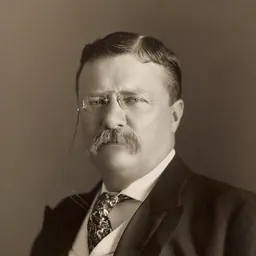
Despite the scandalous notoriety of the incident, supporters of the cadets mounted a campaign directly to President Theodore Roosevelt, who had signed the no-hazing law that had resulted in their dismissal. On August 20, Roosevelt ordered the third class cadets reinstated but suspended with loss of all pay and allowances until June 15, 1909. After Roosevelt approved the December 1908 recommendation of the superintendent of West Point, Colonel Hugh L. Scott, that they be permitted to return to the academy, Jones and the other third class cadets joined the same class that they had hazed on February 1, 1909. Jones graduated on June 12, 1912, 27th in a class of 95.
Military career
Signal Corps Jones entered active duty and was commissioned as a second lieutenant in the 14th Cavalry. He performed troop duty at Fort Clark and Marfa, Texas from September 14, 1912, to December 2, 1913, when he volunteered for pilot instruction. Jones was detached to the Aeronautical Division, U.S. Signal Corps and assigned to the Signal Corps Aviation School at North Field in San Diego, California, on December 5, 1913.
He was taught to fly by civilian instructor Oscar A. Brindley and assigned to the 2nd Company, 1st Aero Squadron on August 5, 1914. On August 19, he earned his rating of Junior Military Aviator (JMA) and was immediately placed on flight status. Congress expanded the air arm into the Aviation Section, U.S. Signal Corps in July 1914, and Jones remained assigned to the 1st Aero Squadron until September 23, 1915, when he returned to MIT for a post-graduate course on aeronautical engineering, the first such course ever, graduating on June 7, 1916. While at MIT, Jones served with both Milling and Captain Virginius E. Clark on the Technical Aero Advisory and Inspection Board in April and May 1916, testing aircraft and balloons at the Curtiss Aviation School in Newport News, Virginia, for possible use in Mexico.
During 1915, Jones set two flight duration records: for an aviator alone with a flight time of eight hours and 53 minutes flying S.C. 31, a new Martin TT tractor airplane, on January 15, and for an aviator and two passengers with a flight time of seven hours and five minutes flying S.C. 28, a Burgess H with extra fuel tanks, on March 12, both at North Field. For these flights, Jones received the Mackay Trophy. On July 2 at San Diego, he became the first army pilot to execute a loop and stall an airplane without crashing, and on December 12, to execute a tail spin, flying S.C. 30, a Curtiss J tractor on both flights. on April 20, 1915. Using one end of the cavalry drill field at Fort Brown as a landing strip, the pair flew S.C. 31 to observe for movements of Pancho Villa, with Jones piloting and Milling to record the location of Villa's troops. Their morning flight was uneventful, but on their afternoon sortie, despite being on the American side of the Rio Grande, they were fired upon by at least one machine gun, the first time an American military pilot had ever come under fire.
On July 26, 1915, Jones and the 1st Aero Squadron moved by train to Fort Sill, Oklahoma, to work with the field artillery. In August, Jones was part of a detachment of two planes and four pilots sent to the Mexican border at Brownsville. On September 5, the detachment commander, First Lieutenant Joseph C. Morrow, was severely injured in a crash of one of their Curtiss JN2 airplanes, making Jones acting detachment commander. He promptly filed a report that the heavy, underpowered JN2s were too inherently dangerous to use as military aircraft, and that the artillery officers they were to train as observers had refused to fly with them. As a result, the JN2s were grounded on September 13 by the commanding general of the Southern Department, and in January their use discontinued by the Aviation Section.
Upon completion of his engineering course, Jones returned to the Aviation School, where he was promoted to first lieutenant, Cavalry, on July 1, 1916, and transferred in grade on the same date to the Field Artillery when an increase in the peacetime strength of the army authorized by the National Defense Act of 1916 resulted in the creation of 15 new regiments.
World War I and the Air Service While still on duty at the Aviation School, Jones received a promotion on May 15, 1917, to captain, Field Artillery, in the first wave of officer promotions following the entry of the United States into World War I. At the beginning of June, he reported to the Office of the Chief Signal Officer (OCSO) in Washington, D.C. for temporary staff duty assisting Major Raynal Bolling in standardizing airplane specifications for the aviation services of the Army and the United States Navy preparatory to Bolling's mission to Europe on behalf of the Aircraft Production Board. On September 27, after reaching the legal requirement of three years' pilot experience as a JMA, he was awarded the advanced pilot rating of Military Aviator, one of the first in the Aviation Section to do so. His duties at Selfridge continued until October 23, 1917, when he received a temporary commission as lieutenant colonel in the Signal Corps to act as an observer for the OCSO during an inspection tour of aviation schools in the United States and Canada. On November 30, he returned to Washington to assume the duties of Chief of Air Service Training in the OCSO until April 22, 1918, when the Division of Military Aeronautics (DMA) was created to remove aviation from the purview of the OCSO. He was immediately sent to Europe to observe the training methods of British, French and American aviation schools. Following his graduation, he was assigned as Air Officer, Seventh Corps Area, at Omaha, Nebraska, between July 1927 and May 16, 1928. He then attended the Army War College in Washington, D.C., graduating July 1, 1929, and was immediately assigned to the G-2 Division of the War Department General Staff that date. He organized the newly activated 8th Pursuit Group at Langley Field, Virginia, on June 25, 1932, and commanded it until February 1934. The project, known as the Army Air Corps Mail Operation (AACMO), divided the country into three zones, with Jones placed in charge of the Eastern Zone.
Following the mail operation, Jones was given command of the 2d Bombardment Wing at Langley Field in November 1934. On March 1, 1935, the 2nd Wing became a part of GHQAF, and command of it carried a temporary rank of brigadier general. Jones was not selected to fill the new billet. Dispossessed of his command assignment, Jones was attached to the General Staff's War Plans Division and placed on the faculty of the Army War College as an instructor. He was promoted to the permanent rank of lieutenant colonel, Air Corps, in August 1935, and to the temporary rank of colonel the following year on August 26. and that airpower was useful mainly as "long range artillery." Air Corps officers in the G-3 Department of the General Staff rejected Jones' conclusions as inconsistent with Training Regulation TR 440-15 Employment of the Air Forces of the Army (then current Air Corps doctrine), although their views were dismissed by the Deputy Chief of Staff.
In March 1938, the War Department offered Jones command of the 18th Wing in Hawaii, which also included temporary promotion to brigadier general. However Jones declined the position, stating in his submission to Cullum's Biographical Register in 1940 that he did so "because of desire of superiors to retain his services within continental U.S." (sic)
World War II
Soon after his return to the Cavalry, Jones attended the Cavalry School at Fort Riley, Kansas, for a 30-day student officer course. When he returned to the Fort Knox, he was elevated on January 2, 1940, to regimental Executive Officer.
In June 1940, Jones was admitted to Walter Reed General Hospital on an extended medical leave of six months. After his release to full duty, he served at Fort Bliss, Texas, as commanding officer, Special Troops, 1st Cavalry Division, from December 9, 1940, to June 16, 1941. In the expansion of the Army leading up to American participation in World War II, he transferred to Providence, Rhode Island, to become Anti-Tank Officer of 6th Army Corps on October 4, 1941, where he was stationed when the Japanese attack on Pearl Harbor took place.
He received promotion to permanent colonel on February 1, 1942. On July 9, 1942, Jones was ordered to the Southwest Pacific Area (SWPA), when he served from August 14 to February 5, 1943, during the Guadalcanal Campaign. On March 27 he began his final career assignment at Camp Pickett, Virginia, as commanding officer, Special Troops, Second Army to August 22. Jones subsequently retired from the Army with a line-of-duty medical disability on January 31, 1944.
Patents Even though the first major production series of the quarter-ton truck known as the "Jeep" had been of the design submitted by Willys, the Army had a strong interest in establishing ownership of the design. Jones filed an application to be certified as the inventor on behalf of the Army, covering "various aspects of the design and construction of the Jeep body" with the United States Patent Office on October 8, 1941, stating in the application that "The invention described herein, if patented, may be manufactured and used by or for the Government for governmental purposes without the payment of any royalty thereon". Patent 2,278,450 for a "Military Vehicle Body" was granted on April 7, 1942. and he was issued several patents: a steering by driving mechanism, granted June 17, 1941 a multiple differential, granted November 3, 1942 an armored vehicle body, granted September 28, 1943 possibly a diaphragm muffler, granted March 22, 1927 to a Byron Q. Jones of Washington, D.C. possibly a wind indicating airways beacon, granted June 27, 1933 to Byron Q. Jones of Washington, D.C. In all the above patent applications except that of the muffler, there is a stipulation that "The invention described herein may be manufactured and used by or for the Government for governmental purposes without the payment to me of any royalty thereon."
Death He died on March 30, 1959, at age 70 at Walter Reed Army Medical Center of a heart ailment. He was predeceased by less than a year by his wife, Evelyn Kennerly Chadwick Jones, whom he had married on June 4, 1917, shortly after the United States entered World War I.
Don’t just read it —
keep it.
Full-length biographies made to live with: read them, listen on the way to work, watch them tonight.
- E-book
- Audio
- Video
Instant download · yours to keep · every purchase keeps this site free
Important facts
People in Byron Quinby Jones's life
Named in this biography and alive at the same time


Related people
Same field, nearest in time


Contemporaries
People whose lives overlapped Byron Quinby Jones's


Frequently asked questions
Who was Byron Quinby Jones?
American Army officer (1888-1959)
When was Byron Quinby Jones born?
Byron Quinby Jones was born on 9 April 1888 in Henrietta.
When did Byron Quinby Jones die?
Byron Quinby Jones died on 30 March 1959 in Washington, D.C., Walter Reed Army Medical Center.
What was Byron Quinby Jones's occupation?
Byron Quinby Jones was an aircraft pilot and military officer.
What nationality was Byron Quinby Jones?
Byron Quinby Jones was American.
Sources & further reading
· Wikipedia: Byron Quinby Jones
Cite this page
APA: Biography.guide. (2026). Byron Quinby Jones. https://biography.guide/byron-quinby-jones/
MLA: "Byron Quinby Jones." Biography.guide, https://biography.guide/byron-quinby-jones/.
Chicago: "Byron Quinby Jones." Biography.guide. https://biography.guide/byron-quinby-jones/.
Data last updated: 2026-09-20 · Spot an error? Report a correction.
Page generated 2026-09-27 05:28 UTC