
About Bump Elliott
Lived 1925 – 2019 (aged 94). Bump Elliott was an American head coach and american football player.
Chalmers William "Bump" Elliott (January 30, 1925 – December 7, 2019) was an American football player, coach, and college athletics administrator. He played halfback at Purdue University (1943–1944) and the University of Michigan (1946–1947). Elliott grew up in Bloomington, Illinois, enlisted in the United States Marine Corps as a senior in high school and was assigned to the V-12 Navy College Training Program at Purdue University. He received varsity letters in football, baseball, and basketball at Purdue, before being called into active duty in late 1944, serving with the Marines in China.
After being discharged from the military, he enrolled at the University of Michigan in 1946 and joined the football team for whom his brother Pete Elliott played quarterback. In 1947, he played for an undefeated and untied Michigan football team known as the "Mad Magicians", led the Big Nine Conference in scoring, won the Chicago Tribune Silver Football trophy as the Most Valuable Player of the conference, and was selected as an All-American by the American Football Coaches Association.
After graduating from Michigan in 1948, Elliott spent ten years as an assistant football coach at Oregon State, Iowa, and Michigan. He was appointed as Michigan's head football coach in 1959 and held that position until 1968, leading the team to a Big Ten Conference championship and Rose Bowl victory in the 1964 season. For a period of 21 years, from 1970 to 1991, he was the athletic director at the University of Iowa. During his tenure as athletic director, he hired coaches Dan Gable, Hayden Fry, Lute Olson, C. Vivian Stringer, and Dr. Tom Davis, and the Iowa Hawkeyes won 41 Big Ten Conference championships and 11 NCAA titles. In 1989, Elliott was inducted into the College Football Hall of Fame.
Early life Chalmers William Elliott was born in Detroit, but grew up in Bloomington, Illinois. His father, J. Norman Elliott, was an ears, nose and throat doctor who also coached football at Illinois Wesleyan University from 1930 to 1934. Elliott's given name is Chalmers, but he was known by the nickname "Bump" since he was six months old, though no one remembered how he received the nickname, "not even his mother."
Elliott and his younger brother, Pete Elliott, both played football together for Bloomington High School, where Bump was an All-State halfback in 1942, and Pete made it as a fullback in 1943. He scored a touchdown against Minnesota in his first game, and made a key interception at Purdue's ten-yard line in the season's final game against Indiana. A May 1944 newspaper article reported that the 19-year-old Elliott, who had been a "high school sensation last year," Elliott appeared in the final three games of the football season, and his performance in the season's final game against Indiana "provided one of the highlights of the Boilermaker season." In baseball, Elliott played shortstop and center field, where he was "a steady fielder with a strong arm."
Elliott played in the first six games of the 1944 football season for Purdue before being transferred by the Marine Corps. In a game against Marquette in late September, he broke up a 7–7 tie with successive touchdown runs of 24 and 71 yards. He was also the only defensive player in 1944 to pull down Illinois' Buddy Young from behind. Elliott received orders to report for active duty in October 1944, and he played his last game in a Purdue uniform against the Michigan Wolverines on October 28, 1944. In November 1944, Elliott was sent to Parris Island. He was later sent to China and emerged from the war as a Marine lieutenant.
University of Michigan Elliott and his younger brother, Pete, were teammates again at Michigan in 1946 and 1947. After his discharge from the military, Bump joined Pete at Michigan, where Pete played quarterback and Bump was the right halfback for the undefeated 1947 team. The brothers shared the same distinctive golden red hair, and the two were so close that they told a reporter in 1947 that a girl had to receive "the Bumper stamp of approval" before passing Pete's test. Elliott "practically stepped off a World War II transport from Marine Corps duty in China to Michigan's Ferry Field and stardom." With less than a week of conditioning after his discharge from the Marines, he was reported to be giving Michigan's coaching staff "something lovely to look at."
In a 14–14 tie with Northwestern in mid-October 1946, Elliott scored all 14 of Michigan's points. He scored the first touchdown late in the first quarter on a 37-yard pass from Bob Chappuis in the corner of the end zone. In the fourth quarter, Michigan fullback Bob Wiese intercepted a pass on Michigan's 1-yard line, and lateralled to Elliott on the Michigan 40-yard line. From that point, Elliott ran it back 60 yards down the sideline for his second touchdown. He again scored two touchdowns in Michigan's 21–0 win over Minnesota on November 2. He also helped Michigan to a 28–6 win over Wisconsin with a bullet pass to end Bob Mann in the end zone.
Big Nine MVP in 1947
In 1947, Elliott played for the Wolverines team known as the "Mad Magicians" that went undefeated and untied, beating the USC Trojans, 49–0, in the 1948 Rose Bowl. The team is considered to be the greatest Michigan team of all time. Along with Bob Chappuis, Elliott was one of the key players in Michigan's undefeated season. He led the Big Nine Conference in scoring, made the All-American team picked by the American Football Coaches Association (AFCA), and was voted Most Valuable Player in the Big Nine, winning the Chicago Tribune Silver Football trophy. Elliott was one of two Michigan players in 1947, along with fullback Jack Weisenburger, who played both offense and defense. Indeed, Elliott was actually a four-way threat as he contributed in rushing, receiving, punt returns, and defense. He scored a total of 12 touchdowns in 1947—eight rushing, two receiving, one on a punt return, and another on an interception return.
Elliott had a breakthrough season that began with the team's "Blue" versus "White" exhibition game in mid-September in which he scored four touchdowns, including 50- and 60-yard runs. He scored touchdowns in each of the team's early season wins over Michigan State (55–0), Stanford (49–13), and Pitt (69–0). His touchdown against Pitt came on defense, as he intercepted a pass and ran it back 37 yards. In the Big Nine opener against Northwestern, Elliott scored on a nine-yard run less than two minutes after the game started, as the Wolverines won, 49–21. In Michigan's closest contest of the 1947 season, a 13–6 win over Minnesota, Elliott caught a 40-yard pass from Bob Chappuis on his fingertips at the Minnesota 15-yard line and went on to score with a minute and 15 seconds to go in the first half. Said one reporter: "It was the exceptional speed of Elliott on this play that turned the tide. He completely outmaneuvered the Minnesota secondary."
The biggest challenge of the 1947 season came in a 14–7 win over Illinois. The Associated Press (AP) described Elliott as Michigan's "Big Cog" in the Illinois game, and the United Press proclaimed: "Bump Elliott Steals Show in 14 to 7 Defeat of Illinois Saturday." In the first quarter, he ran back a punt 75 yards for a touchdown, as Bob Mann "bulldozed the path with a vicious block", and "the Bloomington blaster scampered down the sidelines."
Elliott finished the season scoring two touchdowns each in games against Indiana and Ohio State. At the end of the season, Elliott and Chappuis both received 16 of 18 possible points in voting by the AP for the All-Big Nine football team. Elliott weighed only during his All-American season in 1947. Asked later about how he managed to compete at his weight, Elliott noted, "I was awful lucky to get by at that weight."
1948 Rose Bowl against USC Elliot, brother Pete (No. 45), Fritz Crisler and Bruce Hilkene (No. 75) celebrate Big 9 championship after defeating Wisconsin. As the Big Nine Conference champions, the 1947 Wolverines were invited to play in the 1948 Rose Bowl game against the USC Trojans. Michigan dominated the game, winning 49–0, as "the shifty Chappuis and the speedy Elliott began to fake (the Trojans) out of their shoes." Elliott scored on an 11-yard touchdown pass from Chappuis. In August 1948, Elliott was chosen as the captain of the College All-Stars in their game against the Chicago Cardinals at Soldier Field. Injured in practice, Elliott was unable to play as the Cardinals beat the All-Stars, 28–0.
Application for 1948 eligibility denied Elliott applied for an extra year of eligibility in 1948. Due to his military service, he played in only three games as a freshman and six games in his sophomore season. Under the Big Nine Conference code, he was eligible for a fifth season due to a war-caused stay at Purdue in 1943 and 1944. However, his request was denied by the Big Nine Conference. The decision was criticized by Michigan's representative on the Big Nine faculty committee as a "grave injustice." Nonetheless, Elliott set the Michigan career interception return yards record that stood for five years until Don Oldham pushed the record from 174 yards to 181 yards. His 174 career yards still ranks fifth in school history.
Coaching career The Elliott brothers served as assistant coaches together at Oregon State University in 1949 and 1950, before going their separate ways. The Elliotts' coached against each other in the early 1960s while Bump was the head football coach at Michigan and Pete held the same position at the University of Illinois. In November 1963, Pete Elliott's Illinois team was ranked No. 2 in the country and the favorite for the Rose Bowl when it faced off against Bump Elliott's Michigan team. Michigan had a record of 2–3–1 when the brothers met in 1963, but Michigan came out on top, 14–8, marking the fourth time in four games that Bump's Wolverines came out on top of brother Pete's Illini. Elliott also considered going into medicine as his father had done, but he chose instead to go into coaching. He started his coaching career at Michigan in the fall of 1948 as assistant backfield coach. Shortly after the game, Elliott resigned, and athletic director Don Canham hired Bo Schembechler to replace him as head coach. Schembechler would use the memory of the 1968 Ohio State loss to motivate his team the following season. There were also reports when Don Canham was hired that Elliott had expected to be named athletic director and that there was "bad blood" between Canham and Elliott.
According to Canham, he met with Elliott in December 1968 and offered him the job of associate athletic director. Canham told Elliott he could stay on as coach if he wanted, but Canham could not promise him that the job of associate athletic director would still be open in another couple of years. Canham said: "Bump smiled at me and said, 'I don't have to think about it.' He was ready to get out. I did not force him, and I mean that in all honesty. But the job had ceased to be fun for him." His career at Iowa was marked by a general resurgence in the competitiveness of Iowa athletics. Elliott hired a number of notable coaches, including Lute Olson, Dan Gable, Hayden Fry, and Dr. Tom Davis. During Elliott's 21 years as athletic director, the Iowa Hawkeyes won 41 Big Ten championships in football (1981, 1985, 1990), wrestling (1974–1990), men's basketball (1970, 1979), baseball (1972, 1974, 1990), men's gymnastics (1972, 1974, 1986), men's swimming (1981, 1982).
Elliott was known as "a coach's AD." "The one thing we emphasized from the start was that our staff had to make sure we were 100 percent loyal to each other and the university,"
Elliott was also the one who hired Hayden Fry as Iowa's football coach in 1979. Fry later said that Elliott was one of the principal reasons he chose to coach at Iowa. In his autobiography, Fry wrote: "Iowa had one thing in its favor as far as I was concerned: Bump Elliott was its athletic director. Bump had a reputation as being a fair, honest and well-liked administrator." Elliott told Fry that he would be the last football coach Bump ever hired. Fry was puzzled and asked Elliott what he meant. Elliott said, "Simple, I don't think they'll give me a chance to hire another coach, so if you don't make it, neither will I." He is the only person to have been with Rose Bowl teams in five capacities – player, assistant coach, head coach, assistant athletic director, and athletic director.
Elliott lived in his later years at the Oaknoll Retirement Community in Iowa City. He died on December 7, 2019, at age 94.
Honors and accolades Elliott received numerous honors and accolades, including the following: Recipient of the Chicago Tribune Silver Football as the Most Valuable Player in the Big Nine Conference in 1947; Inducted into the College Football Hall of Fame in 1989; Inducted into the Michigan Sports Hall of Fame in 2002; and Elliott Drive, the Iowa City street on which Carver-Hawkeye Arena is located, is named in his honor. The sculpture of the 12' stainless steel hawk, Strike Force, is located in a small park just south of Carver-Hawkeye arena. In addition to the street in his name and the sculpture, a scholarship in Elliott's name were all spearheaded by his good friend Earle Murphy to honor Bump and future Iowa athletes.
Head coaching record
Don’t just read it —
keep it.
Full-length biographies made to live with: read them, listen on the way to work, watch them tonight.
- E-book
- Audio
- Video
Instant download · yours to keep · every purchase keeps this site free
Important facts
People in Bump Elliott's life
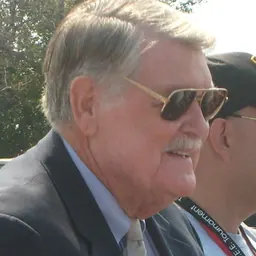
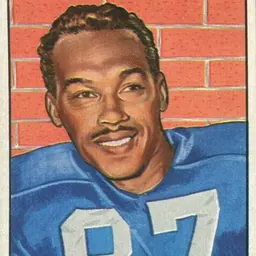
Named in this biography and alive at the same time





Related people
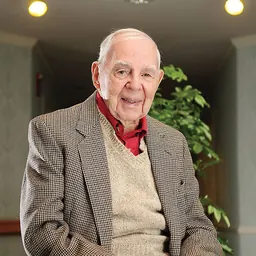
Same field, nearest in time




Contemporaries
People whose lives overlapped Bump Elliott's

Frequently asked questions
Who was Bump Elliott?
American football player (1925-2019)
When was Bump Elliott born?
Bump Elliott was born on 30 January 1925 in Detroit.
When did Bump Elliott die?
Bump Elliott died on 7 December 2019 in Iowa City, Iowa.
What was Bump Elliott's occupation?
Bump Elliott was a head coach and american football player.
What nationality was Bump Elliott?
Bump Elliott was American.
Sources & further reading
Cite this page
APA: Biography.guide. (2026). Bump Elliott. https://biography.guide/bump-elliott/
MLA: "Bump Elliott." Biography.guide, https://biography.guide/bump-elliott/.
Chicago: "Bump Elliott." Biography.guide. https://biography.guide/bump-elliott/.
Data last updated: 2026-09-20 · Spot an error? Report a correction.
Page generated 2026-09-27 05:19 UTC