
About Bryan Browning
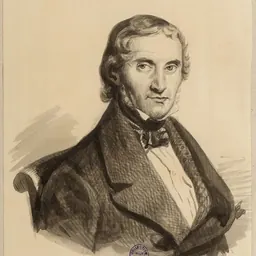
Lived 1773 – 1856 (aged 82–83). Bryan Browning was a British architect.
Bryan Browning (1773 – 1 October 1856) was an English architect working in Stamford.
Life
Bryan Browning was born at Thurlby in Lincolnshire in 1773. Nothing is known about his architectural training, but in 1817, he made designs for the rebuilding of Ringwood vicarage in Hampshire. Between about 1820 and 1830, he worked in partnership with George Woolcott in Doughty Street as Builders and Surveyors. In this period, Browning and Woolcott worked as contractors for a number of major building projects in London. This included the building of Lancaster House. They also built Strensham Court in Worcestershire, probably to designs by George Maddox. In 1821, Bryan Browning designed the Sessions House at Bourne, in Lincolnshire and in 1824, he was the architect for the House of Correction at Folkingham. By 1834, he had returned to Lincolnshire and was living at Northorpe near Bourne. He had moved to Stamford by 1838, where he was retained by the Marquess of Exeter and was being paid £180. In 1847, his son, Edward Browning, who had trained under George Maddox, joined the practice. The practice worked from Broad Street, Stamford. Bryan Browning died on 1 October 1856 and is buried in the cemetery there.
Works Public buildings
1821 Town Hall, Bourne, Lincolnshire 1824–5 House of Correction at Folkingham 1835 Stamford Workhouse 1842 Stamford Institution (Camera Obscura House)
School 1840–1 National School, Titchmarsh, Northamptonshire
Houses 1843 Barn Hill House, Stamford. Remodelled for Lord Exeter. 1846–48 Alterations to Apethorpe, Northants
Rectories and vicarages 1833 Alwalton, Northamptonshire 1835 Fletton, Hunts 1838 Greatford, Lincolnshire 1839 Deeping St James, Lincolnshire 1840 Stoke Dry Rectory, Rutland
Miscellaneous
1845. Grant's Iron Foundry, Wharf Road, Stamford. Built for Lord Exeter. Only the monumental arch now survives. This was built in 1845 as the entrance to Grant's iron foundry and was designed by Bryan Browning. The site became Blashfield's Terracotta Works in 1858. In 1937 the Stamford architect John Charles Traylen rebuilt the arch several feet to the south and parallel with the road.
Don’t just read it —
keep it.
Full-length biographies made to live with: read them, listen on the way to work, watch them tonight.
- E-book
- Audio
- Video
Instant download · yours to keep · every purchase keeps this site free
Important facts
People in Bryan Browning's life
Named in this biography and alive at the same time



Related people
Same field, nearest in time





Contemporaries
People whose lives overlapped Bryan Browning's


Frequently asked questions
Who was Bryan Browning?
(1773-1856)
When was Bryan Browning born?
Bryan Browning was born in 1773 in Thurlby, South Kesteven.
When did Bryan Browning die?
Bryan Browning died on 1 October 1856 in Stamford, Lincolnshire.
What was Bryan Browning's occupation?
Bryan Browning was an architect.
What nationality was Bryan Browning?
Bryan Browning was British.
Sources & further reading
Cite this page
APA: Biography.guide. (2026). Bryan Browning. https://biography.guide/bryan-browning/
MLA: "Bryan Browning." Biography.guide, https://biography.guide/bryan-browning/.
Chicago: "Bryan Browning." Biography.guide. https://biography.guide/bryan-browning/.
Data last updated: 2026-09-20 · Spot an error? Report a correction.
Page generated 2026-09-27 05:11 UTC