
About Bruno Bjelinski
Lived 1909 – 1992 (aged 82). Bruno Bjelinski was a Croatian composer.
Bruno Bjelinski (born Bruno Weiss; 1 November 1909 – 3 September 1992) was one of the most influential Croatian composers in the 20th century. He was extremely prolific as a composer. His unique musical style was built upon the music of Poulenc, Hindemith, Ravel and Milhaud. He developed his own and recognizable musical language with the elements of neoclassicism. Bjelinski composed six operas, three ballets, 15 symphonies, 2 cello concertos, a cantata, piano music, songs, chamber music, and concertos for piano, violin, viola, bassoon, flute, and piano duo. He also composed music for the Croatian football movie Plavi 9.
Biography
Bjelinski was born in Trieste into a Jewish family. His mother died very early in his life so his father brought him to Zagreb where he was nurtured by his grandmother. In his youth, he played violin and piano. Later he changed his surname from Weiss to Bjelinski (derivation of the word bijeli, meaning 'white' in Croatian). He doctored in law at the University of Zagreb and later studied music at the Zagreb Academy of Music under Blagoje Bersa and Franjo Dugan. Bjelinski started composing in the 1930s. By the beginning of World War II, he had finished his 2 sonatas for violin and piano, 3 piano suites and a toccata. He taught at the Academy from 1945 to 1977. In the late 1950s, he married young and perspective pianist Ljerka Pleslić (b. 1938), with whom he had two sons, Dean and Alan Bjelinski. The younger son, Alan, later became a composer and conductor. Bjelinski died on 3 September 1992 on the island Silba where he was buried.
Awards
For his music, he received several awards: Mlado pokoljenje award (1965), Vladimir Nazor Award (1976) for life achievement and Josip Slavenski award (1986). In the year of 1988 he became a member of Croatian Academy of Sciences and Arts.
Works (selection)
Concerto for flute and strings, 1955 Ljetna simfonija (Summer Symphony), Symphony No. 1, 1955 Serenade for trumpet, piano, strings and percussion, 1957 Pčelica Maja (Maya the Bee), fairy tale opera after Waldemar Bonsels, 1963 Sinfonia jubilans, Symphony No. 4, 1965 Peter Pan, ballet for children, 1966 Sinfonietta concertante, for piano and orchestra, 1967 Musica Tonalis for oboe, bassoon and strings, 1968 Heraklo (Herkules) comic opera, 1971 Močvara (The Marsh), opera, 1972 Zvona (The Bells), opera, 1975 Orfej XX. stoljeca (Orpheus in the Twentieth Century), opera, 1981 Slavuj (The Nightingale), opera after Hans Christian Andersen, 1984 Concertino for horn and strings, 19?? Drei biblische Legenden for trombone and piano, 19??
Don’t just read it —
keep it.
Full-length biographies made to live with: read them, listen on the way to work, watch them tonight.
- E-book
- Audio
- Video
Instant download · yours to keep · every purchase keeps this site free
Important facts
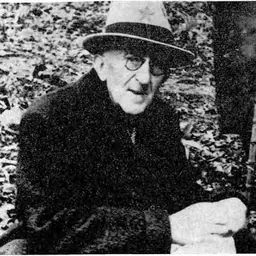
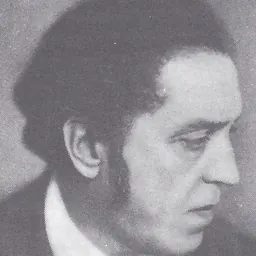
People in Bruno Bjelinski's life
Named in this biography and alive at the same time





Related people
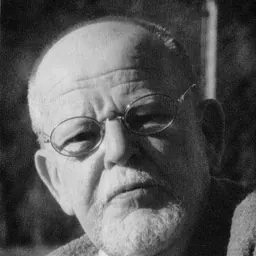
Same field, nearest in time




Contemporaries
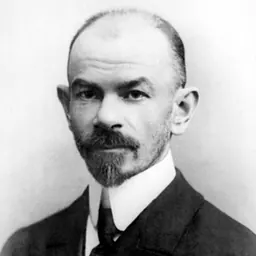
People whose lives overlapped Bruno Bjelinski's




Frequently asked questions
Who was Bruno Bjelinski?
Croatian composer (1909–1992)
When was Bruno Bjelinski born?
Bruno Bjelinski was born on 1 November 1909 in Trieste.
When did Bruno Bjelinski die?
Bruno Bjelinski died on 3 September 1992 in Zagreb.
What was Bruno Bjelinski's occupation?
Bruno Bjelinski was a composer.
What nationality was Bruno Bjelinski?
Bruno Bjelinski was Croatian.
Sources & further reading
Cite this page
APA: Biography.guide. (2026). Bruno Bjelinski. https://biography.guide/bruno-bjelinski/
MLA: "Bruno Bjelinski." Biography.guide, https://biography.guide/bruno-bjelinski/.
Chicago: "Bruno Bjelinski." Biography.guide. https://biography.guide/bruno-bjelinski/.
Data last updated: 2026-09-20 · Spot an error? Report a correction.
Page generated 2026-09-27 05:23 UTC