
About Bruno Adler
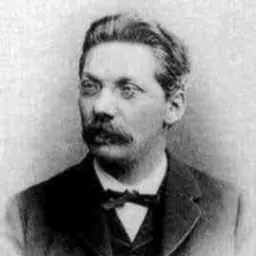
Lived 1888 – 1968 (aged 80). Bruno Adler was a German and Austrian art historian, writer, literary scholar and radio editor.
Bruno Maria Adler (14 October 1888 – 27 December 1968) was a German art historian and writer. He taught art history in Weimar and lectured about it at the Bauhaus. Adler fled Germany after the Nazis seized power and immigrated to England, where he worked first at a German-Jewish refugee school in Kent, then as a writer with the German Service of BBC Radio.
Early life and education Adler was born to Jewish parents in Carlsbad, Bohemia. His mother was Therese Adler (née Hirsch) and his father was Moritz Adler, editor and critic with the social democratic newspaper, Volkswille and an elected representative. Adler attended gymnasium in Carlsbad and Prague.
From 1910 to 1916, he studied art history, the history of literature, and philosophy at the University of Vienna, the University of Erlangen, and the Ludwig-Maximilians-Universität München, acquiring his doctorate in 1917 with a dissertation on the origin and beginning of woodcuts. From 1919 to 1924, Adler lectured on art history at the Bauhaus, a German-Jewish school founded by Anna Essinger with help from British Quakers. Originally located in Herrlingen, Germany, it was relocated to Kent, England, because of Nazi persecution, where it became a haven for refugees, including both children from the Kindertransports and adults, who joined the staff. Adler's nephew, Gerard Hoffnung, was a pupil at Bunce Court.
Adler created the satirical "", a program broadcast from summer 1940 to January 1944. The lead role, Frau Gertrud Wernicke, was voiced by the German actress and cabaret artist Annemarie Hase, also in exile. and she launched subversive tirades against the Nazis, turning them into a laughingstock. Frau Wernicke became one of the most popular programs of the BBC's German Service.
Adler wrote the satirical series "Kurt und Willi" with the Scottish poet Norman Cameron. It featured two characters, a teacher named Kurt Krüger and Willi Schimanski, an official in the German Ministry of Propaganda. So skilled was the character Willi as a propagandist that he was reputedly much admired within the actual Nazi Ministry.
Adler later edited the monthly German-language magazine Neue Auslese aus dem Schrifttum der Gegenwart, published by the US Information Services Division, Central Office of Information in London after the war.
Personal and legacy Adler's first wife was Margit, née Téry (1892–1977), a painter, graphic designer and student of Johannes Itten. They were married in 1918 and had one son, Florian (1921–1998), an architect and editor. Adler married his second wife, Ilse, née Katz (1890–1974), in 1928.
Adler's personal papers are archived at the German Literature Archive (Deutsches Literaturarchiv) in Marbach am Neckar. Included in the papers is correspondence with Willi Baumeister, Theodor Heuss, Walter Gropius, Itten, Hermann Kasack, Alfred Kubin, Georg Muche and Max Stefl.
In 1958, Adler, again writing as Roedl, reissued his 1936 biography of Stifter and dedicated it to his wife, Ilse Katz. Roedl was also the author of the Adalbert Stifter, monograph, which Adler dedicated to Erich Heller.
Publications (selected) as Bruno Adler Translation of Gustave Flaubert, Die Sage von St. Julian, dem Gastfreien, (Original title: La légende de Saint Julien l'hospitalier) M. Biewald, Weimar(1923) Matthias Claudius. Werke, Utopia-Verlag, Weimar (1924) Das Weimarer Bauhaus, Bauhaus Archive, Darmstadt (1965) (Editor) Utopia: Dokumente der Wirklichkeit, Martin Biewald, Weimar (1921); Kraus reprint, Munich (1980)
as Urban Roedl Matthias Claudius: sein Weg und seine Welt, Wolff, Berlin (1934) Kampf um Polna (novel), Kacha, Prague (1934), reprinted Polná (1999) Adalbert Stifter in Selbstzeugnissen und Bilddokumenten, Rowohlt, Reinbek bei Hamburg (1965) Jodel-Franz, (with Billy Dongen). Munich: Ed. Insel-Ton, (1955) Adalbert Stifter: Geschichte seines Lebens, Francke, Bern (1958) Frau Wernicke: Kommentare einer "Volksjenossin, Uwe Naumann (Ed.), persona verlag, Mannheim (1990)
Don’t just read it —
keep it.
Full-length biographies made to live with: read them, listen on the way to work, watch them tonight.
- E-book
- Audio
- Video
Instant download · yours to keep · every purchase keeps this site free
Important facts
People in Bruno Adler's life
Named in this biography and alive at the same time
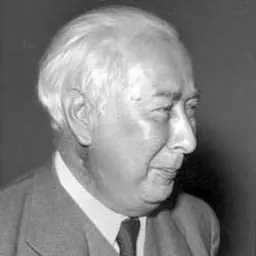
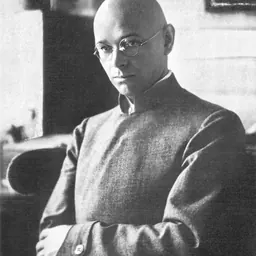

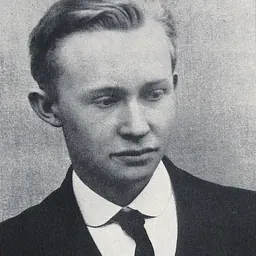


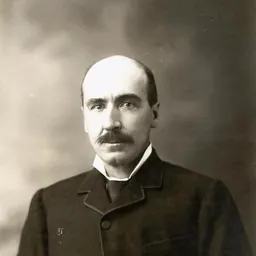

Related people
Same field, nearest in time



Contemporaries
People whose lives overlapped Bruno Adler's



Frequently asked questions
Who was Bruno Adler?
German art historian, writer, editor (1888-1968)
When was Bruno Adler born?
Bruno Adler was born on 14 October 1888 in Karlovy Vary.
When did Bruno Adler die?
Bruno Adler died on 27 December 1968 in London.
What was Bruno Adler's occupation?
Bruno Adler was an art historian, writer, literary scholar and radio editor.
What nationality was Bruno Adler?
Bruno Adler was German and Austrian.
Sources & further reading
Cite this page
APA: Biography.guide. (2026). Bruno Adler. https://biography.guide/bruno-adler/
MLA: "Bruno Adler." Biography.guide, https://biography.guide/bruno-adler/.
Chicago: "Bruno Adler." Biography.guide. https://biography.guide/bruno-adler/.
Data last updated: 2026-09-20 · Spot an error? Report a correction.
Page generated 2026-09-27 05:17 UTC