
About Bruce Mazlish
Lived 1923 – 2016 (aged 93). Bruce Mazlish was an American historian, university teacher and historian of ideas.
Bruce Mazlish (September 15, 1923 – November 27, 2016) was an American historian who was a professor in the Department of History at the Massachusetts Institute of Technology. His work focused on historiography and philosophy of history, history of science and technology, artificial intelligence, history of the social sciences, the two cultures and bridging the humanities and sciences (natural and social), revolution, psychohistory, history of globalization and the history of global citizenship. He worked to build the latter two fields of inquiry into a public intellectual movement, through initiatives such as the New Global History conferences.
Early life and education Bruce Mazlish was born in Brooklyn, New York, in 1923. His father, Louis Mazlish, had immigrated as a teenager from what was then Russia. A largely self-taught engineer and entrepreneur, Louis Mazlish started a laundry service for which he developed much of the equipment. He married Lee Reuben in 1919, and had three children, of whom Bruce was the middle, with an older brother Robert and a younger sister, Elaine.
Bruce Mazlish attended local public primary schools in Brooklyn and then elected to go to Boys High School, which drew its students on a city-wide basis. Upon graduation he entered Columbia University in 1940.
Having enlisted in the Officer's Reserve Corps, Mazlish was called up in 1943, and underwent basic training in the US infantry. Subsequently he served in the Office of Strategic Services, assigned to the East Asian arena, in Morale Operations. When the war ended, Columbia granted him a catch-up BA dated 1944.
Mazlish worked as a journalist at The Washington Daily News (now defunct) for half of a year, spent a year with his wife in Mexico working on a novel, and then worked at a third-rate prep school, teaching English (for which he was qualified) and History (which he learned by reading one chapter ahead of his students). Teaching the latter gave him an original view of the discipline, and the G.I. Bill drove educational expansion and demand for teachers in the post-WWII years.
In this way, Mazlish stumbled onto the path of the academic world, teaching history for two years at the University of Maine, Brunswick campus, and then completing advanced degrees at Columbia University in literature (MA thesis: “Defoe: Criminologist,” 1947) and then a Ph.D in Modern European History, where he worked mainly under Professors Shepherd Clough and Jacques Barzun (thesis on “Burke, Bonald and De Maistre: A Study in Conservative Thought”, 1955)."
Mazlish was an editor of, and contributor to, several collected volumes, and the author of over two dozen books (with translations into six different languages), as well as several dozen more articles and reviews in over two dozen peer-reviewed journals (a couple of which he founded) in addition to various periodicals.
Notable among his publications are: The Western Intellectual Tradition (1960; co-authored with Jacob Bronowski, this became a classic used in university courses and translated into many languages), Psychoanalysis and History (1963 edited volume), The Riddle of History: The Great Speculators from Vico to Freud (1966), The Revolutionary Ascetic (1976), A New Science: The Breakdown of Connections and the Birth of Sociology (1989), The Leader, the Led, and the Psyche (1990), Conceptualizing Global History (1991, co-edited with Ralph Buultjens), The Fourth Discontinuity: The Co-Evolution of Humans and Machines (1993), The Uncertain Sciences (1998), The Global History Reader (2005, co-edited with Akira Iriye, based on a course co-taught at Harvard in 2004), The New Global History (2006), and The Idea of Humanity in a Global Era (2009). He also wrote psychohistorical biographies on Richard Nixon (written at the time of the Watergate hearings, and receiving wide popular attention and acclaim), Henry Kissinger, and James and John Stuart Mill.
His articles appeared in peer-reviewed journals such as History and Theory, American Historical Review, Historically Speaking, and New Global Studies, as well as periodicals for a more general audience, including Book Review Digest, Center Magazine, Encounter, The Nation, The New Republic, New York Magazine, and The Wilson Quarterly. Reviews of his books appeared in a wide range of publications, including The Christian Science Monitor, Fortune Magazine, The New York Review of Books, and The New York Times.
In 1960, he was a founding associate editor of History and Theory, helping to edit it for ten years. In 1969 he was instrumental in the establishment of the Journal of Interdisciplinary History, helping to secure its financial and institutional footing, and serving on its Board of Advisors from its founding until his death. and since 2007 has published the New Global Studies Journal (a peer-reviewed electronic journal). Mazlish was one of the editors, along with Nayan Chanda (Yale), Akira Iriye (Emeritus, Harvard), Saskia Sassen (Columbia), and Kenneth Weisbrode (Managing Editor).
Mazlish was also one of the founding members of the Wellfleet Psychohistory Group.
In 2004, the journal Historically Speaking, on the occasion of an interview with Mazlish, conducted by its editor, Donald Yerxa, described him as "identified with several seemingly disparate intellectual pursuits", including psychohistory, the history of the social sciences, and the new field of "global history", which he was then helping to shape.
Awards and honors
Mazlish was elected a fellow of the American Academy of Arts and Sciences in 1967. The academy funded a project examining the feasibility of psychohistory; Mazlish was a primary investigator, along with Erik Erikson, Philip Rieff, Robert Lifton, and others.
In 1972-73 Mazlish was a recipient of a Social Science Research Council Faculty Fellowship and made a visiting member of the Institute for Advanced Study.
From 1974 to 1979, Mazlish served as head of MIT’s Department of Humanities (Course XXI). At the time, there were 11 “sections” representing their disciplines (this amounted to about 140 faculty), an unwieldy administrative structure. When he stepped down, he recommended that each section became an autonomous department; this occurred a few years later.
Mazlish received the Toynbee Prize for 1986-87. Other recipients include George F. Kennan, Ralf Dahrendorf, Arthur M. Schlesinger, Jr., and Albert O. Hirschman. He also served on the board of trustees (1992-2007), and as president (1997-2006), of the Toynbee Prize Foundation,
Mazlish served on the Scholars Council for the Kluge Prize of the Library of Congress, 2000-2003, and on the governing board of the Rockefeller Archive Center, 1999-2005.
Invited lectures included the Remsen Bird Honorary Lecture at Occidental College, the Presidential Lecture at Brown University, along with innumerable others in the United States and abroad, including in Argentina, India, Great Britain, and Russia."
Mazlish's books received several honors, including the Hudson Book Club Selection, Book Find Club Selection,
Personal life
Mazlish was married to Neva Goodwin, daughter of David Rockefeller, an economist and co-director of the Global Development And Environment Institute at Tufts University, with whom he published and edited several works. Previously, he was married to Constance Shaw (fellow OSS officer in WWII), and to Anne Austin. He had two children from his first marriage, Cordelia and Peter Shaw, two from his second, Anthony and Jared Mazlish, and two stepchildren, David and Miranda Kaiser. He died on November 27, 2016, in Cambridge, Massachusetts, and was eulogized in The New York Times, by several at the Toynbee Prize Foundation, by MIT News, and at an MIT Memorial service.
Don’t just read it —
keep it.
Full-length biographies made to live with: read them, listen on the way to work, watch them tonight.
- E-book
- Audio
- Video
Instant download · yours to keep · every purchase keeps this site free
Important facts
Family & relationships
People in Bruce Mazlish's life
Named in this biography and alive at the same time


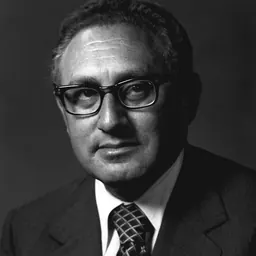

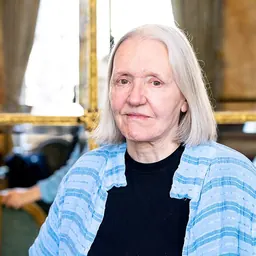
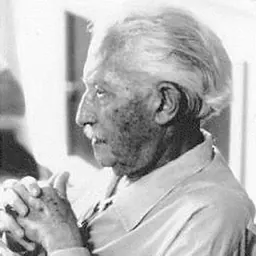

Related people
Same field, nearest in time


Contemporaries
People whose lives overlapped Bruce Mazlish's




Frequently asked questions
Who was Bruce Mazlish?
History professor at MIT
When was Bruce Mazlish born?
Bruce Mazlish was born on 15 September 1923 in Brooklyn.
When did Bruce Mazlish die?
Bruce Mazlish died on 27 November 2016 in Cambridge.
What was Bruce Mazlish's occupation?
Bruce Mazlish was a historian, university teacher and historian of ideas.
What nationality was Bruce Mazlish?
Bruce Mazlish was American.
Sources & further reading
Cite this page
APA: Biography.guide. (2026). Bruce Mazlish. https://biography.guide/bruce-mazlish/
MLA: "Bruce Mazlish." Biography.guide, https://biography.guide/bruce-mazlish/.
Chicago: "Bruce Mazlish." Biography.guide. https://biography.guide/bruce-mazlish/.
Data last updated: 2026-09-20 · Spot an error? Report a correction.
Page generated 2026-09-27 05:15 UTC