
About Bruce Litchfield
Lived 1908 – 1995 (aged 86). Bruce Litchfield was an Australian architect.
Bruce Albert John Litchfield (20 December 1908 – 10 October 1995) was an architect in Darwin, Northern Territory, Australia. He was integral to the reestablishment of Darwin after it was bombed by the Japanese in 1942. He later designed and built many significant early buildings in Katherine.
Early life
Litchfield was born on 20 December 1908 at Gallaghehs Estate, near Cessnock, New South Wales. He was the youngest child of Albert George and Clara Ellen (Nee Eyre). Had four siblings, Clarice Harriet, Aldyth Doris Myee, Albert and Harold Arthur Leslie, who became a navigator for Charles Kingsford Smith's 1928 Trans-Tasman Flight. In 1919 the family moved to Newcastle, New South Wales. Litchfield attended Waratah Public School. After leaving school at 16, Litchfield began work at architects F.G. & A.C. Castleden, while undertaking a Diploma in Architecture at Newcastle Technical College. After graduation in 1938 he went on to work with Pitt & Merryweather.
Life in the Northern Territory
Litchfield was appointed Commonwealth Architect with the Department of the Interior, Works and Services Branch in Darwin in May 1939. He worked alongside Northern Territory architect Beni Burnett, who was best known for his innovative, climate appropriate designs.
On 19 February 1942, Darwin was bombed by the Japanese. Litchfield was working at the drawing office when the bombs exploded. He was one of only 13 civilians with professional qualifications tasked with reestablishing Darwin. At one stage he was the only architect working on the reconstruction program. He supervised the repair of airstrips and established temporary building constructions. He became a well-known figure in Darwin social life.
Litchfield was posted to Katherine in 1944 as District Officer covering the region from Borroloola to Kalkarindji and south as far as Daly Waters. Katherine was being developed as a provisioning centre by the Australian Army. Litchfield was required to move away from his profession often to accommodate the necessary constructions of kilns, baking ovens, laundries and other essential equipment to service the growing defence population. He also supervised the construction of the Manbulloo Abattoirs, now a World War II heritage site. He also designed and supervised the construction of houses and buildings suited to Katherine's climate, including the Katherine Museum. He retired on his 60th birthday in 1968. He continued to work as a sole trader.
He married his second wife Dorothy Janet Denbow in the 1980s.
Litchfield died on 10 October 1995 in Killara in Sydney, aged 86 years. He was buried at the Northern Suburbs Memorial Gardens alongside his wife, Dorothy.
Don’t just read it —
keep it.
Full-length biographies made to live with: read them, listen on the way to work, watch them tonight.
- E-book
- Audio
- Video
Instant download · yours to keep · every purchase keeps this site free
Important facts
People in Bruce Litchfield's life
Named in this biography and alive at the same time

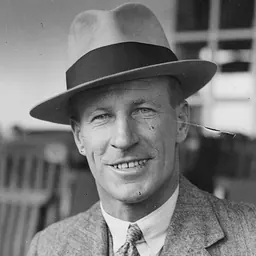



Related people
Same field, nearest in time
Contemporaries
People whose lives overlapped Bruce Litchfield's


Frequently asked questions
Who was Bruce Litchfield?
Australian architect
When was Bruce Litchfield born?
Bruce Litchfield was born on 20 December 1908.
When did Bruce Litchfield die?
Bruce Litchfield died on 10 October 1995.
What was Bruce Litchfield's occupation?
Bruce Litchfield was an architect.
What nationality was Bruce Litchfield?
Bruce Litchfield was Australian.
Sources & further reading
Cite this page
APA: Biography.guide. (2026). Bruce Litchfield. https://biography.guide/bruce-litchfield/
MLA: "Bruce Litchfield." Biography.guide, https://biography.guide/bruce-litchfield/.
Chicago: "Bruce Litchfield." Biography.guide. https://biography.guide/bruce-litchfield/.
Data last updated: 2026-09-20 · Spot an error? Report a correction.
Page generated 2026-09-27 05:31 UTC