
About Bruce Kison
Lived 1950 – 2018 (aged 68). Bruce Kison was an American baseball player.
Bruce Eugene Kison (February 18, 1950 – June 2, 2018) was an American professional baseball pitcher, who played in Major League Baseball (MLB) for the Pittsburgh Pirates (1971–79), California Angels (1980–84) and Boston Red Sox. Known as The Whip because of his sidearm delivery and fearless approach on the mound, he was part of two World Series championship teams with the Pirates, both over the favored Baltimore Orioles. Kison is perhaps best remembered for his performance as a rookie in the crucial Game 4 of the 1971 World Series, in which he pitched scoreless innings in emergency relief. His father, Fred, worked as a building supplier, while his mother, Bertha, focused on homemaking. Kison started playing baseball in elementary school and was a pitcher and outfielder by the age of 12. At 14, an injury in a PONY League game caused him to start throwing sidearm. At Pasco High School, Kison threw three no-hitters, before getting selected by the Pittsburgh Pirates in the 14th round of the 1968 Major League Baseball draft. "Chills ran down my back," he said after the game. "If you don’t go out to the mound scared, you better get out of the game.” Earl Weaver, manager of the Orioles, said of Kison's performance, "Kison turned the Series around."
After the 1971 season, Kison threw 92 innings for San Juan in the Puerto Rican Winter League. This led to a "tired arm," which caused him to begin the 1972 season on the disabled list for the Pirates. In June, he replaced Bob Johnson in Pittsburgh's starting rotation. In 32 games (18 starts) for the Pirates, he had a 9–7 record and a 3.26 ERA. However, the Reds would win the series over the Pirates in five games. In 20 starts at Charleston, he had an 8–6 record and a 4.66 ERA. Kison was called back up in September and, in his first start back on September 1, threw eight shutout innings in a no-decision, 1–0 Pirate victory over the Chicago Cubs. He would make seven starts for the Pirates to finish the year, going 3–0 with a 3.09 ERA. After going 0–2 in three starts with a 6.28 ERA, though, he went back to the bullpen in favor of Larry Demery. He rejoined the rotation July 14, though, and stayed in it for most of the rest of the year.
In 1975, Kison was the third starter for the Pirates. Through July 17, he had a 9–4 record and a 3.23 ERA. After that, he lost seven starts in a row before getting moved to the bullpen at the end of August. While in the bullpen, he snapped his losing streak on August 31 in a 9–6 victory over the Houston Astros. Used as a starter again in September, he won two more games, finishing the year with a 12–11 record and a 3.23 ERA in 33 games (29 starts). After posting an ERA close to 6.00 in his first five starts, he changed his position on the mound. "I used to pitch from the third-base side of the rubber. My fastball was tailing away from left-handed hitters. The good ones were taking the pitch because it wasn’t a strike.” In 1976, Kison posted the best numbers of his career. He had the most wins (14, with 9 losses) and his lowest ERA (3.08).
Once again, Kison was the Pirates' number two starter in 1977, this time behind Jerry Reuss. On July 8, Kison hit Mike Schmidt with a pitch during a game. Schmidt charged the mound, started a fight, and broke a finger, while Kison escaped without injury. He was bothered by a hangnail that year and tried numerous remedies to alleviate it, even resorting to fan mail suggestions such as packing it in salt and ice—"It gave me frostbite," was how he described the effectiveness of that remedy. He finished the season with a 6–6 record and a 3.19 ERA in 28 games (11 starts). Moving to the bullpen, he had an 0.84 ERA in six games. Then, on June 3, Don Robinson had trouble warming up, and Kison had to make a spot start against the Padres; the start would be one of the best of his career. After the game, Kison complained publicly about Charley Feeney and Dan Donovan's decision to give Evans a double; the incident led to the resignation of both Feeney and Donovan, and a new policy by Pittsburgh newspapers that their sportswriters would not serve as official scorers. From July 6 through the end of the year, he had a 9–3 record and a 2.93 ERA, He was the Pirates' choice for Game 1 of the World Series, which was postponed for a day because of snow at Memorial Stadium. Kison struggled in the game, giving up five runs in less than an inning in a 5–4 loss to the Orioles, his only loss in his postseason career. Developing forearm trouble during the game (perhaps because of the cold weather), Kison did not pitch again in the series, his rotation spot for Game 5 taken by Jim Rooker.
Kison opened 1980 as the number two starter in the Angels' rotation (behind Dave Frost). He had a second no-hit bid broken up in the ninth on April 23. With his team leading the Minnesota Twins 17–0 at Metropolitan Stadium, Kison had the no-hit bid broken up by a Ken Landreaux double with one out; the hit was the only one Kison would allow. A nerve problem in his pitching elbow limited him to one game after June 11, and he finished the year 3–6 with a 4.91 ERA in 13 games (all starts). The elbow injury required surgery; Kison was so embarrassed at being unable to fully fulfill his contract, he went to Bavasi and tried to give the money back.
Initially, Kison complained of paralysis in his hand and a lack of feeling in three of his fingers after undergoing surgery on his ulnar nerve. Though the injury jeopardized his career, he managed to return to the Angels' bullpen in August 1981. In September, he was used for four starts. Used as a reliever for much of the rest of the season, he did not rejoin the rotation until September 14, but when he did, it was similar to the time he rejoined the Pirates' rotation in 1979. He finished the season 10–5 with a 3.17 ERA in 33 games (16 starts) and made the playoffs for the sixth time as the Angels won the American League West. Tabbed to start in Game 2 of the ALCS against the Milwaukee Brewers, Kison allowed two runs over nine innings in a 4–2 Angel victory. He also started Game 5, giving up two runs (one earned) in five innings and leaving with the Angels ahead, but the Brewers came back and won 4–3 to win the Series in five games.
In 1983, Kison was the Opening Day starter for the Angels, the first time in his 13 seasons he got a chance to start his team's first game of the year. His season started strong, as he won six of his first seven decisions. In 26 games (17 starts), he had an 11–5 record and a 4.05 ERA. In August, he rejoined the team's rotation after Geoff Zahn had surgery on bone chips in his knee. In 20 games (seven starts), he had a 4–5 record and a 5.37 ERA, the highest of his career. After the season, he became a free agent. He returned to the rotation in May, then was moved to the bullpen at the end of June after relinquishing six runs in three starts in a row. In 22 games (9 starts), he had a 5–3 record and a 4.11 ERA. and the Baltimore Orioles' pitching coach (1999). He was later a scout for the Orioles for more than ten years, retiring after the 2017 season.
Pitching style Kison threw a fastball, a hard slider, and offspeed pitches, though he was at his best when he could rely on the fastball and slider. However, after he battled injuries from 1971 through 1973, he changed to a three-quarter delivery, which gave him better control and relieved pressure on his shoulder.
Personal life Kison married the former Anna Marie Orlando after Game 7 of the 1971 World Series, flying straight from the game to the wedding in a helicopter and a Learjet. Some of Kison's hobbies were hunting and fishing. In the early morning of June 2, 2018, Kison died at age 68 after a battle with cancer.
Don’t just read it —
keep it.
Full-length biographies made to live with: read them, listen on the way to work, watch them tonight.
- E-book
- Audio
- Video
Instant download · yours to keep · every purchase keeps this site free
Important facts
People in Bruce Kison's life
Named in this biography and alive at the same time



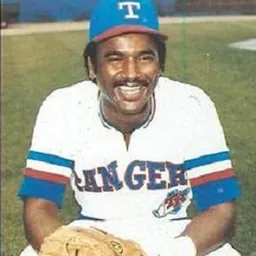
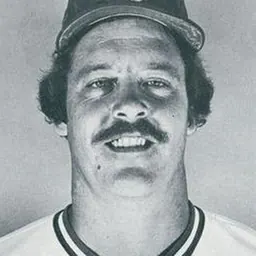

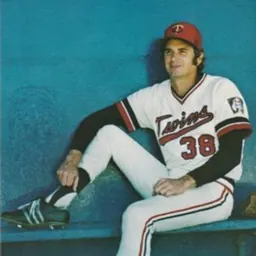

Related people
Same field, nearest in time

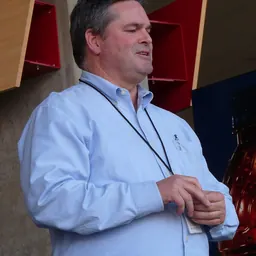
Contemporaries
People whose lives overlapped Bruce Kison's



Frequently asked questions
Who was Bruce Kison?
American baseball player and coach (1950-2018)
When was Bruce Kison born?
Bruce Kison was born on 18 February 1950 in Pasco.
When did Bruce Kison die?
Bruce Kison died on 2 June 2018 in Bradenton.
What was Bruce Kison's occupation?
Bruce Kison was a baseball player.
What nationality was Bruce Kison?
Bruce Kison was American.
Sources & further reading
Cite this page
APA: Biography.guide. (2026). Bruce Kison. https://biography.guide/bruce-kison/
MLA: "Bruce Kison." Biography.guide, https://biography.guide/bruce-kison/.
Chicago: "Bruce Kison." Biography.guide. https://biography.guide/bruce-kison/.
Data last updated: 2026-09-20 · Spot an error? Report a correction.
Page generated 2026-09-27 05:19 UTC