
Bruce Edwards Ivins
American microbiologist and vaccinologist
About Bruce Edwards Ivins
Lived 1946 – 2008 (aged 62). Bruce Edwards Ivins was an American circus performer, politician, terrorist and microbiologist.
Bruce Edwards Ivins (; April 22, 1946 – July 29, 2008) was an American microbiologist, vaccinologist, Ivins died on July 29, 2008, of an overdose of acetaminophen mixed with codeine in an apparent suicide after learning that criminal charges were likely to be filed against him by the FBI for an alleged criminal connection to the attacks.
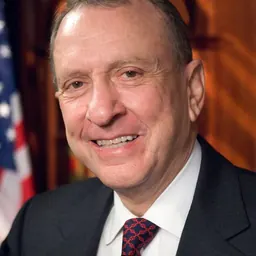
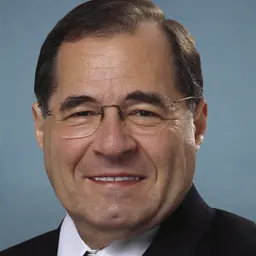
At a news conference at the United States Department of Justice (DOJ) on August 6, 2008 (eight days after Ivins' suicide), FBI and DOJ officials formally announced that the government had concluded that Ivins was likely solely responsible for the deaths of five people, and the injury of dozens of others, resulting from the September–October 2001 mailings to members of Congress and to members of the media of several anonymous letters that contained Bacillus anthracis, commonly referred to as anthrax. On February 19, 2010, the FBI released a 92-page summary of evidence against Ivins and announced that it had concluded its investigation. The FBI conclusions have been contested by many, including senior microbiologists, the widow of one of the victims, and several prominent American politicians. Senator Patrick Leahy (D-VT), who was among the targets in the attack, Senator Chuck Grassley (R-IA), Senator Arlen Specter (R-PA), Representative Rush Holt (D-NJ), and Representative Jerrold Nadler (D-NY) On May 15, 2011, the panel released its findings, which "conclude that the bureau overstated the strength of genetic analysis linking the mailed anthrax to a supply kept by Bruce E. Ivins." The NAS committee stated that its primary finding was that "it is not possible to reach a definitive conclusion about the origins of the B. anthracis in the mailings based on the available scientific evidence alone."
Early and family life
Bruce Ivins was born and spent his youth in Lebanon, Ohio, about northeast of Cincinnati.
According to C.W. Ivins, one of his older brothers, their mother Mary was violent and physically abusive to all three children. When she discovered she was pregnant with Bruce, a pregnancy that was unplanned and unwanted, she repeatedly tried to abort the child by throwing herself down a set of stairs. Ivins would eventually hear the story of his mother's attempt to abort him.
Avidly interested in science, Ivins was an active participant in extracurricular activities in high school, including the National Honor Society, science fairs, the current events club, and the scholarship team all four years. He ran on the track and cross-country teams, worked on the yearbook and school newspaper, and was in the school choir and junior and senior class plays. The couple had two children. His wife, children, and brothers were all still alive at the time of his death; his parents were deceased.
Ivins had published at least 44 scientific papers dating back to May 18, 1969. His earliest known published work pertained to the response of peritoneal macrophages, a type of white blood cell, to infection by Chlamydia psittaci, an infectious bacterium that can be transmitted from animals to humans. Ivins often cited the 2001 anthrax attacks in his papers to bolster the significance of his research in years subsequent to the attacks. In a 2006 paper published in the prestigious journal Proceedings of the National Academy of Sciences, he wrote with his co-authors Shortening the duration of antibiotic postexposure prophylaxis in a bioterrorism event involving B. anthracis by adding postexposure vaccination could greatly alleviate problems of noncompliance and side effects associated with prolonged antibiotic therapy. The value of adding vaccination to postexposure antibiotic prophylaxis should be considered in planning the public health response to bioterrorism events involving inhalational anthrax.
Alleged involvement in 2001 anthrax attacks and investigations
The 2001 anthrax attacks involved the mailing of several letters proclaiming, "Death to America ... Death to Israel ... Allah is Great", and contaminated with anthrax to the offices of U.S. Senators Tom Daschle and Patrick Leahy, as well as to the offices of ABC News, CBS News, NBC News, the New York Post, and the National Enquirer.
Initial investigative role Ivins became involved in the investigation of the anthrax attacks because he was regarded as a skilled microbiologist. Ivins also helped the FBI analyze the powdery material recovered from one of the anthrax-tainted envelopes sent to a U.S. senator's office in Washington, D.C. The incident called into question the ability of USAMRIID to keep its deadly agents within laboratory walls seven months after the anthrax mailings.
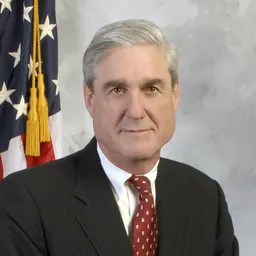
A coworker reportedly told Ivins that she was concerned she was exposed to anthrax spores when handling an anthrax-contaminated letter. Ivins tested the technician's desk area December 2001 and found growth that had the hallmarks of anthrax. He decontaminated her desk, computer, keypad and monitor, but did not notify his superiors. According to ABC News, some in the FBI considered Ivins a suspect as early as 2002. FBI director Robert Mueller changed leadership of the investigation in late 2006, and at that time Ivins became the main focus of the investigation. As a result of his changed behavior, he lost access to sensitive areas at his job. Ivins began being treated for depression and expressed some suicidal thoughts. When asked about the anthrax attacks and whether he could have had anything to do with them, the FBI said that Ivins admitted he suffered from loss of memory, stating that he would wake up dressed and wonder if he had gone out during the night. His responses allegedly included the following: "I can tell you I don't have it in my heart to kill anybody" "I do not have any recollection of ever have doing anything like that. As a matter of fact, I don't have no clue how to, how to make a bio-weapon and I don't want to know." "I can tell you, I am not a killer at heart" "If I found out I was involved in some way, and, and ..." "I don't think of myself as a vicious, a, a nasty evil person." "I don't like to hurt people, accidentally, in, in any way. And [several scientists at USAMRIID] wouldn't do that. And I, in my right mind wouldn't do it [laughs] ... But it's still, but I still feel responsibility because it [the anthrax] wasn't locked up at the time ..."
Late in July 2008, investigators informed Ivins of his impending prosecution for alleged involvement in the 2001 anthrax attacks that Ivins himself had previously assisted authorities in investigating. It was reported that the death penalty would have been sought in the case. Ivins maintained his security clearance until July 10; he had been publicly critical of the laboratory's security procedures for several years.
W. Russell Byrne, a colleague who worked in the bacteriology division of the Fort Detrick research facility, said FBI agents "hounded" Ivins by twice raiding his home and that Ivins had been hospitalized for depression earlier in the month. According to Byrne and local police, Ivins had been removed from his workplace out of fears that he might harm himself or others. "I think he was just psychologically exhausted by the whole process", Byrne said. However, Tom Ivins, who last spoke to his brother in 1985, said, "It makes sense ... he considered himself like a god."
The Los Angeles Times wrote that Ivins stood to profit from the attacks because he was a co-inventor on two patents for a genetically engineered anthrax vaccine. San Francisco-area biotechnology company VaxGen licensed the vaccine and won a federal contract valued at $877.5 million to provide the vaccine under the Project Bioshield Act.
On August 6, 2008, eight days after Ivins' self-inflicted death, U.S. Attorney Jeffrey A. Taylor officially made a statement that Ivins was the "sole culprit" in the 2001 anthrax attacks. Taylor stated that Ivins had submitted false anthrax evidence to throw investigators off his trail, was unable to adequately explain his late laboratory working hours around the time of the attacks, tried to frame his co-workers, had immunized himself against anthrax in early September 2001, was one of more than 100 people with access to the same strain of anthrax used in the killings, and had used similar language in an email to that in one of the anthrax mailings. Ivins was also reportedly upset that the anthrax vaccine that he had spent years helping develop was being pulled from the market.
Death On the morning of July 27, 2008, Ivins was again found unconscious at his home. He was taken to Frederick Memorial Hospital and died on July 29 from what was then called an overdose of Tylenol with codeine, an apparent suicide. No autopsy was ordered following his death because, according to an officer in the local police department, the state medical examiner "determined that an autopsy wouldn't be necessary" based on laboratory test results of blood taken from the body. A summary of the police report of his death, released in 2009, lists the cause of death as liver and kidney failure, citing his purchase of two bottles of Tylenol PM (containing diphenhydramine), contradicting earlier reports of Tylenol with codeine. His family declined to put him on the liver transplant list, and he was removed from life support. Ivins' attorney released a statement saying that Ivins had co-operated with the FBI's six-year investigation and was innocent.
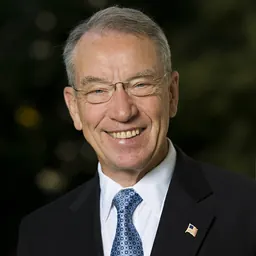
Anthrax investigation, post-death Criticism of the official findings Paul Kemp, Ivins' attorney, stated that the government's case against Ivins was "not convincing." Justice Department official Dean Boyd stated that Ivins mailed anthrax to NBC in retaliation for an investigation of Ivins' laboratory's work on anthrax conducted by Gary Matsumoto, a former NBC News journalist. At the time, however, Matsumoto was working for ABC, not NBC. Boyd responded by saying that the FBI now believes that Ivins used countermeasures to deceive the polygraph examiners. "There are clearly a lot of unanswered questions," said Senator Chuck Grassley, who called for a congressional investigation into the allegations that Ivins was the anthrax killer.
Those who argue for Ivins' innocence say that the anthrax used in the attacks was too sophisticated to be produced by a lone researcher without relevant training. Richard O. Spertzel, a microbiologist who led the United Nations' biological weapons inspections of Iraq, wrote that the anthrax used could not have come from the lab where Ivins worked. "In my opinion, there are maybe four or five people in the whole country who might be able to make this stuff, and I'm one of them," said Spertzel, who was also the former deputy commander of USAMRIID. "And even with a good lab and staff to help run it, it might take me a year to come up with a product as good."
While not outright rejecting the theory of Ivins' involvement, Senator Leahy said that "if he is the one who sent the letter, I do not believe in any way, shape or manner that he is the only person involved in this attack on Congress and the American people. I do not believe that at all."
Allegations of mental illness On August 6, 2008, the FBI released a collection of emails written by Ivins. In some, Ivins describes episodes of depression, anxiety, and paranoia for which he was medicated; these are referenced in the summary of the case against Ivins. A psychiatrist engaged by The New York Times to analyze the released documents found evidence of psychoses, but could not rule out the possibility that Ivins was feigning or exaggerating mental illness for purposes of attention or sympathy.
A United States government investigative panel, called the Expert Behavioral Analysis Panel, issued a report in March 2011 which detailed more of Ivins' mental health issues. According to the panel's report, the Army did not examine Ivins' background adequately before clearing him to work with anthrax, and such clearance should not have been given. The report endorses the government's implication of Ivins: circumstantial evidence from Ivins' psychiatric history supported the conclusion that Ivins was the anthrax killer.
Allegations by Ivins' counselor Social worker Jean C. Duley applied for a protective order, writing that Ivins had stalked and threatened to kill her and had a long history of homicidal threats.
Duley had been set to give testimony against Ivins on August 1, 2008. The charges forced her to quit her job, and attorney costs used up her savings, according to her fiancé. According to an article originally appearing in the Frederick News-Post on August 12, 2009, Duley was under house arrest when she recorded Ivins' allegedly threatening messages. The News-Post also made available a recording of the allegedly threatening calls. The newspaper characterized the messages as not being threatening but instead "the sad ramblings of a broken man who felt betrayed". Ivins was subsequently committed for psychiatric evaluation and his home was raided by federal agents who confiscated ammunition and a bulletproof vest. He was released from his committal on July 24, five days before his death.
Statement by Henry S. Heine Henry S. Heine, a microbiologist who was Ivins' fellow researcher at the USAMRIID, told a National Academy of Sciences (NAS) panel on April 22, 2010, that he considered it impossible that Ivins could have produced the anthrax used in the attacks without detection. argued that "ther than a desire to avoid finding out who the culprit was (or to avoid having the FBI's case against Ivins subjected to scrutiny), there's no rational reason to oppose an independent investigation into this matter." These were cited in the Department of Justice summary of the case against Ivins as suggesting that he may have harbored a grudge against pro-choice Catholic senators Daschle and Leahy, recipients of anthrax mailings. Ivins praised a rabbi for refusing a dialogue with a Muslim cleric. Ivins' attorney, Paul Kemp, described this fixation as dating back to Ivins' time as a college student at the University of Cincinnati, when he was rebuffed by a member of Kappa Kappa Gamma. But according to Dr. Rick Sams, a pharmacologist and former school friend, Ivins had described feelings of resentment toward women stemming from his high school years. Such behavior does not appear to have been anomalous for Ivins, who himself admitted to FBI investigators that he once drove through the night to Ithaca, New York, to leave gifts for a young woman who had left her job in his laboratory to attend Cornell University. However, no evidence was found to place Ivins in Princeton on the day the letters were mailed.
In popular culture The 2001 anthrax attack was featured in the TV series The Hot Zone. Ivins was played by actor Tony Goldwyn.
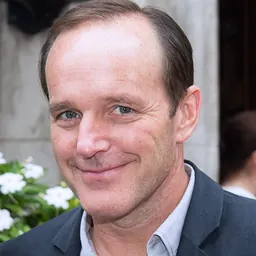
The 2022 Netflix documentary, The Anthrax Attacks: In the Shadow of 9/11, features Bruce Ivins prominently and shows him portrayed by actor Clark Gregg in re-enactments.
Patents November 13, 2001, Asporogenic B anthracis expression system May 14, 2002, Method of making a vaccine for anthrax
Don’t just read it —
keep it.
Full-length biographies made to live with: read them, listen on the way to work, watch them tonight.
- E-book
- Audio
- Video
Instant download · yours to keep · every purchase keeps this site free
Important facts
People in Bruce Edwards Ivins's life
Named in this biography and alive at the same time


Related people
Same field, nearest in time





Contemporaries
People whose lives overlapped Bruce Edwards Ivins's


Frequently asked questions
Who was Bruce Edwards Ivins?
American microbiologist and vaccinologist (1946–2008)
When was Bruce Edwards Ivins born?
Bruce Edwards Ivins was born on 22 April 1946 in Lebanon.
When did Bruce Edwards Ivins die?
Bruce Edwards Ivins died on 29 July 2008 in Frederick.
What was Bruce Edwards Ivins's occupation?
Bruce Edwards Ivins was a circus performer, politician, terrorist and microbiologist.
What nationality was Bruce Edwards Ivins?
Bruce Edwards Ivins was American.
Sources & further reading
· Wikipedia: Bruce Edwards Ivins
· DBpedia: Bruce Edwards Ivins
Cite this page
APA: Biography.guide. (2026). Bruce Edwards Ivins. https://biography.guide/bruce-edwards-ivins/
MLA: "Bruce Edwards Ivins." Biography.guide, https://biography.guide/bruce-edwards-ivins/.
Chicago: "Bruce Edwards Ivins." Biography.guide. https://biography.guide/bruce-edwards-ivins/.
Data last updated: 2026-09-20 · Spot an error? Report a correction.
Page generated 2026-09-27 05:21 UTC