
About Bruce Donald
Born 1958. Bruce Donald is an American computer scientist and researcher.
Bruce Randall Donald (born 1958) is an American computer scientist and computational biologist. He is the James B. Duke Professor of Computer Science and Biochemistry at Duke University. He has made numerous contributions to several fields in Computer Science such as robotics, Microelectromechanical Systems (MEMS), Geometric & physical algorithms and computational geometry, as well as in areas of Structural Molecular Biology & Biochemistry such as Protein design, Protein Structure Determination and Computational Chemistry.
Life and career Donald received a B.A. summa cum laude in Russian Language and Literature from Yale University in 1980. After working at the Laboratory for Computer Graphics and Spatial Analysis in the Graduate School of Design at Harvard University, he then attended MIT EECS, where he received his S.M. in EECS (1984) and Ph.D. in Computer Science (1987) under the supervision of professor Tomás Lozano-Pérez in the MIT AI Lab (Artificial Intelligence Laboratory). He joined the Cornell University Department of Computer Science as an assistant professor in 1987.
At Cornell, Donald received tenure in 1993, and served as associate professor of computer science at Cornell University until 1998. While on sabbatical at Stanford University (1994-1996), he worked at Paul Allen's research & development and technology incubator Interval Research Corporation (1995-1997), where he and Tom Ngo co-invented Embedded Constraint Graphics. After moving to Dartmouth, Donald was the Joan P. and Edward J. Foley Jr 1933 Professor of Computer Science, Dartmouth College until 2006 when he moved to Duke University. Currently Donald is the James B. Duke Professor of Computer Science, Chemistry, and Biochemistry, in the Trinity College of Arts and Sciences at Duke University and in the School of Medicine, Duke University Medical Center. Donald was appointed William and Sue Gross Professor from 2006 to 2012, and was named James B. Duke Professor in 2012.
He is a fellow of the Association for Computing Machinery (ACM) and a fellow of the IEEE. Previously, he was a Guggenheim Fellow (2001–2002) and received a National Science Foundation Presidential Young Investigator Award (1989–1994). In 2015, Donald was elected a fellow of the American Association for the Advancement of Science (AAAS), for contributions to computational molecular biology.
Work Donald's early research was in the field of robotic motion planning and distributed manipulation. Later he has made numerous contributions to MEMS and Micro-robotics, and designed MEMS micro-robots with dimensions of 60 μm by 250 μm by 10 μm.
Recently, he has conducted research in the areas of Structural Molecular Biology; chiefly, Protein Design and Protein Structure Determination from NMR data. He has developed numerous algorithms for protein design which have been successfully tested experimentally in the wet lab. The protein design algorithms attempt to incorporate additional molecular flexibility into the design process by using ensembles and continuously flexible rotamers and backbones. Donald has also developed algorithms for determining the structures of biomedically significant proteins. For example, his subgroup algorithm CRANS (Acta Crystallogr. D 2004; J. Biol. Chem. 2003), which identifies cross-rotation peaks consistent with non-crystallographic symmetry, was used in the structure determination of the enzyme dihydrofolate reductase-thymidylate synthase (DHFR-TS) from Cryptosporidium hominis, an important advancement in Cryptosporidium biology. He has designed many algorithms and computational protocols to extract structural information from NMR data, and used that information to compute structures of globular proteins and symmetric homo-oligomers. A distinct feature of his algorithms is that they use less data, and provide complexity-theoretic guarantees on time and space (See, e.g., B. R. Donald and J. Martin. "Automated NMR Assignment and Protein Structure Determination using Sparse Dipolar Coupling Constraints." Progress in NMR Spectroscopy 2009; 55(2):101-127). Donald is the author of Algorithms in Structural Molecular Biology, a textbook published by MIT Press (2011).
Students Donald has supervised many students and postdocs, many of whom are now professors in reputed universities such as MIT, Carnegie-Mellon University, University of Washington, Seattle, University of Massachusetts Amherst, Dartmouth College, Duke University, Middlebury College and University of Toronto, and researchers at organizations such as NIAID, NIST, IBM, Sandia National Laboratories.
Personal life
Donald is the son of historian David Herbert Donald and historian and editor Aida DiPace Donald.
Don’t just read it —
keep it.
Full-length biographies made to live with: read them, listen on the way to work, watch them tonight.
- E-book
- Audio
- Video
Instant download · yours to keep · every purchase keeps this site free
Important facts
People in Bruce Donald's life
Named in this biography and alive at the same time



Related people
Same field, nearest in time


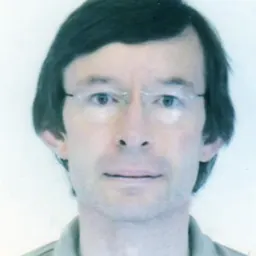
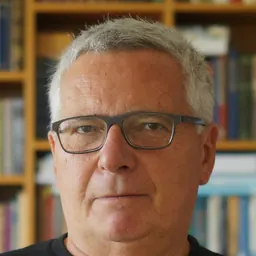
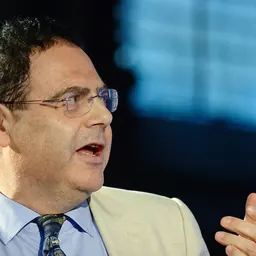

Contemporaries
People whose lives overlapped Bruce Donald's
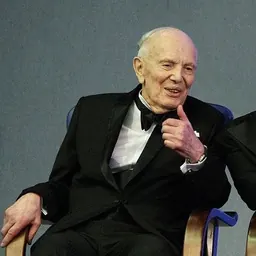


Frequently asked questions
Who is Bruce Donald?
American computer scientist
When was Bruce Donald born?
Bruce Donald was born in 1958.
What is Bruce Donald's occupation?
Bruce Donald is a computer scientist and researcher.
What nationality is Bruce Donald?
Bruce Donald is American.
Sources & further reading
Cite this page
APA: Biography.guide. (2026). Bruce Donald. https://biography.guide/bruce-donald/
MLA: "Bruce Donald." Biography.guide, https://biography.guide/bruce-donald/.
Chicago: "Bruce Donald." Biography.guide. https://biography.guide/bruce-donald/.
Data last updated: 2026-09-20 · Spot an error? Report a correction.
Page generated 2026-09-27 05:34 UTC