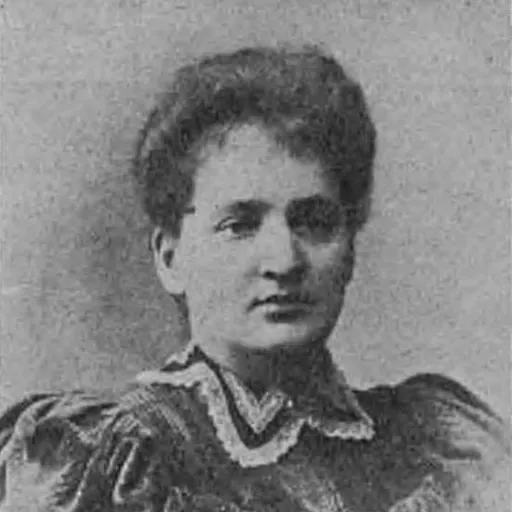
Bronia Dłuska
Polish physician, first director of the Radium-Institut in Warsaw
About Bronia Dłuska
Lived 1865 – 1939 (aged 74). Bronia Dłuska was a Polish gynecologist, oncologist and physician.
Bronisława Dłuska (; ; 28 March 1865
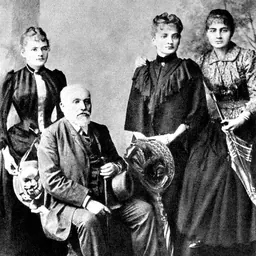
Her paternal grandfather, Józef Skłodowski, had been a respected teacher in Lublin, where he taught the young Bolesław Prus, who would become a leading figure in Polish literature. Her father, Władysław Skłodowski, taught mathematics and physics, and was also director of two Warsaw gymnasia for boys.
The father was eventually fired by his Russian supervisors for pro-Polish sentiments, and forced to take lower-paying posts; the family also lost money on a bad investment, and eventually chose to supplement their income by lodging boys in the house.
Bronisława and Kazimierz had a daughter, Helena, in 1892, then a son, Jakub, a few years later.
Return to Poland
She and Kazimierz returned to Poland in 1898 to set up a pulmonological sanitarium in the southern, Tatra Mountains resort town of Zakopane. Kazimierz was not permitted to travel to the Russian partition of Poland.
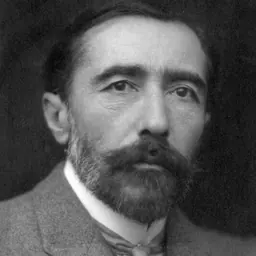
Beginning in early August 1914, one of Zakopane's notable World War I visitors was the Polish-born English-language novelist Joseph Conrad, who took refuge there with his family. The patriotic Bronisława Dłuska scolded him for using his great literary talent for purposes other than bettering the future of his native Poland, which Conrad had left at age 16.
After World War I, Poland regained its independence, and Kazimierz joined the Polish delegates at the 1919 Versailles Peace Conference.
Now free to return to a Warsaw no longer under Russian rule, the Dłuskis set up a tuberculosis preventorium in the Warsaw suburb of Anin.
Following the successful opening of the first Radium Institute in Paris in 1918, Maria, now known by her adopted French given name of Marie, began work setting up a second Radium Institute in Warsaw. Building began in 1925 with the laying of the foundation stone of the Warsaw Radium Institute, with Bronisława to be its director. She supervised the construction and recruitment, while Marie raised funds in the United States and elsewhere, and despite the death of Kazimierz in 1930, Bronisława continued to run and oversee the creation of the facility. On 29 May 1932, the Institute was officially opened, with Bronisława as the first director.
Death
On 15 April 1939, Bronisława died of natural causes, aged 74. She is interred in the family tomb with her parents, her sisters Zofia and Helena, and her brother Józef.
Don’t just read it —
keep it.
Full-length biographies made to live with: read them, listen on the way to work, watch them tonight.
- E-book
- Audio
- Video
Instant download · yours to keep · every purchase keeps this site free
Important facts
Family & relationships
People in Bronia Dłuska's life
Named in this biography and alive at the same time


Related people
Same field, nearest in time





Contemporaries
People whose lives overlapped Bronia Dłuska's

Frequently asked questions
Who was Bronia Dłuska?
Polish physician, first director of the Radium-Institut in Warsaw
When was Bronia Dłuska born?
Bronia Dłuska was born on 18 March 1865 in Warsaw.
When did Bronia Dłuska die?
Bronia Dłuska died on 15 April 1939 in Warsaw.
What was Bronia Dłuska's occupation?
Bronia Dłuska was a gynecologist, oncologist and physician.
What nationality was Bronia Dłuska?
Bronia Dłuska was Polish.
Sources & further reading
Cite this page
APA: Biography.guide. (2026). Bronia Dłuska. https://biography.guide/bronia-dluska/
MLA: "Bronia Dłuska." Biography.guide, https://biography.guide/bronia-dluska/.
Chicago: "Bronia Dłuska." Biography.guide. https://biography.guide/bronia-dluska/.
Data last updated: 2026-09-22 · Spot an error? Report a correction.
Portrait: Wikimedia Commons · author & licence
Page generated 2026-09-27 05:00 UTC