
Bright Sheng
Chinese-American composer, conductor, and pianist
About Bright Sheng
Born 1955. Bright Sheng is a Chinese and American composer, conductor, musicologist and pianist.
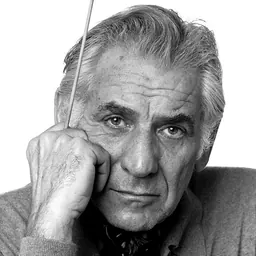
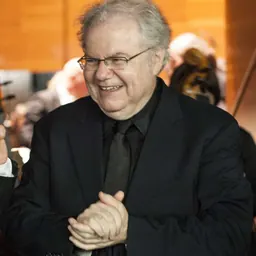
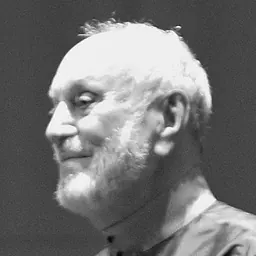
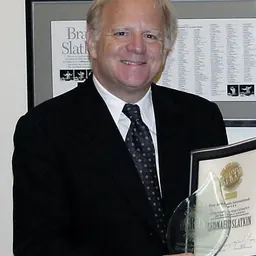
Bright Sheng (; born December 6, 1955) is a Chinese and American composer, pianist and conductor. Sheng has earned many honors for his music and compositions, including a MacArthur Fellowship in 2001; he also was a two-time Pulitzer Prize finalist. His music has been commissioned and performed by virtually every major American symphony orchestra, in addition to the Orchestre de Paris, Royal Concertgebouw Orchestra, Toronto Symphony Orchestra, BBC Symphony Orchestra, London Sinfonietta, St. Petersburg Philharmonic Orchestra, Russian National Orchestra, Finnish Radio Symphony Orchestra, Sydney Symphony Orchestra, National Symphony Orchestra of Taiwan, Shanghai Philharmonic Orchestra, Tokyo Philharmonic Orchestra, and the Seoul Philharmonic Orchestra among numerous others. His music has been performed by such musicians as the conductors Leonard Bernstein, Kurt Masur, Christoph Eschenbach, Charles Dutoit, Michael Tilson Thomas, Leonard Slatkin, Gerard Schwarz, David Robertson, David Zinman, Neeme Järvi, Robert Spano, Hugh Wolff; the cellists Yo-Yo Ma, Lynn Harrell, and Alisa Weilerstein; the pianists Emanuel Ax, Yefim Bronfman, and Peter Serkin; the violinists Gil Shaham and Cho-Liang Lin; and the percussionist Evelyn Glennie.
Born in Shanghai, he first studied the piano at the age of four with his mother. He graduated from the Shanghai Conservatory and went on to continue his education at Queens College and Columbia University. In 1995, he became a part of the faculty at the University of Michigan.
Most of Sheng's musical career has followed the path of mixing Western cultures and Asian cultures into his pieces, leading his music to be performed in both Asia and the United States, as well as around the world.
Early life and education Bright Sheng was born in Shanghai, China on December 6, 1955. His mother had been his first piano teacher, having started learning at the age of four.
Sheng was sent to Qinghai Province, China, and stayed there for seven years. He became a performer, playing the piano and percussion to not only perform, and in 2003 he was appointed the Leonard Bernstein Distinguished University Professor.
He was involved in the Silk Road Project, a music project that stretches across different nations and cultures. It was named after the silk trade because the Silk Road is the oldest trade route between ancient Rome and China. Sheng allegedly failed to give students any warning that the film contained blackface.
Musical style At the beginning of his musical career, Sheng started out by making simplistic pieces of Chinese-Western mixtures since he had been exposed early on to both traditional Chinese music and ‘mainstream’ Western music. As his career continued, he found ways to incorporate traditional Chinese methods of music with modern music from Western influences. For nearly his whole composing career, Sheng has represented the Chinese culture he came from with the Western culture he moved to. As a result, Sheng's following has expanded from Asia and the United States to a global one. a Kennedy Center Award (1995), and an ASCAP Concert Music Award (2002).
His orchestral composition H’un (‘Lacerations’), which premiered with the New York Chamber Symphony in 1988 and was a memorial to the Cultural Revolution in China, was awarded the first runner-up for the 1989 Pulitzer Prize. Two years later in 1991, his piece Four Movements for Piano Trio was also awarded first runner-up for the Pulitzer Prize.
Works
Operas The Song of Majnun (1992) The Silver River (1997) Madame Mao (2003) Dream of the Red Chamber (2016)
Instrumental
Vocal Three Chinese Poems (1982-1992) for piano Three Poems from the Sung Dynasty (1985) for soprano, orchestra Revised as Two Poems from the Sung Dynasty Three Chinese Love Songs (1988) for soprano, viola, piano Two Folk Songs from Qinghai (1989) for chorus, orchestra may I feel, said he 'Opera in 7 minutes''' (1996) for soprano, tenor, four-handed piano Phoenix'' (2004) for soprano, orchestra
Don’t just read it —
keep it.
Full-length biographies made to live with: read them, listen on the way to work, watch them tonight.
- E-book
- Audio
- Video
Instant download · yours to keep · every purchase keeps this site free
Important facts
People in Bright Sheng's life
Named in this biography and alive at the same time

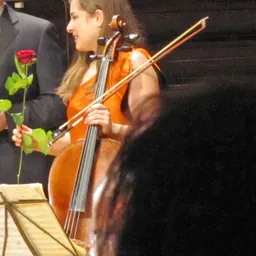
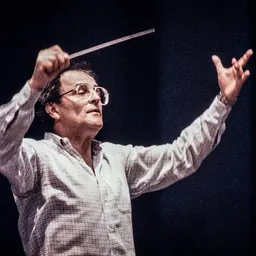
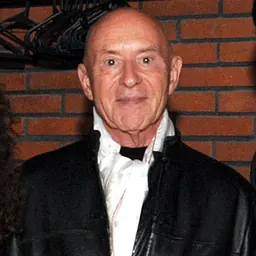
Related people
Same field, nearest in time

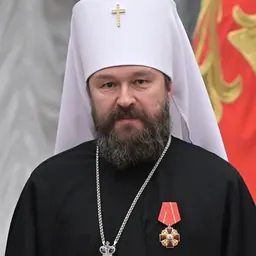
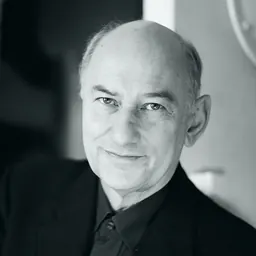
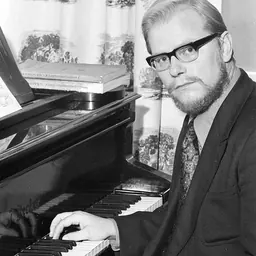

Contemporaries
People whose lives overlapped Bright Sheng's
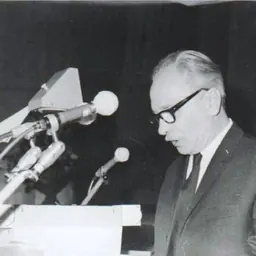
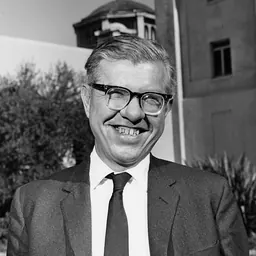

Frequently asked questions
Who is Bright Sheng?
Chinese-American composer, conductor, and pianist
When was Bright Sheng born?
Bright Sheng was born on 6 December 1955 in Shanghai.
What is Bright Sheng's occupation?
Bright Sheng is a composer, conductor, musicologist and pianist.
What nationality is Bright Sheng?
Bright Sheng is Chinese and American.
Sources & further reading
Cite this page
APA: Biography.guide. (2026). Bright Sheng. https://biography.guide/bright-sheng/
MLA: "Bright Sheng." Biography.guide, https://biography.guide/bright-sheng/.
Chicago: "Bright Sheng." Biography.guide. https://biography.guide/bright-sheng/.
Data last updated: 2026-09-20 · Spot an error? Report a correction.
Page generated 2026-09-27 05:32 UTC