
About Brian Sedgemore
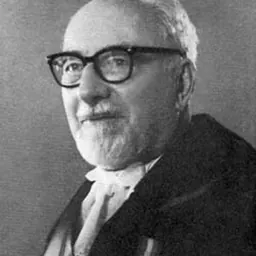
Lived 1937 – 2015 (aged 78). Brian Sedgemore was a British politician, non-fiction writer and barrister.
Brian Charles John Sedgemore (17 March 1937 – 29 April 2015) was a British politician who served as a Labour Member of Parliament (MP) from 1974 to 1979, and again from 1983 to 2005. He defected to the Liberal Democrats shortly after standing down from Parliament just before the 2005 general election.
Early life Brian Sedgemore was born in Exmouth, Devon, and with his two siblings was raised by his mother; his father, a stoker in the Royal Navy, died during active service in the Second World War.
He attended Newtown Primary School in Newtown, Exeter, and Hele's School, Exeter, a grammar school. He did RAF national service from 1956 to 1958. He read PPE at Corpus Christi College, Oxford, and graduated in 1962. While working as a Whitehall civil servant, he trained at night as a barrister specialising in Criminal Law at Middle Temple, London, being called to the bar in 1966. During the 1970s he and fellow barrister David Fingleton contributed pseudonymous articles on politics and the police and criminal justice system to the Private Eye column 'Justinian Forthemoney'. He wrote a number of books including The Secret Constitution and a novel, Power Failure.
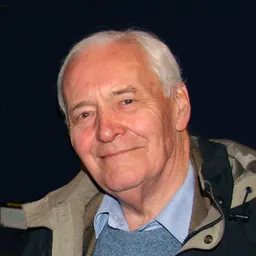
Parliamentary career Sedgemore was first elected to the House of Commons at the February 1974 general election for Luton West, but lost this seat in 1979. In 1976 he voted for Tony Benn, the Energy Secretary, in the Labour leadership election, and during 1978–79 served as Benn's Parliamentary Private Secretary, or PPS. Early in 1979 he was forced to resign over a leak of Treasury papers on the European Exchange Rate Mechanism to the Treasury Select Committee. Having lost his seat, he worked as a journalist for Granada Television.
Sedgemore returned to Parliament at the 1983 general election, as the MP for Hackney South and Shoreditch, and stood down at the 2005 general election. Sedgemore succeeded Ronald Brown, who had defected from Labour to the Social Democratic Party (SDP), as the member for Shoreditch.
Europe Initially, he was a member of the (now Socialist) Campaign Group, but he left the faction when he reversed his hostility to the (then) European Communities in the late 1980s. He was later one of only five Labour MPs to vote for the Third Reading of the Maastricht Treaty in 1993, defying his party Whip, which was to abstain.
Female Labour MPs On 6 February 1998, in a controversial speech at the Tate Gallery (now Tate Britain), he disparaged the 1997 intake of female Labour MPs as "Stepford Wives…who've had the chip inserted into their brain to keep them on message and who collectively put down women and children in the vote on lone parent benefits" — in the previous month benefits had been reduced for this group of (mainly) women. In the 2001–2005 parliament he was the fifth-most frequent rebel on the Labour benches in divisions on government motions, and the tenth-most frequent rebel on motions put forward by his own party.
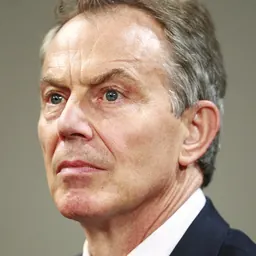
Defection On 25 April 2005, when he was no longer an MP during the run-up to the 2005 general election, he announced he would be defecting to the Liberal Democrats, citing the invasion of Iraq – of which he had been a long-term critic – university tuition fees and anti-terrorism laws as reasons for his defection and Blair's "scorn for liberal Britain". He made various comments about Tony Blair being a liar; Blair responded on a live BBC television broadcast, saying "He was not present at any meeting I had with George Bush and I don't remember having any conversation on the issue with Brian Sedgemore". Lib Dem leader Charles Kennedy called Sedgemore's defection "a pivotal moment" in the election campaign.
Personal life He was an Honorary Associate of the National Secular Society and a Distinguished Supporter of the British Humanist Association.
He married Audrey Reece, a fellow barrister, in 1964; they had a son. They divorced in 1985 and remarried in 2002.
Sedgemore died in 2015 after a fall in hospital while recovering from kidney surgery.
Don’t just read it —
keep it.
Full-length biographies made to live with: read them, listen on the way to work, watch them tonight.
- E-book
- Audio
- Video
Instant download · yours to keep · every purchase keeps this site free
Important facts
People in Brian Sedgemore's life
Named in this biography and alive at the same time





Related people
Same field, nearest in time





Contemporaries
People whose lives overlapped Brian Sedgemore's



Frequently asked questions
Who was Brian Sedgemore?
British politician (1937-2015)
When was Brian Sedgemore born?
Brian Sedgemore was born on 17 March 1937 in Exmouth.
When did Brian Sedgemore die?
Brian Sedgemore died on 5 May 2015 in North London.
What was Brian Sedgemore's occupation?
Brian Sedgemore was a politician, non-fiction writer and barrister.
What nationality was Brian Sedgemore?
Brian Sedgemore was British.
Sources & further reading
Cite this page
APA: Biography.guide. (2026). Brian Sedgemore. https://biography.guide/brian-sedgemore/
MLA: "Brian Sedgemore." Biography.guide, https://biography.guide/brian-sedgemore/.
Chicago: "Brian Sedgemore." Biography.guide. https://biography.guide/brian-sedgemore/.
Data last updated: 2026-09-20 · Spot an error? Report a correction.
Page generated 2026-09-27 05:27 UTC