
Brian Kernighan
Canadian computer scientist, co-inventor of the Unix operating system
About Brian Kernighan
Born 1942. Brian Kernighan is a Canadian and American computer scientist, engineer, programmer, writer and university teacher, known for AMPL, AWK and Kernighan–Lin algorithm.
Brian Wilson Kernighan (; born 30 January 1942)
Kernighan authored many Unix programs, including ditroff. He is coauthor of the AWK and AMPL programming languages. The "K" of K&R C and of AWK both stand for "Kernighan".
In collaboration with Shen Lin he devised well-known heuristics for two NP-complete optimization problems: graph partitioning and the travelling salesman problem. In a display of authorial equity, the former is usually called the Kernighan–Lin algorithm, while the latter is known as the Lin–Kernighan heuristic.
Kernighan has been a professor of computer science at Princeton University since 2000 and is the director of undergraduate studies in the department of computer science. In 2015, he co-authored the book The Go Programming Language.
Early life and education Brian Kernighan speaks at a tribute to Dennis Ritchie in 2012 at Bell Labs. Kernighan was born in Toronto. He attended the University of Toronto between 1960 and 1964, earning his bachelor's degree in engineering physics.
Career and research Kernighan has held a professorship in the department of computer science at Princeton since 2000. Each fall he teaches a course called "Computers in Our World", which introduces the fundamentals of computing to non-majors.
Kernighan was the software editor for Prentice Hall International. His "Software Tools" series spread the essence of "C/Unix thinking" with makeovers for BASIC, FORTRAN, and Pascal, and most notably his "Ratfor" (rational FORTRAN) was put in the public domain.
He has said that if stranded on an island with only one programming language it would have to be C.
Kernighan coined the term "Unix" and helped popularize Thompson's Unix philosophy. Kernighan is also known for coining the expression "What You See Is All You Get" (WYSIAYG), which is a sarcastic variant of the original "What You See Is What You Get" (WYSIWYG). Kernighan's term is used to indicate that WYSIWYG systems might throw away information in a document that could be useful in other contexts.
In 1972, Kernighan described memory management in strings using "hello" and "world", in the B programming language, which became the iconic example we know today. Kernighan's original 1978 implementation of was sold at The Algorithm Auction, the world's first auction of computer algorithms.
In 1996, Kernighan taught CS50 which is the Harvard University introductory course in computer science. Kernighan was an influence on David J. Malan who subsequently taught the course and scaled it up to run at multiple universities and in multiple digital formats.
Kernighan was elected a member of the National Academy of Engineering in 2002 for contributions to software and to programming languages. He was also elected a member of the American Academy of Arts and Sciences in 2019.
In 2022, Kernighan stated that he was actively working on improvements to the AWK programming language, which he took part in creating in 1977.
Books and reports The Elements of Programming Style, with P. J. Plauger Software Tools, a book and set of tools for Ratfor, co-created in part with P. J. Plauger Software Tools in Pascal, a book and set of tools for Pascal, with P. J. Plauger The AWK Programming Language, with Alfred V. Aho, and Peter J. Weinberger The C Programming Language, with C creator Dennis Ritchie, the first book on C The Practice of Programming, with Rob Pike The Unix Programming Environment, a tutorial book, with Rob Pike "Why Pascal is Not My Favorite Programming Language", a popular criticism of Niklaus Wirth's Pascal. Some parts of the criticism are obsolete due to ISO 7185 (Programming Languages - Pascal); the criticism was written before ISO 7185 was created. (AT&T Computing Science Technical Report #100) UNIX: A History and a Memoir, a historical account of the development of Unix from the perspective of his role at Bell Labs
Programs 1972: The first documented "Hello, world!" program, in Kernighan's "A Tutorial Introduction to the Language B" 1973: ditroff, or "device independent troff", which allowed troff to be used with any device 1974: The eqn typesetting language for troff, with Lorinda Cherry The Go Programming Language (2015) with Alan Donovan Understanding the Digital World: What You Need to Know about Computers, the Internet, Privacy, and Security (2017) Millions, Billions, Zillions: Defending Yourself in a World of Too Many Numbers (2018) UNIX: A History and a Memoir (2019)
Don’t just read it —
keep it.
Full-length biographies made to live with: read them, listen on the way to work, watch them tonight.
- E-book
- Audio
- Video
Instant download · yours to keep · every purchase keeps this site free
Important facts
People in Brian Kernighan's life
Named in this biography and alive at the same time



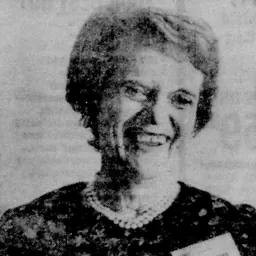
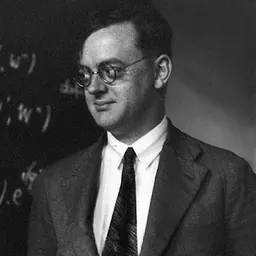
Related people
Same field, nearest in time
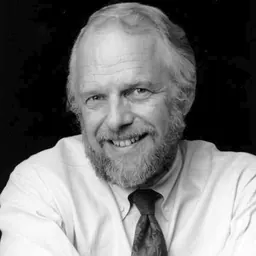




Contemporaries
People whose lives overlapped Brian Kernighan's


Frequently asked questions
Who is Brian Kernighan?
Canadian computer scientist, co-inventor of the Unix operating system
When was Brian Kernighan born?
Brian Kernighan was born in 1942 in Toronto.
What is Brian Kernighan's occupation?
Brian Kernighan is a computer scientist, engineer, programmer, writer and university teacher.
What is Brian Kernighan known for?
Brian Kernighan is known for AMPL, AWK, Kernighan–Lin algorithm, Lin–Kernighan heuristic, The C Programming Language and Unix.
What nationality is Brian Kernighan?
Brian Kernighan is Canadian and American.
Sources & further reading
Cite this page
APA: Biography.guide. (2026). Brian Kernighan. https://biography.guide/brian-kernighan/
MLA: "Brian Kernighan." Biography.guide, https://biography.guide/brian-kernighan/.
Chicago: "Brian Kernighan." Biography.guide. https://biography.guide/brian-kernighan/.
Data last updated: 2026-09-24 · Spot an error? Report a correction.
Page generated 2026-09-27 05:01 UTC