
About Brian Ferneyhough
Born 1943. Brian Ferneyhough is a British composer and pedagogue.
Brian John Peter Ferneyhough (; born 16 January 1943) is an English composer. Ferneyhough is typically considered the central figure of the New Complexity movement. Ferneyhough has taught composition at the Hochschule für Musik Freiburg and the University of California, San Diego; he teaches at Stanford University and is a regular lecturer in the summer courses at Darmstädter Ferienkurse. He has resided in California since 1987.
Life Ferneyhough was born in Coventry and received formal musical training at the Birmingham School of Music and the Royal Academy of Music from 1966 to 1967, where he studied with Lennox Berkeley. Ferneyhough was awarded the Mendelssohn Scholarship in 1968 and moved to mainland Europe to study with Ton de Leeuw in Amsterdam, and later with Klaus Huber in Basel.
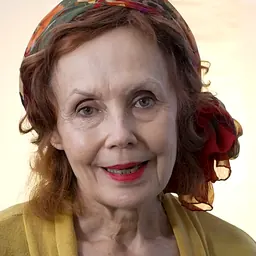
Between 1973 and 1986 he taught composition at the Hochschule für Musik Freiburg, Germany, where his students included Toshio Hosokawa, Joël-François Durand, Roger Redgate, Alessandro Melchiorre, Giulio Castagnoli, Kaija Saariaho, Joël Bons (winner of the 2021 Grawemeyer Award), Hans-Ola Ericsson, and Rodney Sharman.
The Royan Festival of 1974 saw the premiere of Cassandra's Dream Song, the first of several pieces for solo flute, as well as Missa Brevis, written for 12 singers. In 1975, performances of his work for large ensemble Transit and Time and Motion Study III were given; the former piece being awarded a Koussevitzky Prize, the latter performed at the Donaueschingen festival. In many of these events he was paired with fellow British composer, Michael Finnissy, with whom he became friends during his student days. In 1984 he was given the title Chevalier de l'Ordre des Arts et des Lettres. In 2009 he was appointed foreign member of the Royal Swedish Academy of Music. In 2012 he was awarded an honorary DMus from Goldsmiths, University of London; and in December 2018 he received an honorary degree from the Royal Birmingham Conservatoire for his contribution to contemporary classical music.
Style and technique Ferneyhough's initial forays into composition were met with little sympathy in England. His submission of Coloratura to the Society for the Promotion of New Music in 1966 was returned, with a suggestion that the oboe part should be scored for clarinet. Whilst Ferneyhough did find it hard, one source of support came from Hans Swarsenski who saw the same thing happen to Cornelius Cardew; Cardew enjoyed a prestigious continental reputation, but a poor one in his homeland. Swarsenski said of Ferneyhough: 'I've taken on an English composer who is I think is enormously talented. If this doesn't work, this is the last time'. Ferneyhough continued to struggle, but the aforementioned Royan festival marked a breakthrough for Ferneyhough's career.
From here, Ferneyhough became closely associated with the so-called New Complexity school of composition (indeed, he is often referred to as the "Father of New Complexity"), characterized by its extension of the modernist tendency towards formalization (particularly as in integral serialism).
Selected works Works for string quartet First String Quartet (1963) Sonatas for String Quartet (1967) Second String Quartet (1980) Adagissimo (1983) Third String Quartet (1987) Fourth String Quartet (1989–90) Fifth String Quartet (2006) Dum transisset I–IV for string quartet (2007) Exordium for string quartet (2008) Sixth String Quartet (2010) Silentium (2014)
Selected solo works Sieben Sterne for organ (1970) Cassandra's Dream Song for flute (1970–71) Time and Motion Study I for bass clarinet (1971–77) Time and Motion Study II for singing cellist and live electronics (1973–76) Unity Capsule for solo flute (1976) Lemma-Icon-Epigram for piano (1982) Kurze Schatten II for guitar (1989) (essay, analysis, analysis, score sample) Trittico per G.S. for double bass (1989) Bone Alphabet for percussion (1991) (score sample) Unsichtbare Farben for violin (1999) (score sample) Opus Contra Naturam, for solo piano (2000) no time (at all) for two guitars (2004), five pieces Sisyphus Redux for alto flute (2009) Quirl for solo piano (2011–13), part of Nicolas Hodges' Studies Project
For non-orchestral ensemble Prometheus for wind sextet (1967) Transit for solo voices and ensemble (1972–75) Carceri d'Invenzione I for fl, ob, 2cl, bn, hn, tpt, trb, euphonium, 1perc, pf, 2vn, va, vc, db [1121, 1111.2111] (1982) (analysis, score sample)(inspired by the "Carceri d'Invenzione" by Giambattista Piranesi) Etudes Transcendantales for soprano and chamber ensemble (1982–1985) Carceri d'Invenzione II for flute and ensemble (1985) Carceri d'Invenzione III for fifteen wind instruments and percussion (1986) La Chute d’Icare for solo clarinet and chamber ensemble (1988) (program note) Terrain for violin and chamber ensemble (1992) Allgebrah for oboe and 9 solo strings (1996) (score sample) Incipits for solo viola, obbligato percussion and six instruments (1996) The Doctrine of Similarity for chorus (SATB), 3 clarinets, violin, piano and percussion (2000) (score sample) Chronos-Aion for large ensemble (2007–8) Renvoi/Shards for quarter-tone guitar and vibraphone (2008) Liber Scintillarum for 6 instruments (2012)
For orchestra Firecycle Beta for two pianos and two orchestras with five conductors (1969-1971) La Terre est un Homme for orchestra (1979) Plötzlichkeit for large orchestra (2006)
Opera Shadowtime (1999–2004), libretto by Charles Bernstein, premiered at the Munich Biennale
Reception Ferneyhough has been called "the most controversial composer of his generation". "In the same year , the performance of several of his works at the Royan Festival established Ferneyhough as one of the most brilliant and controversial figures of a new generation of composers". "Brian Ferneyhough may well be one of the most important composers to emerge from the latter half of this century. Simultaneously famous and infamous, he is a controversial figure of world renown, bent on making the most out of music." The Guardian 's Tom Service called La Terre est un Homme "one of the most significant achievements in late 20th-century orchestral writing", and also recommended the Carceri d'Invenzione pieces, Lemma-Icon-Epigram, Terrain, and the string quartets.
Don’t just read it —
keep it.
Full-length biographies made to live with: read them, listen on the way to work, watch them tonight.
- E-book
- Audio
- Video
Instant download · yours to keep · every purchase keeps this site free
Important facts
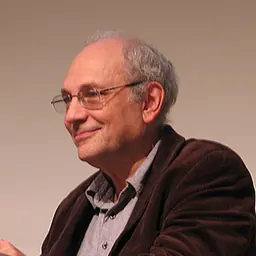
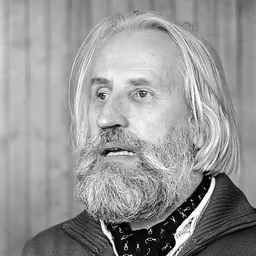
People in Brian Ferneyhough's life
Named in this biography and alive at the same time



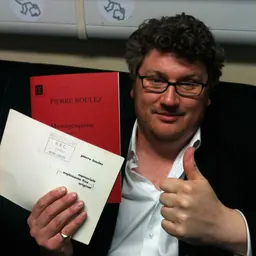
Related people
Same field, nearest in time
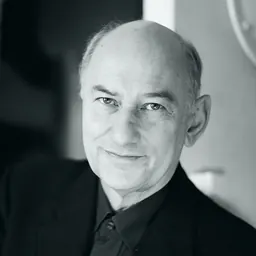
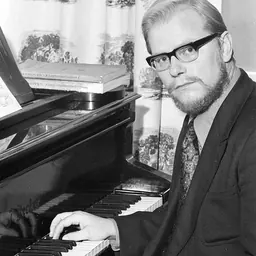


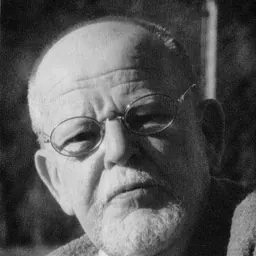

Contemporaries
People whose lives overlapped Brian Ferneyhough's


Frequently asked questions
Who is Brian Ferneyhough?
British composer (born 1943)
When was Brian Ferneyhough born?
Brian Ferneyhough was born on 16 January 1943 in Coventry.
What is Brian Ferneyhough's occupation?
Brian Ferneyhough is a composer and pedagogue.
What nationality is Brian Ferneyhough?
Brian Ferneyhough is British.
Sources & further reading
· Wikipedia: Brian Ferneyhough
Cite this page
APA: Biography.guide. (2026). Brian Ferneyhough. https://biography.guide/brian-ferneyhough/
MLA: "Brian Ferneyhough." Biography.guide, https://biography.guide/brian-ferneyhough/.
Chicago: "Brian Ferneyhough." Biography.guide. https://biography.guide/brian-ferneyhough/.
Data last updated: 2026-09-22 · Spot an error? Report a correction.
Page generated 2026-09-27 05:21 UTC