
About Brew Moore
Lived 1924 – 1973 (aged 49). Brew Moore was an American jazz musician, saxophonist and musician.
Milton Aubrey "Brew" Moore (March 26, 1924 – August 19, 1973) was an American jazz tenor saxophonist.
Early life He was born in Indianola, Mississippi, United States.
Returning to New York in 1948, Moore became a fixture on the city's jazz scene, cutting his first sides as a leader ("Brew Moore and His Playboys," Savoy Records) and working with Machito's orchestra and Claude Thornhill's Big Band, the Kai Winding sextet, Stan Getz and George Wallington among others. In 1949, he joined three of the "four brothers" from Woody Herman's celebrated Second Herd (Getz, Zoot Sims, Al Cohn) plus Allen Eager in a session that resulted in the album The Brothers for the Prestige label. In the early 1950s, he gigged with Bird and other beboppers of note at venues like Birdland. Pianist Gene DiNovi described him as "a natural player. I remember him saying once that you should come to the saxophone as a child would—pick it up and blow. He had blond, straw-colored hair. Always with a farmer's cow-lick sticking up. He was a very simple, lovely person."
He left New York in 1954 for the West Coast, settling eventually in San Francisco where he found a congenial environment, fitting well into the Beat Generation culture personified by one of his acknowledged admirers, Jack Kerouac. In 1959, the heavy drinking that had early on given him his nickname took its toll, and he withdrew from the scene. He subsequently resurfaced in Europe.
Alternatively, Danish scholar Soren Schou has likened Moore's "epic melodist" playing to writing a novel and contrasted it with the concentrated "short story" approach practiced by post-Bird improvisers. Certainly Moore's expansive style of playing tested the attention span of post-bop era listeners. (In evidence of this, one is referred to his X-rated comments to an apparently less than fully engaged Stockholm audience while introducing "Manny's Tune" on "No More Brew," Storyville CD 8275, 1998.)
Moore himself told critic Ralph J. Gleason in 1954: "The idea of playing for me is to compose a different, not always better I'm afraid, melody on the tune and basis of the original song, rather than construct a series of chord progressions around the original chords." An idea the more pre-bop inclined Gleason clearly approved of, noting that Moore "has two absolutely golden gifts. He swings like mad and he has soul . . . he also has a priceless gift for phrasing. . . . When Brew says it, he says it simply, but it rings true."
Discography As leader
As sideman Slim Gaillard, At Birdland (Hep, 1979) Stan Getz, The Brothers (Prestige, 1956) Ray Nance, Body and Soul (Solid State, 1970) Cal Tjader, Tjader Plays Tjazz (Fantasy, 1956) Cal Tjader, Latin Kick (Fantasy, 1959) George Wallington, The George Wallington Trio (Savoy, 1956) Chuck Wayne, The Jazz Guitarist (Savoy, 1956)
Don’t just read it —
keep it.
Full-length biographies made to live with: read them, listen on the way to work, watch them tonight.
- E-book
- Audio
- Video
Instant download · yours to keep · every purchase keeps this site free
Important facts
People in Brew Moore's life
Named in this biography and alive at the same time



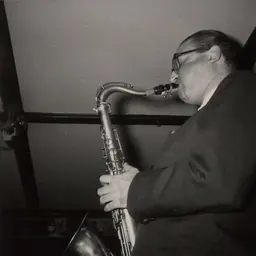
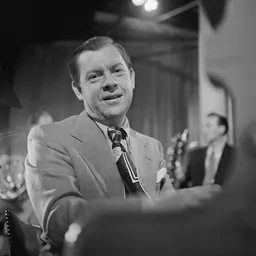


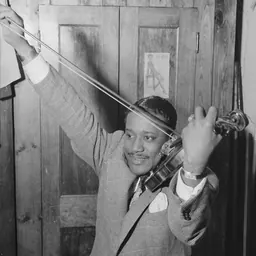
Related people
Same field, nearest in time



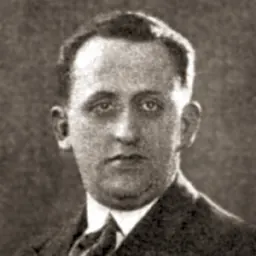
Contemporaries
People whose lives overlapped Brew Moore's



Frequently asked questions
Who was Brew Moore?
American musician (1924-1973)
When was Brew Moore born?
Brew Moore was born on 26 March 1924 in Indianola.
When did Brew Moore die?
Brew Moore died on 19 August 1973 in Copenhagen.
What was Brew Moore's occupation?
Brew Moore was a jazz musician, saxophonist and musician.
What nationality was Brew Moore?
Brew Moore was American.
Sources & further reading
Cite this page
APA: Biography.guide. (2026). Brew Moore. https://biography.guide/brew-moore/
MLA: "Brew Moore." Biography.guide, https://biography.guide/brew-moore/.
Chicago: "Brew Moore." Biography.guide. https://biography.guide/brew-moore/.
Data last updated: 2026-09-20 · Spot an error? Report a correction.
Page generated 2026-09-27 05:31 UTC