
About Brett Hull
Born 1964. Brett Hull is a Canadian and American ice hockey player and actor.
Brett Andrew Hull (born August 9, 1964) is a Canadian–American former ice hockey player and general manager, and currently an executive vice president of the St. Louis Blues of the National Hockey League (NHL). He played for the Calgary Flames, St. Louis Blues, Dallas Stars, Detroit Red Wings, and Phoenix Coyotes between 1986 and 2005. His career total of 741 goals is fifth highest in NHL history, and he is one of five players to score 50 goals in 50 games. He was a member of two Stanley Cup winning teams — 1999 with the Dallas Stars and 2002 with the Detroit Red Wings. In 2017, Hull was named one of the 100 Greatest NHL Players in history.
Known as one of the game's greatest snipers, Hull was an elite scorer at all levels of the game. He played college hockey for the University of Minnesota-Duluth Bulldogs, where he scored 52 goals in 1985–86. He scored 50 the following year with the Moncton Golden Flames of the American Hockey League (AHL) and had five consecutive NHL seasons of at least 50 goals. His 86 goals in 1990–91 is the third-highest single-season total in NHL history, with the first two being the same person, Wayne Gretzky. Hull won the Hart Memorial Trophy and Lester B. Pearson Award that year as the league's most valuable player. He was named a first team all-star on three occasions and played in eight NHL All-Star Games.
Having dual citizenship in Canada and the United States, (after being cut from Team Canada) Hull was eligible to play for the United States internationally and chose to join the American National Team. He was a member of the team that won the 1996 World Cup of Hockey and was a two-time Olympian, winning a silver medal at the 2002 Winter Olympics. Hull was inducted into the Hockey Hall of Fame in 2009, joining his father Bobby Hull. They are the first father-son combination to each score either of 600 goals or 1,000 career points in the NHL. Hull's nickname, "the Golden Brett" is a reference to his father's nickname of "the Golden Jet". His jersey number 16 was retired by the St. Louis Blues in 2006.
Early life Hull was born August 9, 1964, in Belleville, Ontario, Canada. His father, Bobby, was a long-time professional hockey player in both the National Hockey League (NHL) and World Hockey Association (WHA). His mother, Joanne (McKay), was an American professional figure skater and taught him how to skate. He has three brothers, Bobby Jr., Blake, and Bart, and a younger sister, Michelle. Bart played professional football in the Canadian Football League (CFL). His uncle Dennis was also a longtime NHL player.
As his father played for the NHL's Chicago Black Hawks, Hull spent his early life in Illinois, and he first played organized hockey in the Chicago area at age four. He moved to Vancouver with his mother and two youngest siblings shortly before his parents' acrimonious divorce in 1979. Hull was not close to his father following the breakup, though the two spoke periodically. NHL teams finally took notice of Hull following his 1983–84 season in which he scored 105 goals in 56 games and broke the BCJHL scoring record with 188 points. He was awarded the Jerry Chumola Award as the school's rookie of the year and received similar honors from the Western Collegiate Hockey Association (WCHA). Hull was named the WCHA first-team all-star at right wing and was a finalist for the Hobey Baker Award as the top player in the National Collegiate Athletic Association (NCAA). The school retired his jersey number 29 in 2006.
Calgary Flames (1986–1988)
Choosing to turn professional following his sophomore season, Hull signed a contract with the Calgary Flames and joined the team during the 1986 Stanley Cup Playoffs. He made his NHL debut on May 20, 1986, in game three of the Stanley Cup Final against the Montreal Canadiens. His best scoring opportunity came when he hit the post in his first shift of the game. He appeared in two games of the Flames' five-game series loss to Montreal.
Hull earned a spot on the Flames for the 1987–88 season, though the team continued to work with him on his conditioning.
St. Louis Blues (1988–1998)
"The year he scored 86, it was just magical. It was one of those years, wherever we went Brett would score two goals or a hat trick. It was just fantastic. I can't believe we only played together 2½ years because it felt like 10. It was just so special. We just really hit it off as buddies, friends. We played the game the same way; the chemistry was just excellent." — —Adam Oates discusses his time with Brett Hull in St. Louis. Hull scored 228 goals between 1989–90 and , the second-highest three-season total of any player in NHL history, behind only Wayne Gretzky's 250 tallies between and . —joining Maurice Richard, Mike Bossy, Gretzky, and Mario Lemieux—then repeated the feat in 1991–92.
He led the league in goal scoring all three seasons and was named to the first All-Star team each year. He collected numerous league awards, winning the Lady Byng Memorial Trophy in 1990 as the league's most sportsmanlike player, then in 1991, won the Hart Memorial Trophy and Lester B. Pearson Award as the NHL's most valuable player as selected by the league and his fellow players respectively. after Gretzky's 92 goals in 1981–82 and 87 in 1983–84. He recorded a goal in 56 games, the most for a season in NHL history.
Oates left the Blues midway through the 1991–92 season, and while Hull's offensive production dropped, he remained the Blues' top offensive threat. He recorded his fourth and fifth consecutive 50-goal seasons, scoring 54 in and 57 in . Hull, who had been named team captain in 1992, was stripped of the captaincy. By early 1996, the two were publicly criticizing each other in the media. Forced to choose between the player and coach, the Blues fired Keenan on December 19, 1996.
After 43- and 42-goal seasons in and , Hull scored 27 in .
Dallas Stars (1998–2001) Hull reached 1,000 points in his career when he notched a goal and an assist in a 3–1 victory with the Dallas Stars over the Boston Bruins on November 14, 1998. He then scored his 600th goal on December 31, 1999, in a 5–4 victory over the Mighty Ducks of Anaheim. The Stars reached the 1999 Stanley Cup Final, against the Buffalo Sabres. The sixth game of the series went to overtime tied 1–1 while Dallas held a 3–2 series lead. At 14:51 of the third overtime period, Hull collected a rebound in front of the Buffalo net and put the puck past goaltender Dominik Hašek to win the game, and the Stanley Cup, for Dallas.
"We all knew that they had changed the rule. But obviously the NHL decided they weren't going to tell anybody but the teams ... They changed the rule to say if you have control in the crease, you can score the goal, and that's exactly what it was." — —Hull argues the legality of his 1999 Stanley Cup winning goal Media, fans and players across the league remain divided on the goal, some claiming that the league altered the rule after the fact. The NHL formally abolished the crease rule prior to the next season, allowing players to score from within the crease freely as long as they did not interfere with the goaltender.
As a member of the Stars in their Stanley Cup winning season, Hull wore number 22, as his customary number 16 was worn by Pat Verbeek. Hull switched back to number 16 the following season after Verbeek left the team as a free agent. Though he appeared in 79 games in 1999–2000, Hull had what coach Ken Hitchcock called "a disappointing season", struggling defensively and scoring only 24 goals. His offensive production improved in the 2000 Stanley Cup Playoffs as he led the league in post-season scoring with 10 goals and 23 points. The Stars again reached the finals, but lost the series in six games to the New Jersey Devils. Hull scored 39 goals in 2000–01, his best total in four years. Hull played his 1,000th career game on February 25, 2001, in Calgary.
Detroit Red Wings (2001–2004) The Stars did not exercise their option on Hull's contract that would have paid him $7 million for the 2001–02 NHL season, making him a free agent. Although he received superior financial offers from the Montreal Canadiens and New York Rangers, Hull signed a two-year, $9 million contract with the Detroit Red Wings to pursue a second Stanley Cup championship. He joined an already star-studded team that earlier that offseason had acquired goaltender Dominik Hasek and winger Luc Robitaille.
As a member of the Red Wings, Hull switched to sweater number 17 out of respect for Vladimir Konstantinov, who wore number 16 for the Red Wings before his playing career ended due to a limousine accident a week after Detroit's 1997 Stanley Cup championship. No player has worn the number 16 for the Red Wings since Konstantinov.
Hull subsequently scored 30 goals that season as the Red Wings dominated their opponents, earning the Presidents' Trophy as the NHL's top team. During the regular season, he was put on a line with Boyd Devereaux and rookie Pavel Datsyuk, a combination in which Hull himself referred to as "two kids and an old goat".
Hull would then score a league-leading 10 in the 2002 Stanley Cup playoffs, while adding two goals in the second round against the Blues. He then scored three goals in the Western Conference finals against the Avalanche, including one in Detroit's 7–0 rout of Colorado in the decisive game seven.
He scored key goals in Detroit's game three and four victories against the Carolina Hurricanes in the Stanley Cup Final; the latter was the 100th playoff goal of his career. Hull won his second career championship as the Red Wings won the series in five games.
Hull posted a 37-goal, 76-point campaign in 2002–03. At age 38, Hull signed a one-year, $5 million extension with the Red Wings. After scoring 25 goals in 2003–04,
Phoenix Coyotes (2004–2005) The Stars thought they were on the verge of signing Hull to a one-year contract for 2004–05, but he instead accepted a two-year, $4.5 million contract with the Phoenix Coyotes. The first year of the contract was wiped out when the season was cancelled due to a labor stoppage. When play resumed in 2005–06, Hull returned to the ice wearing his father's jersey number 9. The Coyotes franchise, which had relocated from Winnipeg in 1996, continued to honor the Jets' retired numbers, including the elder Hull's. Bobby requested that the team un-retire his number and allow his son to wear it. However, after playing just five games and recording one assist, Hull felt that he was no longer able to play at the level he expected of himself. On October 15, 2005, he announced his retirement as a player.
International play As a dual Canadian and American citizen, Hull was eligible to play for either country internationally. While playing at UMD, he was passed over by Team Canada coach Dave King when selecting the roster for the 1986 World Ice Hockey Championships. However, American national team coach Dave Peterson invited him to join their squad. Hull accepted and led the team in scoring with 7 goals and 11 points for the sixth place Americans. Hull later said the faith shown in him by American officials gave him the confidence to excel in his career. He played with Team USA for the rest of his career, and at the 1986 Calgary Cup tournament, played a pivotal role in a 5–3 upset of Canada by the Americans. Following the game, he said "I don't feel more like an American than a Canadian. I just want to play."
Hull tied Mike Modano for the American scoring lead at the 1991 Canada Cup with nine points. He led the Americans into the tournament final against Canada, but was held pointless in the decisive game as Canada won the tournament with a 4–2 game. Canadian fans turned on Hull at the inaugural World Cup of Hockey in 1996. In the semifinal against Russia, fans in Ottawa loudly booed Hull and chanted "traitor" towards him as he scored two goals to lead the United States to the final against Canada. In the deciding game of the best-of-three final, Hull scored a key goal as the Americans turned a 2–1 deficit with five minutes to play into a 5–2 victory and captured the championship. Hull led all players with 11 points and was a tournament all-star at forward.
Making his Olympic debut at the 1998 Winter Games, Hull scored two goals in four games. The team was further embarrassed when it was discovered some members had trashed their hotel room following their elimination. Hull was initially blamed as being a culprit. He angrily denied the accusation and claimed it was an invention of Canadian media upset that he was playing for the United States. Hull, Modano and John LeClair formed the American's top line for the 2002 Olympics. The trio were dominant throughout most of the tournament, leading Team USA to the gold medal game against Canada. Hull and LeClair finished second and third in overall scoring, respectively; however they were held pointless against Team Canada in the final. Hull and the Americans settled for the silver medal following a 5–2 defeat. However, he was benched by head coach Ron Wilson following two indifferent games in which he did not register a point and never returned to the active lineup.
Playing style Upon his arrival in the NHL, Hull was considered a "one-dimensional player". He was a natural goal scorer with a reputation for being uninterested in backchecking and playing defense. He was nicknamed "The Incredible Hull" (a reference to Bruce Banner) in college for his scoring exploits and was called "The Golden Brett" in the NHL, a play on his father's nickname of "The Golden Jet". but while Bobby was a left wing known for both his conditioning and skating ability, Hull played right wing, was a poorer skater and lacked his father's physique. He shed that reputation after leading his teams to championships at the 1996 World Cup of Hockey and the 1999 Stanley Cup Finals. To win that 1999 championship, Hull also had to fit in with the Dallas Stars' defense-oriented system. He finished that season with a career-best plus-minus of +19. He chastised his own fans in 1992 — later backtracking — when they booed Adam Oates following Oates' trade request, calling them "losers" and stating he wanted to rip one particular fan's head off. Hull was a consistent critic of the NHL's defensive, "clutch and grab" era of the late 1990s, raising the ire of commissioner Gary Bettman in 1998 when he said "I wouldn't pay to watch. It's boring. The whole style of the game is terrible. There's no flow. When a guy like [Mario] Lemieux leaves the game and tells you why he's leaving, and you don't address it, that's stupid. But the players don't say crap. That's why I always look like the big mouth." Hull holds numerous St. Louis Blues franchise records, including goals (527), power play goals (195), game-winning goals (70) and hat tricks (27). In 2010, the team unveiled a statue of him in front of the arena. Hull was inducted into the United States Hockey Hall of Fame in 2008, and into the Hockey Hall of Fame in 2009. He left NBC after one season when he was named a special adviser to the team's hockey operations department. Hull was promoted to interim co-general manager of the Stars, sharing the role with Les Jackson after Doug Armstrong was fired on November 13, 2007. ESPN analyst Scott Burnside criticized the promotion of Hull, noting his lack of front office experience and questionable work ethic.
The pair made one of the most prominent trades in the 2007–08 NHL season, acquiring Brad Richards from the Tampa Bay Lightning as part of a five-player trade. The team went on to reach the Western Conference Final of the 2008 Stanley Cup Playoffs, the Stars' deepest playoff run in eight years. Team owner Tom Hicks rewarded the pair with three-year contracts and named them permanent co-general managers. He credited Hull for his positive relationship with the players and his "unconventional wisdom".
The signing of controversial forward Sean Avery prior to the 2008–09 season proved a turning point for Hull and Jackson. Avery's erratic behavior created divisions within the team's locker room, particularly after he made derogatory comments towards another player's girlfriend in the media. The Stars missed the playoffs that season, leading the team to replace Hull and Jackson as general manager with Joe Nieuwendyk. Hull remained with the organization, serving as an adviser to Hicks and team president Jeff Cogen.
On May 21, 2019, after the Blues advanced to the Stanley Cup Finals for the first time in 49 years, Hull was not able to control his emotions and cried, saying "I'm in there. I'm not a crier, but I'm crying....I saw Bobby Plager and I'm like 'Holy cow,'... 49 years in the making for this... These guys have played unbelievable."
On Saturday, June 15, 2019, after the St. Louis Blues won their first Stanley Cup, Hull took the stage and led the crowd in a drunken ramble that echoed throughout the Jefferson National Expansion Memorial following the victory parade down Market Street. He coined the phrase, "We went Blues," explaining, "We don't have to go anymore, 'cause we already did it."
Personal life Hull lived in Dallas, Texas, with his second wife, Darcie. He has three children with his first wife, Alison: son Jude and daughters Jayde and Crosby. Jude also played hockey as a goaltender. He attended St. Olaf College until 2018, but while he has never played professionally he enjoys sharing an oral history of his families hockey legacy.
In business, Hull was twice involved in the operation of restaurants. He owned two eateries in St. Louis while he was a member of the Blues, and partnered with Mike Modano and others on a Dallas restaurant called "Hully and Mo Restaurant and Tap Room" following his playing career. He lent his name to a 1995 Super Nintendo Entertainment System video game called Brett Hull Hockey. Hull was a co-owner of the St. Louis Bandits, a junior team in the North American Hockey League. In November 2020, Hull returned to restaurant operation in the St. Louis area with the opening of Brett Hull's Junction in Wentzville, Missouri.
Hull is an avid golfer, often stating during his career that he preferred the sport to hockey. He competes in several charity and celebrity tournaments, and in 2009 was ranked as the sixth best athlete golfer in North America by Golf Digest.
In other media Hull was a guest on the Weekend Update segment of the December 11, 2004, episode of Saturday Night Live.
Hull made a special guest appearance as the USA hockey team captain in the What's New, Scooby-Doo? episode, "Diamonds Are a Ghoul's Best Friend".
Career statistics
Regular season and playoffs Bold indicates led league Regular seasonPlayoffs Season Team League GP G A Pts PIM GP G A Pts PIM 1982–83 Penticton Knights BCJHL 50 48 56 104 27 — — — — — 1983–84 Penticton Knights BCJHL 56 105 83 188 20 — — — — — 1984–85 University of Minnesota-Duluth WCHA 48 32 28 60 12 — — — — — 1985–86 University of Minnesota-Duluth WCHA 42 52 32 84 46 — — — — — 1985–86 Calgary Flames NHL — — — — — 2 0 0 0 0 1986–87 Moncton Golden Flames AHL 67 50 42 92 16 3 2 2 4 2 1986–87 Calgary Flames NHL 5 1 0 1 0 4 2 1 3 0 1987–88 Calgary Flames NHL 52 26 24 50 12 — — — — — 1987–88 St. Louis Blues NHL 13 6 8 14 4 10 7 2 9 4 1988–89 St. Louis Blues NHL 78 41 43 84 33 10 5 5 10 6 1989–90 St. Louis Blues NHL 80 72 41 113 24 12 13 8 21 17 1990–91 St. Louis Blues NHL 78 86 45 131 22 13 11 8 19 4 1991–92 St. Louis Blues NHL 73 70 39 109 48 6 4 4 8 4 1992–93 St. Louis Blues NHL 80 54 47 101 41 11 8 5 13 2 1993–94 St. Louis Blues NHL 81 57 40 97 38 4 2 1 3 0 1994–95 St. Louis Blues NHL 48 29 21 50 10 7 6 2 8 0 1995–96 St. Louis Blues NHL 70 43 40 83 30 13 6 5 11 10 1996–97 St. Louis Blues NHL 77 42 40 82 10 6 2 7 9 2 1997–98 St. Louis Blues NHL 66 27 45 72 26 10 3 3 6 2 1998–99 Dallas Stars NHL 60 32 26 58 30 22 8 7 15 4 1999–00 Dallas Stars NHL 79 24 35 59 43 23 11 13 24 4 2000–01 Dallas Stars NHL 79 39 40 79 18 10 2 5 7 6 2001–02 Detroit Red Wings NHL 82 30 33 63 35 23 10 8 18 4 2002–03 Detroit Red Wings NHL 82 37 39 76 22 4 0 1 1 0 2003–04 Detroit Red Wings NHL 81 25 43 68 12 12 3 2 5 4 2005–06 Phoenix Coyotes NHL 5 0 1 1 0 — — — — — NHL totals 1,269 741 650 1,391 458 202 103 87 190 73
International Year Team Event Result GP G A Pts PIM 1986 United States WC 6th 10 7 4 11 18 1991 United States CC 8 2 7 9 0 1996 United States WCH 7 7 4 11 4 1998 United States Oly 6th 4 2 1 3 0 2002 United States Oly 6 3 5 8 6 2004 United States WCH 4th 2 0 0 0 2 Senior totals 37 21 21 42 30
Awards and achievements Award Year RefNHL NHL All-Star Game 1989, 1990, 1991, 1992, 1993, 1994, 1996, 1997, 2001 First All-Star Team 1987 NCAA Jerry Chumola AwardUMD rookie of the year 1985 WCHA rookie of the year 1985
Don’t just read it —
keep it.
Full-length biographies made to live with: read them, listen on the way to work, watch them tonight.
- E-book
- Audio
- Video
Instant download · yours to keep · every purchase keeps this site free
Important facts
People in Brett Hull's life
Named in this biography and alive at the same time




Related people
Same field, nearest in time


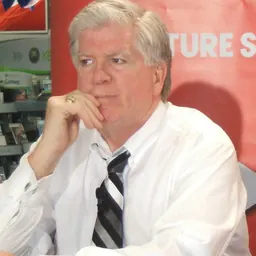
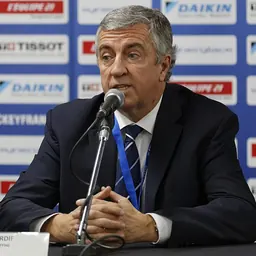


Contemporaries
People whose lives overlapped Brett Hull's


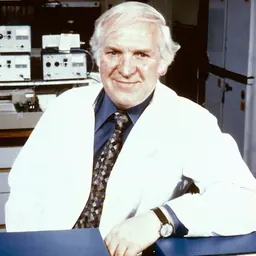
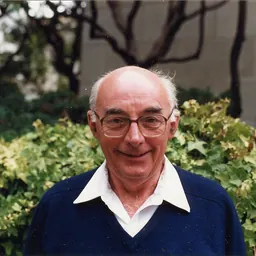
Frequently asked questions
Who is Brett Hull?
Canadian-American ice hockey player
When was Brett Hull born?
Brett Hull was born on 9 August 1964 in Belleville.
What is Brett Hull's occupation?
Brett Hull is an ice hockey player and actor.
What nationality is Brett Hull?
Brett Hull is Canadian and American.
Sources & further reading
Cite this page
APA: Biography.guide. (2026). Brett Hull. https://biography.guide/brett-hull/
MLA: "Brett Hull." Biography.guide, https://biography.guide/brett-hull/.
Chicago: "Brett Hull." Biography.guide. https://biography.guide/brett-hull/.
Data last updated: 2026-09-25 · Spot an error? Report a correction.
Page generated 2026-09-27 05:13 UTC