
About Breese J. Stevens
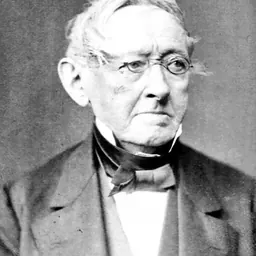
Lived 1834 – 1903 (aged 69). Breese J. Stevens was an American politician.
Breese Jacob Stevens (March 22, 1834 – October 28, 1903) was an American attorney from New York state who relocated to Madison, Wisconsin to begin his law practice. There he conducted "some of the most important railroad, land grant and water litigations of [Wisconsin] and Michigan, in all these years enjoying an enviable distinction for conservatism, command of large affairs, great wisdom and a supreme sense of justice shading into generosity in all professional and business relations," according to the State Bar of Wisconsin.
He was elected the 20th mayor of Madison, and later was a leader on the Board of Regents of the University of Wisconsin. Twenty-three years after his death, the city of Madison built its first municipal athletic facility on land purchased from the Stevens estate for $35,000, naming the ballpark Breese Stevens Field.
Birth and education
Stevens was born March 22, 1834 at Sconondoa (Vernon), in Oneida County in New York state, the son of prominent business man Augustus Caesar Stevens and Elizabeth (Breese) Stevens. He was the descendant of generations of prosperous families.
He was raised in Buffalo, Flint, Michigan, and Vernon, and attended academies in Oneida, Whitesboro, and Cazenovia. He graduated from Hamilton College in 1853. After studying under professor Theodore W. Dwight at Hamilton, Stevens decided to become a lawyer. He briefly studied law under the mentorship of the abolitionist congressman Timothy Jenkins at Oneida Castle, and completed his studies under lawyer and financier Nathan F. Graves of Syracuse. In 1856 he received his Master of Arts degree from Hamilton. Stevens’ uncle Samuel Breese beckoned him to come west and take care of Sidney’s estate. After he arrived in Madison, he was admitted to the State Bar of Wisconsin, and began his law practice in 1857. He continued with various law partners until his death in 1903. He would also own a “gentleman’s farm” on Madison's Lake Mendota.
Corporate attorney In the legal business of his railroad, land and improvement companies, Stevens was active in the litigations over land grants, water power and corporation tax and foreclosure proceedings. He was attorney for the trustees of the Fox & Wisconsin River Improvement Company for many years. He also was the acting president of the Green Bay & Mississippi Canal Company from 1866-1880, serving as its attorney and board director. He became part of the “Loyal Democracy” that opposed the southern states’ secession but did not address slavery. He was a close friend of Democratic Senator William F. Vilas of Wisconsin, and he accompanied President Grover Cleveland, a fellow Bourbon Democrat from New York, when he visited Madison in 1887.
Madison mayor Stevens passed up many opportunities to run for public office. In 1884 he was reportedly reluctant to run for mayor of Madison, but he did not oppose his nomination by local Democrats. He was not a prohibitionist, yet received the support of members of the Law and Order League, which sought enforcement of city liquor ordinances. Claiming that Stevens would be an absentee mayor due to his frequent business outside the state, the stalwart Republican Wisconsin State Journal endorsed his opponent John W. Hudson. Stevens defeated Hudson 1,289 votes to 464.
Stevens’ single term as mayor was marked by a conflict of interest. He was the president of the Madison Gas and Coke Company, and as mayor Stevens discontinued a city committee exploring the feasibility of electric street lights. Madison was without electrically-lit streets for four more years. As predicted, he was often away from the city on corporate matters. He did not seek re-election.
University regent In 1890 Wisconsin elected its first Democratic governor in 18 years, Milwaukee Mayor George Peck. Governor Peck appointed fellow Democrat Stevens to the University of Wisconsin Board of Regents. He was vice president of the board at the time of his death and for years chairman of the executive committee.
He was also a curator for the Wisconsin State Historical Society, and a member of the Madison Literary and Town & Gown clubs, the New York City Reform Club, and the Milwaukee Club. He was also a long-time vestryman of Grace Episcopal Church in Madison. He was buried at Forest Hill Cemetery.
Family His earliest American paternal ancestor came from London prior to 1660, and settled at Charlestown, Massachusetts. On the maternal side Stevens was a great-great-grandson of Sidney Breese, who came from Shrewsbury, England. For more than two centuries the Stevens and Breese families had been allied to many notable families who had settled in Massachusetts, New York and New Jersey. Her devout and long-ailing mother Jemimaette was devastated, and died a year later.
As early as 1920 Stevens’ widow contacted her daughter’s brother-in-law, Joseph “Bud” Jackson, business manager of the Jackson Clinic, to sell the unfilled property. Twenty-three years earlier Jackson had been the manager of the Madison High School football team, which had no home field. Jackson had occasionally asked university regent Breese Stevens to assist his team in gaining use of Camp Randall, the stadium of the University of Wisconsin. Considering that Madison still had no athletic field in 1920, Jackson examined the Stevens block and decided it should be the site of a stadium for the high schools. He suggested to Mrs. Stevens that she sell the block to the city and have the field named for her late husband, in honor of his assistance to the high school team a generation earlier. Breese Stevens Athletic Field opened on May 5, 1926.
Don’t just read it —
keep it.
Full-length biographies made to live with: read them, listen on the way to work, watch them tonight.
- E-book
- Audio
- Video
Instant download · yours to keep · every purchase keeps this site free
Important facts
People in Breese J. Stevens's life
Named in this biography and alive at the same time


Related people
Same field, nearest in time





Contemporaries
People whose lives overlapped Breese J. Stevens's





Frequently asked questions
Who was Breese J. Stevens?
American mayor (1834–1903)
When was Breese J. Stevens born?
Breese J. Stevens was born on 22 March 1834 in Vernon.
When did Breese J. Stevens die?
Breese J. Stevens died on 28 October 1903 in Madison.
What was Breese J. Stevens's occupation?
Breese J. Stevens was a politician.
What nationality was Breese J. Stevens?
Breese J. Stevens was American.
Sources & further reading
· Wikipedia: Breese J. Stevens
Cite this page
APA: Biography.guide. (2026). Breese J. Stevens. https://biography.guide/breese-j-stevens/
MLA: "Breese J. Stevens." Biography.guide, https://biography.guide/breese-j-stevens/.
Chicago: "Breese J. Stevens." Biography.guide. https://biography.guide/breese-j-stevens/.
Data last updated: 2026-09-20 · Spot an error? Report a correction.
Page generated 2026-09-27 05:19 UTC