
About Brady Keys
Lived 1937 – 2017 (aged 80). Brady Keys was an American american football player.
Brady Keys (May 19, 1936 – October 24, 2017 or May 19, 1937 – October 24, 2017) was an American professional football player. He played as a defensive back for eight seasons in the National Football League (NFL), playing for the Pittsburgh Steelers, Minnesota Vikings, and St. Louis Cardinals. He was also a kickoff and punt returner, and holds the Steelers' record for longest punt return in a game (90 yards). Keys played college football at Colorado State as a halfback as well as a defensive back. Keys led the 1960 Colorado State team in rushing yards and total offense.
Keys was America's first Black owner of a national fast-food franchise. His business interests were diverse, and not limited solely to restaurant franchises. Keys had an over 50-year entrepreneurial career that began while he was playing professional football. He also promoted social causes to improve education and safety, and charitable works, during his business career.
Early life Keys was born on May 19, 1936, or May 19, 1937, in Austin, Texas. He grew up in poverty, living in a shack with his mother, A. C. Franklin, who taught him how to use a sewing machine, iron, and cook from a young age. In 1952, the 155 lb (70.3 kg) Keys was a running back on Poly's football team. In 1953, as a junior, Poly was the Eastern League champion, and Keys was named player of the year by the Helms Hall All-Southern California Board of Football, and was also named to its first team at running back. He was used as a tailback in the T formation that season. He was named All-City as both a junior and senior at Poly.
College career Keys originally attended East Los Angeles Junior College, where he played quarterback on the school's football team in 1955, as well as playing on defense. He was also a member of the track and field team, participating in the broad jump. He left school in 1956, without graduating.
Keys worked from 1956 to 1959, and played semipro football for the Eagle Rock Athletic Club in California. Keys was scouted by Pittsburgh Steelers' scout Fido Murphy, who offered Keys a place on the Steelers' practice squad. After Keys declined that offer, Murphy guided Keys to attend Colorado State University. Keys missed most of the 1959 season with a broken foot. His first highlight that season came in a November 14, 1959 game against the University of Utah (the season's penultimate game), when Keys returned a kickoff 85 yards for a touchdown with less than two minutes to play, to win the game for Colorado State. In Colorado State's last game of the season against Brigham Young University the following week, Keys had a 77-yard touchdown run on a rushing play, and passed for a 52-yard touchdown.
In 1960, he rushed for 368 yards in 103 attempts, leading the team in total rushing yards, and had six receptions for 46 yards. He also passed for 63 yards, completing four passes on 16 attempts, with three interceptions. He was second on the team in yards from scrimmage as a rusher and receiver and first in combined yards on offense, as a passer, runner, and receiver. In 1996, Keys was inducted into the Colorado State Athletics Hall of Fame. The draft took place in late 1959, when Keys was a junior at Colorado State, During his third season with the Steelers (1963), he started nine of the 11 games in which he played, playing right cornerback. Keys has stated that he did not give up a touchdown pass that entire season. On September 15, 1963, Keys returned a punt 76 yards, breaking the Steelers' team record of 70 yards set in 1952 by Ray Mathews. He broke the record again the following week with an 82-yard punt return in a September 22 game against the New York Giants. Keys was tackled on the one-yard line by Joe Morrison. Keys said at the time "'I should have made a fair catch because they were so close to me . . . but I gambled I could get away'".
In 1965, he started all 14 games, again playing both cornerback positions. He had one interception, and returned 10 punts for 77 yards. Keys started all 14 games for the Steelers in 1966, and went to the Pro Bowl for the only time in his career; the Newspaper Enterprise Association naming him second-team All-Pro. He had a career best four interceptions that season, Keys himself rejected Austin's assertion that Keys was the cause of the Steelers losing those two games, and reporting at the time indicated broader issues with the Steelers' defense in those games. he did not start in any of his eight games with the Vikings; though he did have one interception that he returned for 30 yards. His one interception came against the Steelers in late November 1967, in a 41–27 Vikings' win (one of only three wins on the season). Keys played most of the second half of that game at cornerback and was calling out the Steelers' offensive play before they happened; giving the Vikings an advantage. After the game, Keys and his former Steelers teammates expressed friendship toward each other.
In July 1968, the Vikings traded Keys to the St. Louis Cardinals for an originally unidentified player, who later turned out to be Jerry Hillebrand. After failing a physical, Hillebrand returned to the Cardinals, Keys started five of the seven games in which he appeared for the Cardinals, with one interception. This was the last season of his NFL career. Keys announced his retirement in early July 1969, further stating his business would donate at least $15,000 to the National Football League's Players Pension Fund. Overall during his eight season career, Keys played in 100 games, started 84, and had 16 interceptions. In January 1967, Keys opened Brady Keys All Pro Chicken (or Brady Keys All Pro Chicken Supreme) restaurant in San Diego. His restaurant menu was written in the language of football. For example, a first down meant a two-piece chicken order and a touchdown meant a 21-piece order. Keys considered Dan Rooney as not only part of the team ownership, but a friend, who loaned him the money without question. After opening his first store in January 1967, at its peak All Pro Fried Chicken had 150 franchises and was run by Keys as a family business. The business was centered in Pittsburgh, and the majority of the franchises were in inner-city locations.
Some of Keys early franchise investors included, among others, fellow athletes Jim Brown, Lou Brock, Matt Snell, Ernie Ladd, Otis Taylor, and Buck Buchanan.
Personal life and death In addition to restaurant related businesses, Keys owned two radio stations in Albany, Georgia (WJIZ-FM and WJYZ-AM) and airport gift shops in Orlando, Florida. Under the umbrella of the Keys Group Company, in the early 1980s, he owned six Burger King restaurants in Detroit, six KFC restaurants in Georgia, a coal brokerage, an oil well company, and video games interests. At the time, the Keys Group was the 87th largest Black-owned business (based on income) and eighth largest employer.
In 1982, he created the Brady Keys Athletic Foundation that provided scholarships to Albany State University students.
Don’t just read it —
keep it.
Full-length biographies made to live with: read them, listen on the way to work, watch them tonight.
- E-book
- Audio
- Video
Instant download · yours to keep · every purchase keeps this site free
Important facts
People in Brady Keys's life
Named in this biography and alive at the same time



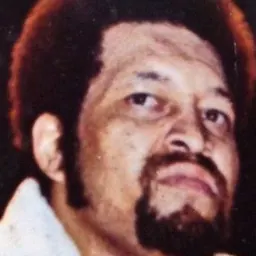

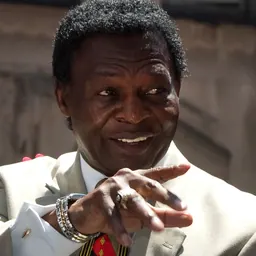
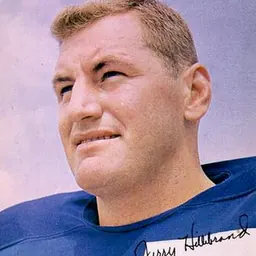
Related people
Same field, nearest in time

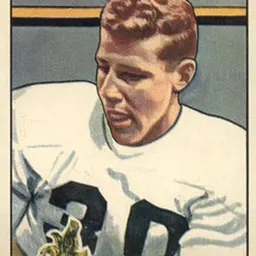

Contemporaries
People whose lives overlapped Brady Keys's

Frequently asked questions
Who was Brady Keys?
American football player (1937-2017)
When was Brady Keys born?
Brady Keys was born on 19 May 1937 in Austin.
When did Brady Keys die?
Brady Keys died on 24 October 2017 in Manhattan.
What was Brady Keys's occupation?
Brady Keys was an american football player.
What nationality was Brady Keys?
Brady Keys was American.
Sources & further reading
Cite this page
APA: Biography.guide. (2026). Brady Keys. https://biography.guide/brady-keys/
MLA: "Brady Keys." Biography.guide, https://biography.guide/brady-keys/.
Chicago: "Brady Keys." Biography.guide. https://biography.guide/brady-keys/.
Data last updated: 2026-09-20 · Spot an error? Report a correction.
Page generated 2026-09-27 05:19 UTC