
About Bradford Gilbert
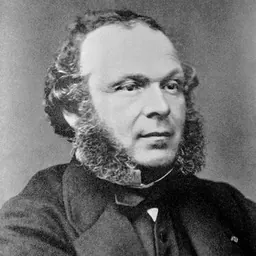
Lived 1853 – 1911 (aged 58). Bradford Gilbert was an American architect.
Bradford Lee Gilbert (March 24, 1853 – September 1, 1911) was a nationally active American architect based in New York City. He is known for designing the Tower Building in 1889, the first steel-framed building anywhere and the first skyscraper in New York City. This technique was soon copied across the United States.
Background Bradford was born in Watertown, New York, the son of civil engineer and banker Horatio Gates Gilbert and his wife Marie Antoinette (née Bacon).
Throughout his career, Gilbert also designed apartment buildings, churches, clubs, exhibition buildings, hospitals, hotels, houses, and office buildings.
This attention to detail may have paid off as many of his other projects steamed from his railroad connections, including designing residences for William H. Baldwin Jr. who was president of the Long Island Railroad, Alfred Skitt who was president of the New York City Interborough Railway Company, Arthur M. Dodge whose father built the Macon and Brunswick Railroad, Benjamin A. Kimball who was president of the Concord and Montreal Railroad Company, and William Greene Raoul president of the Atlantic and Birmingham Railway, the Central Railroad and Banking Company of Georgia, the Mexican National Railroad Company, and the Southwestern Railroad.
Projects
Railroad stations
As an architect with the New York, Lake Erie & Western Railroad, Gilbert designed many railroad stations and related buildings. In 1901, he designed the Ottawa Central Railway Station. He also designed stations, offices and terminals for the National Railroad of Mexico. The first three stories were built from dark speckled granite, with buff brick for the upper levels. The roof was dark glazed Spanish tiles, along with a coppery dome. It was called "the gateway to the city."
Gilbert was also the architect for the 1898 remodel of New York City's Grand Central Terminal—a project started in 1892 where "no expense is to be spared in making the building attractive". The actual cost was around $175,000 (equivalent to $ in today's money). He also criticized designing public buildings in Queen Anne or other overly decorative styles as being both expensive to construct and to maintain. When completed, the Mason Stables were one of the most extensive livery stables in New York City. The five-story stables included 158 stalls and room for more than 300 carriages. In 1912, the stables were remodeled into a car park and were renamed the Dakota Stables (not to be confused with a 19th-century facility with that name), and the Pyramid Garage in the 1950s. Known locally as The Bunker, the building was constructed in 1884. It was converted into residences in 1932 and survives today as a New York City Landmark. The building was located between 5th and 6th Avenues on the north side of 125th Street.
To work around local building ordinances, Gilbert constructed a foundation that was four stories or tall, essentially the height of the adjacent buildings. Some engineers declared it "unsafe and impracticable". In 1889, Engineering News called it "a most skillful solution of an exceedingly difficult problem".
Fire Engine Company No. 258, Hook and Ladder Company No. 115 During his career, Gilbert designed just one firehouse—for Engine Company No. 1 and Hook & Ladder Company No. 1 in Long Island City. Established in 1891, this company was the first professional firefighters in Queens. However, the first base of operation for this ladder company was a modest wood-frame shed.
In 1895, Gilbert designed the Mary F. Ballentine Home for the Aged at 927 Park Ave. in Norfolk, Virginia, for Thomas R. Ballentine. This facility was named after Ballentine's late wife as it was originally her idea. The Ballentine Home was intended to provide a non-institutional, home-like environment for elderly local women, "more specifically gentle folk of irreproachable family." The ornate, gabled house and its estate included a wine cellar, a cottage for servants, a stable, and the first tennis court in Atlanta.
There was a logic to his designs; for example, the Minerals and Forestry Building was constructed of natural Southern woods. Romanesque style was also a good way for Atlanta "to be seen as au courant with America's commercial trends." Gilbert began with a small hotel called Manor Inn, five cottages and the Lodge (or Gatehouse) where the Raoul family lived at first. In 1902, he added three new houses, a wing to the Manor Inn, doubled the size of the dining room and added a stage for musicians. Known cottages credited to Gilbert include Clover, Columbus, Hollyhock, Marigold, and Milfoil. The National Register says, "The Manor and Cottages compose a picturesque small historic district, evocative of Asheville's dramatic turn-of-the-century resort town boom era." Located at the junction of Broad and Peachtree Streets, this triangular-shaped building with eleven stories was the second skyscraper in Atlanta.
Within a year, the building's tenants included National Cash Register Co., Otis Bros. Co. (elevators), Rand McNally Co., Mutual Life Insurance Co., Southern Bell and many others along with its owners and the Knights of the Ku Klux Klan. Remarkably, he was responsible for all aspects of this Charleston world's fair event, from the buildings to the grounds to its infrastructure, including roads, water, sewage, and electricity. Gilbert designed twenty large buildings, including the long Cotton Palace with and its tall dome, and the Administration Building, Agriculture Palace, Art Palace, Auditorium, and the Sunken Garden & Conning Tower Sculpture. In May 1902, Gilbert appeared in court for his lawsuit against the exposition for $16,422.80, the balance due on his $34,422.30 invoice (equivalent to $ in today's money).
Canadian Projects In 1901, he designed the Ottawa Central Railway Station. Construction began in the spring of 1906 to create one of the largest hotels in North America of its day.
Personal In 1872, Gilbert married Cora Rathbone, daughter of the late Captain John Rathbone, in Brooklyn, New York. He was 19 and she was seventeen or eighteen years older. After her husband's death in 1884, Maria McAuley (née Fahy) became the Matron of the Cremorne Mission which Gilbert was a trustee.
Gilbert separated from his wife in January 1887. Her claim was on the basis of infidelity, to be heard in the superior court at White Plains. At the same time, she served Maria McAuley with a $50,000 lawsuit for alienation of affections, with allegations that "were numerous and specific." Standing by Gilbert were banker A.S Hatch, real estate agent Sidney Whittemore, Franklin W. Coe, and other ladies and gentlemen associated with McAuley Mission.
Five years later, McAuley's health declined and doctors believed she would die. Gilbert discontinued his association with the Mission when McAuley left. They also owned a summer home in the Catskills.
Around 1887, Gilbert acquired nearly in Roscoe, New York. There, he constructed his summer retreat, Beaverkill Lodge, named for the nearby river. While designing the 1895 Cobblestone Church in Schenectady, New York, Gilbert donated $800 to build its clock tower in honor of Maria. Gilbert, who was notoriously against ornamentation, also added Celtic designs to several buildings around the time of his marriage to Maria, including the Mason Stables and the Tower Building. On March 15, 1908, the Gilberts conducted services at the Water Street Mission. Gilbert began designing the yacht Jerry McAuley as a gift to The Salvation Army in June 1908. In April 1911, Gilbert was working on designs for a new building to replace the Jerry McAuley Water Street Mission. The new $100,000 building was to include a chapel, dormitories, and modern bathrooms.
On September 1, 1911, at age 58, Gilbert died of dropsy at his summer house in Accord, New York. Acámbaro "Class" Passenger Station 1892 Mexican National Railroad Acámbaro, Mexico museum Alfred Skitt Residence 1903 Alfred Skitt N. Broadway, Yonkers, NY Amoskeag Passenger Station 1892 Concord & Montreal Railroad Manchester, NH residence Annandale Passenger Station 1899 Central Railroad of New Jersey Annandale, NJ razed Berkeley Arms Hotel 1883 Pennsylvania Railroad Company Berkeley Township, NJ burned 1904 Beverly Depot 1897 Boston and Maine Railroad Co. Beverly, MA NRHP Brockton Twin Passenger Stations 1894 New York, New Haven and Hartford Railroad Brockton, MA razed Children's Hospital Reception Building & Nursery 1889 New York City, NY Concord Station, Train Shed, and Office Building 1885 Concord and Montreal Railroad Concord, NH razed 1959 Cotton States and International Exposition 1895 City of Atlanta Atlanta, GA razed Epworth Memorial Methodist Episcopal Church 1890 now Bushwick United Methodist Church Brooklyn, NY in use Essex-Fells Passenger Station 1892 Caldwell Railway Essex Fells, NJ relocated; residence Fire Engine Company 258 / Hook & Ladder Company 115 1904 Fire Department of the City of New York Long Island City, NY still in use Fort Washington Passenger Station 1903 Philadelphia and Reading Company Fort Washington, PA in use Grovetown Passenger Station and Freight Depot 1892 Georgia Railroad Company Grovetown, GA razed 1973 Illinois Central Depot & General Railroad Office 1893 Illinois Central Railroad Chicago, IL razed 1974 Kinston Passenger Station 1905 Atlantic and North Carolina Railroad Kinston, NC razed Laconia Passenger Station 1892 Concord & Montreal Railroad Co. Laconia, NH NRHP Lebanon Passenger Station 1899 Central Railroad of New Jersey Lebanon, NJ restored Liberty Station 1893 New York, Ontario and Western Railway Co. Liberty, NY razed Mary F. Ballentine Home for the Aged 1895 Thomas R. Ballentine Norfolk, VA Middletown Passenger Station, Restaurant & Offices 1893 New York, Ontario & Western Railroad Co. Middletown, NY NRHP Monterey Stations and Offices 1903 Mexican National Railroad Monterey, Mexico Newberry Memorial Chapel at Jefferson Ave. Church 1889 Mrs. John S. Newberry Detroit, MI razed 1950s North Abington station 1894 New York, New Haven & Hartford Railroad North Abington, MA NRHP Pavonia Ferry Slips, Freight Sheds, and Piers 1878– 1881 New York, Lake Erie & Western Railroad New York City, NY Riding Club (renovation and expansion) 1906 Riding Club, James H. Woodward, president New York City, NY razed Roselle Twin Passenger Station 1902 Central Railroad of New Jersey Roselle, NJ razed Sedalia Station with Lunch Room & Railroad Offices 1895 Missouri-Kansas-Texas Railroad Sedalia, MO NRHP Southampton Passenger Station & Baggage Claim 1902 Long Island Rail Road Southampton, NY NPHP, in use Syracuse Passenger Station Offices & Train Shed 1895 New York Central & Hudson River Railroad Syracuse, NY razed Toluca Station 1891 Mexican National Railroad Toluca, Mexico YMCA Building 1893 New York, Ontario & Western Railroad Co. Middletown, NY
Don’t just read it —
keep it.
Full-length biographies made to live with: read them, listen on the way to work, watch them tonight.
- E-book
- Audio
- Video
Instant download · yours to keep · every purchase keeps this site free
Important facts
People in Bradford Gilbert's life
Named in this biography and alive at the same time

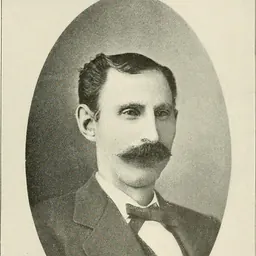

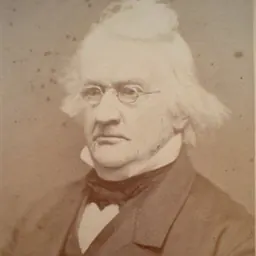

Related people
Same field, nearest in time

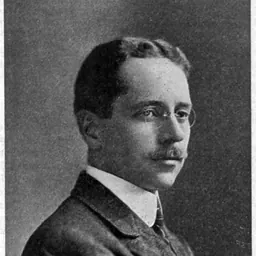
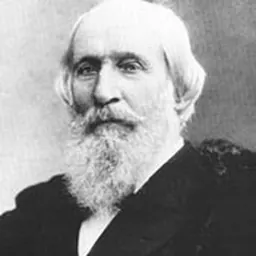
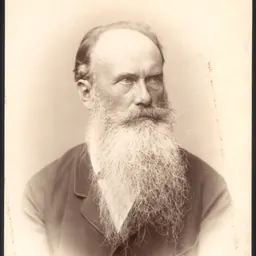
Contemporaries
People whose lives overlapped Bradford Gilbert's
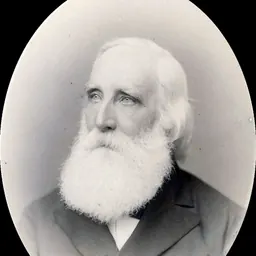
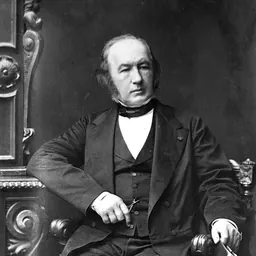
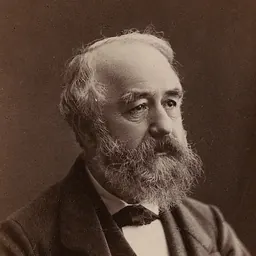

Frequently asked questions
Who was Bradford Gilbert?
American architect
When was Bradford Gilbert born?
Bradford Gilbert was born on 24 March 1853 in Watertown (city), New York.
When did Bradford Gilbert die?
Bradford Gilbert died on 1 September 1911 in Accord, New York.
What was Bradford Gilbert's occupation?
Bradford Gilbert was an architect.
What nationality was Bradford Gilbert?
Bradford Gilbert was American.
Sources & further reading
Cite this page
APA: Biography.guide. (2026). Bradford Gilbert. https://biography.guide/bradford-gilbert/
MLA: "Bradford Gilbert." Biography.guide, https://biography.guide/bradford-gilbert/.
Chicago: "Bradford Gilbert." Biography.guide. https://biography.guide/bradford-gilbert/.
Data last updated: 2026-09-20 · Spot an error? Report a correction.
Page generated 2026-09-27 05:27 UTC