
About Brad Johnson
Born 1968. Brad Johnson is an American american football player and basketball player.
James Bradley Johnson (born September 13, 1968) is an American former professional football quarterback who played in the National Football League (NFL) for 17 seasons with the Minnesota Vikings, Washington Redskins, Tampa Bay Buccaneers, and Dallas Cowboys. He is best known for his time with the Buccaneers, whom he led to a win in Super Bowl XXXVII.
Johnson played college football for the Florida State Seminoles and was selected in the ninth round of the 1992 NFL draft. He is also notable for being the first player in the NFL to complete a touchdown pass to himself, doing so in a 1997 game against the Carolina Panthers. He remained the only player to do so until Marcus Mariota repeated the feat in a 2018 postseason game.
Early life and college Born in Marietta, Georgia, Brad Johnson attended Charles D. Owen High School in Black Mountain, North Carolina. At Owen High School, Johnson played football and basketball; he received All-American honors as quarterback on the football team and all-state honors as a member of the basketball team.
After graduating from Owen High School in 1987, Johnson attended Florida State University. From 1987 to 1989, Johnson played on the Florida State Seminoles men's basketball team and started 11 games as a freshman. In 1988, Johnson joined the football team (under coach Bobby Bowden) at Florida State as a redshirt freshman and served as holder in every game and played two games as quarterback. Johnson won the 1990 Fiesta Bowl title with the Seminoles. As a junior in 1990, Johnson started the first six games of the season before being replaced by Weldon. With a 4–2 record starting those games, Johnson finished the 1990 season with 109-for-163 passing for a career-high 1,136 yards with 8 touchdowns and 5 interceptions. For the third consecutive season with Johnson, Florida State won a bowl game, the Blockbuster Bowl. Johnson would play nine games (with one start – a win) as a senior in 1991.
Professional career
First stint with Minnesota Vikings (1992–1998)
1992–1993 In the 1992 NFL draft, the Minnesota Vikings drafted Johnson in the ninth round as the 227th overall pick. As third-string quarterback behind starter Rich Gannon and backup Sean Salisbury, Johnson dressed for only one game as a rookie in 1992 but did not play. In 1993, Johnson continued to be the third-string quarterback for the first 10 games of the season and was inactive for the final six. Johnson would play in three more games in 1994. In Week 8 (October 30), a 36–13 win over the Tampa Bay Buccaneers, Johnson completed 5 of 5 passes for 30 yards. Johnson had his first significant playing time in Week 15 (December 17), a 41–19 loss to the Detroit Lions. In that game, Johnson completed 14 of 29 passes for 104 yards. Johnson had the most completions of all World League quarterbacks in 1995. Back with the Minnesota Vikings in 1995, Johnson played five games that season. In a 44–24 victory over the Pittsburgh Steelers in Week 4 (September 24), Johnson completed one 36-yard pass. However, Minnesota lost 38–21 to the Green Bay Packers in Week 7 (October 22), a game in which Johnson completed 10 of 17 passes for 94 yards and one interception. In that game, Johnson also rushed once for 3 yards. In Week 11 (November 19), Johnson completed 5 of 7 passes for 70 yards in the Vikings' 43–24 win over the New Orleans Saints. Johnson had 9-for-11 passing for 72 yards but one interception in Week 14 (December 9), and Minnesota defeated the Cleveland Browns 27–11. Overall that game, Johnson completed 16 of 23 passes for 157 yards and rushed three times for 14 yards. Warren Moon would return as starter the following week. Johnson played again in Week 4 with one incomplete pass and saw significant playing time next in Week 8 (October 28), a 15–13 loss to the Chicago Bears. Again replacing an injured Warren Moon, Johnson completed 10 of 15 passes for 79 yards. In the final play of the game, Bryan Cox forced a fumble from Johnson. This was Johnson's only lost fumble of Johnson's five fumbles in 1996. Minnesota finished the regular season 9–7, second place in the NFC Central. Johnson made his postseason debut in the Vikings' NFC Wild Card game against the defending Super Bowl champion Dallas Cowboys on December 28, 1996. Minnesota lost to Dallas 40–15, as Johnson completed 15 of 27 passes for 208 yards, 1 touchdown, and 2 interceptions and rushed 14 yards on three carries for one touchdown. After Johnson passed only 15-for-30 for 117 yards and one interception and was sacked six times, coach Dennis Green benched Johnson and put in Randall Cunningham. The Vikings would lose to the Green Bay Packers 27–11. Cunningham would start the final three games of the season, and Minnesota finished the 1997 season 9–7, won the NFC Wild Card game, and lost the NFC Divisional round.
1998 season Johnson started the first two games of 1998 for the Vikings, both victories. In the season opener, a 31–7 win over Tampa Bay, Johnson threw for 4 touchdowns and 1 interception over 189 yards and completed 15 of 25 passes. Randall Cunningham replaced Johnson, and Minnesota won Week 2 (September 13) over the St. Louis Rams 38–31. By Week 8, with Cunningham as starter, the Vikings had a perfect 7–0 record. Johnson returned to action in Week 9 (November 8), in a 31–24 win over the New Orleans Saints, after Cunningham injured his knee. With 28-for-38 passing over 316 yards, Johnson had one passing touchdown and 2 interceptions. However, Johnson broke his thumb on the first play of the third quarter. Cunningham returned as starter the following week, and Johnson next played in the Week 15 50–10 win over the Jacksonville Jaguars. Minnesota finished the 1998 season a franchise-best 15–1 and advanced to the NFC championship game, where they came a field goal short of the Super Bowl against the Atlanta Falcons. Following the season, Vikings coach Dennis Green formally named Randall Cunningham as starting quarterback and traded Brad Johnson to the Washington Redskins for a first, a future second, and a third-round draft pick.
Washington Redskins (1999–2000)
1999 season With 4,005 yards, 24 touchdowns, 13 interceptions, and a 90.0 passer rating, Johnson achieved career highs in passing yards, completions, touchdowns, and passer rating in 1999. He was also NFC Offensive Player of the Week twice that year again. One such Player of the Week honor came after Week 4 (October 3) after Johnson rallied the Redskins to a 38–36 win over the Carolina Panthers; the Panthers led 21–0 during the game.
Johnson threw more interceptions (15) than touchdowns (11) in a season that saw him start the first nine games of the season and go 6–3 before he tore a ligament in his knee that saw Jeff George start the next three games. Johnson stopped negotiations for a contract extension by October. The Redskins skidded down the stretch, which saw Norv Turner fired for Terry Robiskie when the team fell to 7–6. In the game Johnson returned, he was benched midway through a 9-7 loss to the Giants (where he was just 14-of-29 passes for 126 yards with two interceptions) for George, who started the next two games due to apparent orders from owner Daniel Snyder. Johnson started the last game of the season, which saw the team finish with a 8–8 record.
Johnson signed with Tampa Bay as a free agent during the offseason while George started in Washington for 2001. George would go on to have the worst stats in the league and was released for Tony Banks after the second game with a 0–2 start, while Johnson had a strong season in Tampa Bay and won a Super Bowl the following year.
Tampa Bay and the Super Bowl (2001–2004) In 2001, Johnson was pursued by the Baltimore Ravens in the offseason (coached by Brian Billick, his former offensive coordinator with the Vikings), but he spurned them to join the Buccaneers on a five-year contract worth $28 million. Johnson was reunited with former Vikings assistant-coach Tony Dungy for his first season with the Tampa Bay Buccaneers. That year, he broke the Buccaneers team records for passing yards with 3,406, completions with 340, and attempts with 540. In the 2002 season, he led the Buccaneers to their first Super Bowl championship and earned his second Pro Bowl appearance. He was helped in the Super Bowl by a defense that scored 21 of their 48 points. That year, Johnson also became the first Buccaneers QB to lead the NFC in passer rating at 92.9 and set new team records for passing touchdowns with 22, completion percentage with 62.3, consecutive passes without an interception with 187 and lowest interception percentage with 1.3%. He was NFC Offensive Player of the Week twice.
On January 21, 2015, Johnson later admitted to bribing ball boys to alter the footballs used during the Super Bowl. According to Johnson: "I paid some guys off to get the balls right. I went and got all 100 footballs, and they took care of all of them." He also stated that he "did nothing wrong", and that he talked to opposing Oakland Raiders quarterback Rich Gannon beforehand and both agreed that they preferred not to use the slick, brand-new balls that the league provided for the game.
In 2003, he won the NFL's "Quarterback Challenge" competition, in which he beat Pro Bowl QBs Tom Brady, Matt Hasselbeck, Jeff Garcia, Mark Brunell, Marc Bulger and others like Byron Leftwich and Joey Harrington in a skills competition with four parts involving accuracy, speed and mobility, long distance throw, and "No Huddle." Former teammate Sean Salisbury said that despite having a big, strong arm and a great deep ball, Johnson would tend to throw the fast and easy completion which earned him the nickname "Checkdown Charlie" among friends.
After the Super Bowl, the Buccaneers ran into some problems. Although Johnson had good passing stats in 2003–2004 the year after the Super Bowl (3,811 yards, 26 touchdowns to break the Buccaneers' record again, 21 interceptions, and named 2003 Buccaneers MVP by the Tampa Sports Club) and 2004 (63% completion rate), they benched him in the fourth game of the 2004 season because the team had gone 4–11 in the last 15 games Johnson started. When the backup quarterback Chris Simms was injured they started third-string quarterback Brian Griese instead of Johnson partly because of salary cap problems. Johnson asked out and was cut from the team at the end of the season.
Back in Minnesota (2005–2006) In 2005, Minnesota was struggling with now three-time Pro Bowler Daunte Culpepper starting at quarterback. Randy Moss had been traded in March of that year, and four-time Pro Bowl Center Matt Birk was injured so Culpepper was expected to carry the offense against the top defenses in the NFL. While playing without any offensive weapons, and falling behind early in games the Vikings began the season at 2–5 with Culpepper throwing twice as many interceptions – twelve – as touchdowns – six – and five fumbles (three lost) before tearing his MCL, ACL, and PCL in the seventh game.
Johnson then took over as starting quarterback and the team then finished the season 7–2 with a six-game winning streak needing only one more win to go to the playoffs. Brad played very well and set a team record for lowest interception to attempt ratio (1.3% – same as his record in Tampa) which was the lowest in the NFL among starting QBs. While starting against teams that included the second (Bears), fourth (Ravens), fifth (Steelers), and seventh (Packers) ranked defenses in the NFL his passer rating was the third best in the NFC among starting quarterbacks, and was also better than three QBs selected to the Pro Bowl. But he struggled in those particular games with the exception of the Bears game in which the Bears had already clinched the division and played all of their 2nd and 3rd stringers. He also scored more touchdowns per game than four selected to the Pro Bowl. And despite his age he threw just as many 40+ yard passes as top 29 yr old QB Peyton Manning – six – in seven fewer games, which was the same amount as his Super Bowl year which had four more games.
Johnson was named the starting quarterback for the Vikings' 2006 season, and a few days before the second game he turned 38 which made him the oldest starting quarterback in the league. Many felt his quick-release style was a good fit for then-new coach Brad Childress' highly touted West Coast system. The knowledge he had acquired from going to the playoffs under four different coaching systems and having winning records with seven different head coaches seemed to be an asset for first time head coach Childress. In the preseason, Johnson had a passer rating of 110.7, one of the top 10 in the league out of more than 100 quarterbacks who performed.
However, in the regular season, Johnson struggled more than Daunte Culpepper did in 2005, throwing eight touchdowns to fifteen interceptions. Midway through the season, he had already set an NFL record for passes completed short of a first down on third down in a season. Many fans grew restless for the benching of Johnson because of his conservative checkdowns, immobility, and at the same time reckless decisions which plagued the Vikings offense. His quarterback-rating on 3rd downs, with a lead, from behind, and in the red zone were the worst in the entire league. 31 QBs threw more touchdown passes while only 10 threw more interceptions than Johnson in the 2006 NFL season.
On February 28, 2007, the Vikings released Johnson in favor of rookie quarterback Tarvaris Jackson.
Dallas Cowboys (2007–2008) On March 5, 2007, Johnson signed a three-year deal with the Dallas Cowboys to back up Tony Romo. Johnson played little in the 2007 season. He played in week 17 against the Washington Redskins, going 7-for-11 for 79 yards in the 27–6 loss.
During the 2008 season, Romo suffered a broken pinkie finger on his throwing hand in week 6 against the Arizona Cardinals. Johnson started for the Cowboys during the next three weeks until the injury healed. In Johnson's week 7 start against the St. Louis Rams, he completed 17 of 34 passes for 234 yards with one touchdown and three interceptions. He also had one fumble in the 34–14 loss. In week 8, in a 13–9 win against the Tampa Bay Buccaneers, he passed for 122 yards and one touchdown to Roy Williams, and the Cowboys had the lowest total offensive yards in a winning game: 172 yards. In the week 9 game against the New York Giants, he completed 5 of 11 passes for 71 yards and had two passes intercepted. He was replaced by third-string quarterback Brooks Bollinger at the start of the second half. After the Cowboys' bye week, Romo returned from the broken finger to reclaim the starting role.
The Cowboys released Johnson on February 26, 2009.
Legacy Johnson ranks 63rd in career passer rating in NFL history as of January 2022, above Troy Aikman and Warren Moon, who are 71st and 77th, respectively. Johnson went 72–53 as a starter and completed over 60% of his passes for 13 straight seasons (1995–2007), the first quarterback in NFL history to do so.
Johnson eclipsed the 3,000-yard passing mark five times. In 1999, he became only the second Washington Redskins quarterback in franchise history to eclipse 4,000 yards. He had the top passer rating in the NFC in 2002, the same season he helped the Tampa Bay Buccaneers win Super Bowl XXXVII, and would earn NFC Offensive Player of the Week honors seven times in his career. He would also break many Tampa Bay passing records during his time there as quarterback.
To date, Johnson, Marcus Mariota, and Josh Allen are the only NFL quarterbacks to have thrown touchdown passes to themselves (Mariota doing it in the 2018 NFL playoffs and Allen doing it in Week 13 of the 2024 NFL season). Johnson accomplished this against the Carolina Panthers in 1997, catching his own deflected pass, juking, and running three yards for a touchdown.
NFL career statistics Legend Won the Super Bowl Bold Career high
Regular season Year Team Games Passing Rushing GP GS Record Cmp Att Pct Yds Avg TD Int Rtg Att Yds Avg TD 1994 MIN 4 0 — 22 37 59.5 150 4.1 0 0 68.5 2 −2 −1.0 0 1995 MIN 5 0 — 25 36 69.4 272 7.6 0 2 68.3 9 −9 −1.0 0 1996 MIN 12 8 5–3 195 311 62.7 2,258 7.3 17 10 89.4 34 90 2.6 1 1997 MIN 13 13 8–5 275 452 60.8 3,036 6.7 20 12 84.5 35 139 4.0 0 1998 MIN 4 2 2–0 65 101 64.4 747 7.4 7 5 89.0 12 15 1.3 0 1999 WAS 16 16 10–6 316 519 60.9 4,005 7.7 24 13 90.0 26 31 1.2 2 2000 WAS 12 11 7–4 227 364 62.4 2,505 6.9 11 15 75.7 22 58 2.6 1 2001 TB 16 16 9–7 340 559 60.8 3,406 6.1 13 11 77.7 39 120 3.1 3 2002 TB 13 13 10–3 281 451 62.3 3,049 6.8 22 6 92.9 13 30 2.3 0 2003 TB 16 16 7–9 354 570 62.1 3,811 6.7 26 21 81.5 25 33 1.3 0 2004 TB 4 4 0–4 65 103 63.1 674 6.5 3 3 79.5 5 23 4.6 0 2005 MIN 15 9 7–2 184 294 62.6 1,885 6.4 12 4 88.9 18 53 2.9 0 2006 MIN 15 14 6–8 270 439 61.5 2,750 6.3 9 15 72.0 29 82 2.8 1 2007 DAL 16 0 — 7 11 63.6 79 7.2 0 0 85.0 5 −5 −1.0 0 2008 DAL 16 3 1–2 41 78 52.6 427 5.5 2 5 50.5 2 −1 −0.5 0 Total 177 125 72–53 2,668 4,326 61.7 29,054 6.7 166 122 82.5 276 657 2.4 8
Postseason Year Team Games Passing Rushing GP GS Record Cmp Att Pct Yds Avg TD Int Rtg Att Yds Avg TD 1996 MIN 1 1 0–1 15 27 55.6 208 7.7 1 2 62.0 3 14 4.7 1 1999 WAS 2 2 1–1 35 63 55.6 323 5.1 1 3 55.2 1 0 0.0 0 2001 TB 1 1 0–1 22 36 61.1 202 5.6 0 4 36.8 1 2 2.0 0 2002 TB 3 3 3–0 53 98 54.1 670 6.8 5 3 79.9 8 13 1.6 0 Total 7 7 4–3 125 224 55.8 1,403 6.3 7 12 62.8 13 29 2.2 1
Personal life Johnson has two sons with his wife, Nikki. His brother-in-law is Mark Richt, former head football coach at the University of Georgia and the University of Miami. Johnson's father is Rick Johnson, who helped establish the Winshape Camps after working several years at Ridgecrest Camps. He currently resides in Athens, Georgia. Both of Johnson's sons, Max and Jake, play for the North Carolina Tarheels football team.
He occasionally participates in competitive Pop-A-Shot.
Don’t just read it —
keep it.
Full-length biographies made to live with: read them, listen on the way to work, watch them tonight.
- E-book
- Audio
- Video
Instant download · yours to keep · every purchase keeps this site free
Important facts
People in Brad Johnson's life
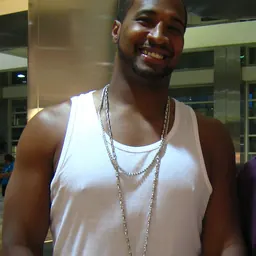
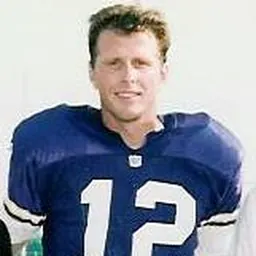
Named in this biography and alive at the same time


Related people
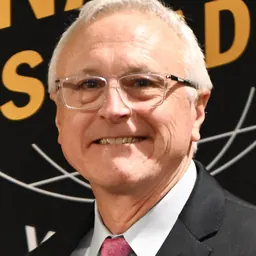
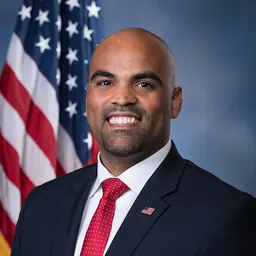
Same field, nearest in time




Contemporaries
People whose lives overlapped Brad Johnson's


Frequently asked questions
Who is Brad Johnson?
American football player
When was Brad Johnson born?
Brad Johnson was born on 13 September 1968 in Marietta.
What is Brad Johnson's occupation?
Brad Johnson is an american football player and basketball player.
What nationality is Brad Johnson?
Brad Johnson is American.
Sources & further reading
· DBpedia: Brad Johnson (American football)
Cite this page
APA: Biography.guide. (2026). Brad Johnson. https://biography.guide/brad-johnson-american-football-player/
MLA: "Brad Johnson." Biography.guide, https://biography.guide/brad-johnson-american-football-player/.
Chicago: "Brad Johnson." Biography.guide. https://biography.guide/brad-johnson-american-football-player/.
Data last updated: 2026-09-20 · Spot an error? Report a correction.
Page generated 2026-09-27 05:23 UTC