
About Bosley Crowther
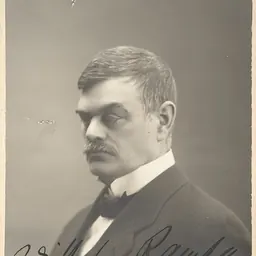
Lived 1905 – 1981 (aged 75). Bosley Crowther was an American journalist, film critic, opinion journalist, author and film journalist.
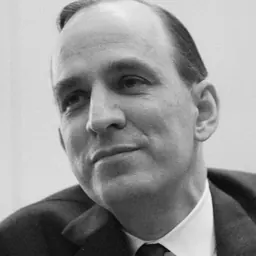
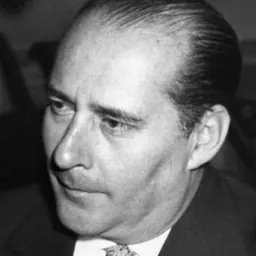
Francis Bosley Crowther Jr. (July 13, 1905 – March 7, 1981) was an American journalist, writer, and film critic for The New York Times for 27 years. His work helped shape the careers of many actors, directors and screenwriters, though some of his reviews of popular films have been seen as unnecessarily harsh. Crowther was an advocate of foreign-language films in the 1950s and 1960s, particularly those of Roberto Rossellini, Vittorio De Sica, Ingmar Bergman, and Federico Fellini.
Life and career Crowther was born Francis Bosley Crowther Jr. in Lutherville, Maryland, the son of Eliza Hay (née Leisenring, 1877–1960) and Francis Bosley Crowther (1874–1950). As a child, Crowther moved to Winston-Salem, North Carolina, where he published a neighborhood newspaper, The Evening Star. His family moved to Washington, D.C., and Crowther graduated from Western High School in 1922. After two years of prep school at Woodberry Forest School, he entered Princeton University, where he majored in history and was editor of The Daily Princetonian. During his final year in 1928, he won The New York Times Intercollegiate Current Events Contest and won a trip to Europe. Following his return, Crowther was offered a job as a cub reporter for The New York Times at a salary of $30 per week. He declined the offer, made to him by the publisher Adolph S. Ochs, hoping to find employment on a small Southern newspaper. When the salary offered by those papers was not half of the Times offer, he went to New York and took the job. He was the first nightclub reporter for the Times, and in 1932 was asked by Brooks Atkinson to join the drama department as assistant drama editor. He spent five years covering the theater scene in New York, and even dabbled in writing for it. They had three sons, Bosley Crowther III, an attorney; John M. Crowther, a writer and artist; and Jefferson, a banker and the father of Welles Remy Crowther, who died in the September 11 attacks in 2001.
In 1937 he became assistant screen editor and in 1940 replaced Frank Nugent as film critic for The New York Times as well as screen editor.
In addition to his film criticism, Crowther wrote The Lion's Share: The Story of an Entertainment Empire (1957), the first book documenting the history of Metro-Goldwyn-Mayer, Hollywood Rajah: The Life and Times of Louis B. Mayer (1960), a biography of the head of the MGM studio, The Great Films: 50 Golden Years of the Motion Picture Industry (1967), and Treasury of the Talking Picture.
In the 1950s, Crowther was an opponent of Senator Joseph R. McCarthy, whose anti-communist crusade targeted the State Department, the administration of Harry S. Truman, the U.S. Army, and individual government employees.
Crowther opposed censorship of films, and advocated greater social responsibility in the making of them. He approved of movies with social content, such as Gone with the Wind (1939), The Grapes of Wrath (1940), Citizen Kane (1941), The Lost Weekend (1945), All the King's Men (1949), and High Noon (1952).
Crowther barely concealed his disdain for Joan Crawford when reviewing her films, saying that her acting style in Female on the Beach (1955) was characterized by "artificiality" and "pretentiousness," and also chided Crawford for her physical bearing. In his review of the Nicholas Ray film Johnny Guitar (1954), Crowther complained that "no more femininity comes from (Crawford) than from rugged Mr. Heflin in Shane (1953). For the lady, as usual, is as sexless as the lions on the public library steps and as sharp and romantically forbidding as a package of unwrapped razor blades".
Though his preferences in popular movies were not always predictable, Crowther in general detested action and war films that depicted violence and gunplay. He defended epics such as Ben-Hur (1959) and Cleopatra (1963), but gave the World War II film The Great Escape (also 1963) a highly unfavorable review, and panned David Lean's later works. He called Lawrence of Arabia (1962) a "thundering camel-opera that tends to run down rather badly as it rolls on into its third hour and gets involved with sullen disillusion and political deceit."
Crowther often admired foreign-language films, especially the works of Roberto Rossellini, Vittorio De Sica, Ingmar Bergman, and Federico Fellini. and called Godzilla (1954) "an incredibly awful film". Crowther dismissed Alfred Hitchcock's Psycho (1960) as "a blot on an otherwise honorable career". After other reviewers praised the film, Crowther recanted his criticism and named it one of the top ten movies of the year, writing that Psycho was a "bold psychological mystery picture.... t represented expert and sophisticated command of emotional development with cinematic techniques." He commented that while Satyajit Ray's Pather Panchali (1955; U.S., 1958) took on "a slim poetic form," the structure and tempo of it "would barely pass as a 'rough cut' with editors in Hollywood". Writing about L'Avventura (1960; U.S., 1961), Crowther said that watching the film was "like trying to follow a showing of a picture at which several reels have got lost."
The career of Bosley Crowther is discussed at length in the 2009 documentary film For the Love of Movies: The Story of American Film Criticism. The film includes discussions of his support for foreign-language cinema and his public repudiation of McCarthyism and the Blacklist. And it includes appearances of critics who appreciate his work, such as A. O. Scott, as well as those who found his work too moralistic, such as Richard Schickel, Molly Haskell, and Andrew Sarris.
Bonnie and Clyde criticism The end of Crowther's career was marked by his disdain for the 1967 film Bonnie and Clyde. He was critical of what he saw as the film's sensationalized violence. His review was negative:
Other critics besides Crowther panned the film. John Simon, the critic of New York magazine, while praising its technical execution, declared "Slop is slop, even served with a silver ladle." Its distributor pulled the film from circulation. However, the critical consensus on Bonnie and Clyde reversed, exemplified by two high-profile reassessments by Time and Newsweek. The latter's Joe Morgenstern wrote two reviews in consecutive issues, the second retracting and apologizing for the first. Time hired Stefan Kanfer as its new film critic in late 1967; his first assignment was an ostentatious rebuttal of his magazine's original negative review. A rave review in The New Yorker by Pauline Kael was also influential.
Even in the wake of this critical reversal, however, Crowther remained one of the film's most dogged critics. He eventually wrote three negative reviews and periodically blasted the movie in reviews of other films and in a letters column response to unhappy Times readers. Crowther worked as an executive consultant at Columbia Pictures after leaving the Times.
Death Crowther died of heart failure on March 7, 1981, at Northern Westchester Hospital in Mount Kisco, New York.
Don’t just read it —
keep it.
Full-length biographies made to live with: read them, listen on the way to work, watch them tonight.
- E-book
- Audio
- Video
Instant download · yours to keep · every purchase keeps this site free
Important facts
People in Bosley Crowther's life
Named in this biography and alive at the same time






Related people
Same field, nearest in time



Contemporaries
People whose lives overlapped Bosley Crowther's





Frequently asked questions
Who was Bosley Crowther?
American film critic (1905–1981)
When was Bosley Crowther born?
Bosley Crowther was born on 13 July 1905 in Lutherville.
When did Bosley Crowther die?
Bosley Crowther died on 7 March 1981 in Mount Kisco.
What was Bosley Crowther's occupation?
Bosley Crowther was a journalist, film critic, opinion journalist, author and film journalist.
What nationality was Bosley Crowther?
Bosley Crowther was American.
Sources & further reading
Cite this page
APA: Biography.guide. (2026). Bosley Crowther. https://biography.guide/bosley-crowther/
MLA: "Bosley Crowther." Biography.guide, https://biography.guide/bosley-crowther/.
Chicago: "Bosley Crowther." Biography.guide. https://biography.guide/bosley-crowther/.
Data last updated: 2026-09-22 · Spot an error? Report a correction.
Page generated 2026-09-27 05:28 UTC