
About Boris Vipper
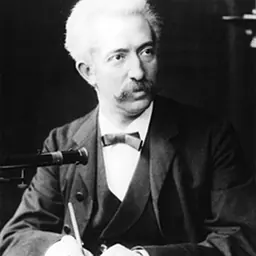
Lived 1888 – 1967 (aged 78). Boris Vipper was a Russian art historian.
Boris Robertovich Vipper (, ; 15 April 1888 – 24 January 1967) was a Russian, Latvian and Soviet art historian.
Early life and education Boris Robertovich Vipper was born in Moscow, in the Russian Empire, the only son of historian Robert Wipper, who was of Austrian origin (his ancestors arrived in Russia in the 1820s from Bregenz), and his wife Anastasiia Vasilievna Akhramovich, an ethnic Belarusian. He attended the VII Moscow Classical Gymnasium, completing his studies in 1906, and applied for entrance to the Imperial Moscow University, where his father was employed. Vipper studied at the historical-philological faculty, graduating in 1911. In 1918 he obtained a master's degree at the same institution, defending his thesis on "The problem and development of still life". At this time, with his father's views on history coming under criticism from the new Soviet authorities, the Vippers moved to newly-independent Latvia to continue their academic career. A specialist in European art, Boris Vipper taught history and art theory at the Latvian Academy of Arts, and from 1932 at the University of Latvia, making a substantial contribution to the research on Latvian art. Due to a lack of knowledge of Latvian, he taught in Russian until 1929, when he was forbidden to do so by the authorities. In 1944 he returned to the capital to teach at the Moscow State University, where he taught general art history until 1955, as well as work at the Pushkin Museum and as a senior researcher at the Institute of Art History of the Academy of Sciences of the Soviet Union, holding both positions until his death.
Published works His fundamental works are dedicated to the main problems in art history and include questions of realism, struggles between art schools and historical development of styles and genres. His propaedeutic course for art historians, Introduction to the Historical Study of Arts, was unique for its deep and thorough analysis of technical problems and genres. He covered primitive to 20th-century art.
Latvijas māksla baroka laikmetā, Rīga, 1937 Baroque art in Latvia, Rīga, 1939 Проблема и развитие натюрморта, Казань, 1922 Тинторетто. М., 1948 Борьба течений в итальянском искусстве XVI века, М., 1956 Становление реализма в голландской живописи XVII века, М., 1957 Очерки голландской живописи эпохи расцвета (1640-1670), М., 1962 Проблемы реализма в итальянской живописи XVII-XVIII вв., М., 1966 Статьи об искусстве, М., 1970 Введение в Историческое изучение искусства. М. 1970
Don’t just read it —
keep it.
Full-length biographies made to live with: read them, listen on the way to work, watch them tonight.
- E-book
- Audio
- Video
Instant download · yours to keep · every purchase keeps this site free
Important facts
People in Boris Vipper's life
Named in this biography and alive at the same time

Related people
Same field, nearest in time
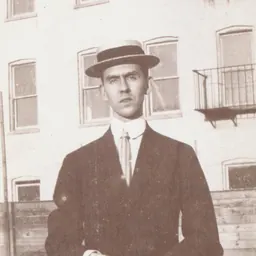

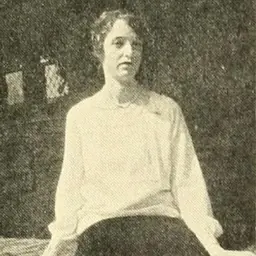

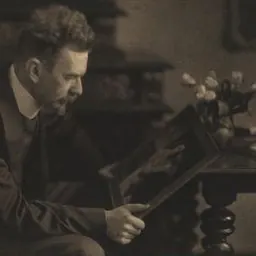
Contemporaries
People whose lives overlapped Boris Vipper's




Frequently asked questions
Who was Boris Vipper?
Latvian-Russian art historian (1888–1967)
When was Boris Vipper born?
Boris Vipper was born on 3 April 1888 in Moscow.
When did Boris Vipper die?
Boris Vipper died on 24 January 1967 in Moscow.
What was Boris Vipper's occupation?
Boris Vipper was an art historian.
What nationality was Boris Vipper?
Boris Vipper was Russian.
Sources & further reading
Cite this page
APA: Biography.guide. (2026). Boris Vipper. https://biography.guide/boris-vipper/
MLA: "Boris Vipper." Biography.guide, https://biography.guide/boris-vipper/.
Chicago: "Boris Vipper." Biography.guide. https://biography.guide/boris-vipper/.
Data last updated: 2026-09-20 · Spot an error? Report a correction.
Page generated 2026-09-27 05:04 UTC