
Bobby Ross
American football player and coach
About Bobby Ross
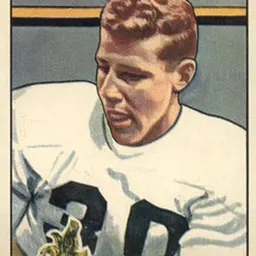
Born 1936. Bobby Ross is an American american football player, american football coach and basketball player.
Robert Joseph Ross (born December 23, 1936) is an American former football coach. He served as the head football coach at The Citadel (1973–1977), the University of Maryland, College Park (1982–1986), Georgia Tech (1987–1991), and the United States Military Academy (2004–2006), compiling a career college football coaching record of 103–101–2. Ross was also the head coach of the National Football League's San Diego Chargers from 1992 to 1996 and the Detroit Lions from 1997 to 2000, tallying a career NFL mark of 77–68. He guided his 1990 Georgia Tech squad to the UPI national championship and coached the 1994 San Diego Chargers to an appearance in Super Bowl XXIX.
Education and playing career After graduating from Benedictine High School in 1955, Ross enrolled at the Virginia Military Institute, where he started at quarterback and defensive back for two seasons and served as captain of the football team as a senior. Ross graduated from VMI in 1959 with a Bachelor of Arts degree in English and history.
Coaching career Early years Following a tour of duty in the United States Army as a first lieutenant (1960–1962), Ross found work coaching high school football. He coached at Colonial Heights High School, and at his own nearby alma mater of Benedictine, both located near Richmond, Virginia. He then moved on to coaching at the college level, starting with assistant coaching stints at William & Mary, Rice, and Maryland before accepting his first head coaching job in 1973 at The Citadel, The Military College of South Carolina, located in Charleston, South Carolina.
Ross was the 16th head football coach at The Citadel and held that position for five seasons, from 1973 until 1977. His record at The Citadel was 24 –31.
Ross then spent four years as an assistant coach with the Kansas City Chiefs (1978–1981) under head coach Marv Levy, before returning to the collegiate ranks as head coach at Maryland. He won three consecutive Atlantic Coast Conference (ACC) Championships from 1983 to 1985. After five seasons, Ross left Maryland and was introduced as head coach of the Georgia Tech Yellow Jackets football team. on January 5, 1987.
As head coach of Georgia Tech in 1990, he led the Jackets to their best season in years. They started the year unranked, but they rose all the way to eleven by the sixth week of the season, having beat two ranked teams on their way to a 5–0 record. Their one blemish came against North Carolina, whom they tied 13–13 (ties would be abolished by the NCAA years later). After going from 11 to 16 in the AP Poll, the Jackets rolled on, with their best achievement being against Virginia. In that game, 16th ranked Tech faced #1 Virginia on the road. They rallied from a 28–14 halftime deficit to win 41–38 on a Scott Sisson field goal with seven seconds remaining. From there, Tech continued to win and rise in the polls, going from 16th to seventh to fourth to second by the time of their final game of the regular season against Georgia, which they won to clinch an unbeaten record of 11–0–1 record. The ACC championship was the school's first conference title since 1952, while they were still in the Southeastern Conference. As such, they were invited to play in the 1991 Florida Citrus Bowl as ACC championship against Nebraska (ranked 19th in the AP Poll) on January 1, 1991, the same day that #1 Colorado played in the Orange Bowl. The Yellow Jackets prevailed 45–21.
Colorado had gone 5–1–1 against ranked teams (while Tech won all four of their ranked games), but what set off debate was their victory in a game later called the Fifth Down Game, in which an error by the officials helped Colorado prevail over Missouri. A subsequent 10–9 squeaker over Notre Dame in the Orange Bowl led to further debate, as there was no sort of alliance between Division I-A teams to force a national championship game until the Bowl Coalition in 1992.
Later that year, the UPI Coaches' Poll ranked the Yellow Jackets first and were awarded the UPI national championship trophy, while Colorado kept their top spot in the AP Poll. Ross won the Paul "Bear" Bryant Award and the Bobby Dodd Coach of the Year Award.
San Diego Chargers On December 31, 1991 (less than a week after the season ended for Georgia Tech), Ross announced his decision to take the head coaching position of the San Diego Chargers. He had been approached by general manager Bobby Beathard about the position days after the team fired Dan Henning. Among the hires to serve under Ross in his first season was Bill Arnsparger, who was hired to serve as defensive coordinator. The 1992 season started with ominous undertones, as presumed starter John Friesz hurt his knee in the preseason that saw him not play a down in the regular season. The Chargers went with trading for Stan Humphries, the backup to Mark Rypien of the Washington Redskins; Humphries would start in week two. The Chargers lost the first four games of the season, which saw them lose by at least eight points in each contest. Facing Seattle, they prevailed 17–6 and proceeded to go on a tear the rest of the regular season, which saw them win all but one remaining game to go 11–5, which was bolstered by Humphries at quarterback to go with a defense led by Junior Seau and Leslie O'Neal. The Chargers clinched the AFC West title win in the last game of the season for their first division title since 1981 and first playoff bid since 1982. As of 2022, the 1992 Chargers are the only team in NFL history to reach the playoffs after starting 0–4. The Chargers won the Wild Card round game against Kansas City before being trounced by Miami in the Divisional Round.
The 1993 season saw injuries to Humphries and inconsistent play that saw them go 8–8 and miss the playoffs. The 1994 season saw an overhaul with a usage of Natrone Means to carry the ball while Tony Martin, Shawn Jefferson and Mark Seay were expected to deliver receiving potential. The team was not expected to contend heavily in the AFC by some in the press. Means would rush for 1,350 yards while the receiving trio caught a combined total of over 2,000 yards from Humphries. San Diego won their first six games to start the season. They split their last four games but managed to finish with eleven wins and an AFC West championship. Their record was good enough for the second seed in the AFC playoffs. Hosting the Dolphins in the Divisional Round, the Chargers got onto a slow start that saw Miami lead 21–6 at halftime. They started the second half with a lengthy seven-minute drive in which Ross elected to go for it on 4th and Goal from the 1. The conversion failed, but it left Miami at the one-yard line. A subsequent tackle in the endzone got the Chargers two points and a free kick, which they converted into a subsequent touchdown to narrow the deficit. Trailing by six, Seay caught the go-ahead touchdown pass with 35 seconds remaining before Miami's last-ditch field goal attempt fell short. San Diego was headed to their first AFC Championship in nearly two decades, and they were matched against the Pittsburgh Steelers. The two teams had met in the final week of the season, which saw San Diego win 37–34. The Steelers were heavy favorites, particularly since they were hosting the Championship Game, with Myron Cope even calling the Charger squad "San Diego beach boys" while one player made discussion of producing and promoting a Super Bowl rap video. Pittsburgh jumped out to an early lead on the strength of an opening drive touchdown. San Diego trailed 13–3 midway through the third quarter. With eight minutes remaining in the quarter, the team went for the big play, and Alfred Pupunu caught a pass from Humphries to go for 43 yards and a touchdown to narrow the score. The Steelers passed for over 300 yards but could not get past the end zone after the opening drive touchdown. In the fourth quarter, Martin caught a pass from Humphries and went 43 yards for the touchdown to give San Diego their first lead with 5:13 remaining. Pittsburgh made a last-ditch attempt at a drive that saw them at the 3-yard line with 4th and goal. However, Dennis Gibson batted the ball away from Steeler hands to clinch the game for San Diego. For the first time ever, the Chargers had won an AFC Championship and reached Super Bowl XXIX. In the Super Bowl, they were 18.5-point underdogs to the San Francisco 49ers. Three plays into the game, the 49ers scored on a touchdown throw. Five minutes into the game, the Chargers were down 14–0 on another touchdown drive by San Francisco. The Chargers were trounced 49–26 in a game that they never led at any point.
The following season was turbulent for the defending AFC champions. The Chargers won three of their first four games but saw two separate skids of three game losing streaks that saw them at 4–7. They won their last five games in a row to narrowly reach the playoffs as a wild card team. They hosted the Indianapolis Colts but lost 35–20. The 1996 season saw the team win four of their first five games, but they sputtered into 4–4 halfway through the season and a three-game losing streak near the end doomed their playoff chances as they finished 8–8. San Diego was in the bottom half of both offense and defense. On January 3, 1997, Ross resigned from the Chargers with two years remaining on his contract. Disagreements with Beathard involved the latter's displeasure with the coordinators of Ross (Ralph Friedgen on offense and Dave Adolph on defense) and the way that the coaching staff used young players. In his press conference, Ross stated, "I did not want this to come about, but it was apparent at the onset of our end-of-the-season discussions that Bobby Beathard felt that our philosophical differences could not be overcome. I was surprised by that, but as time continued it appeared that was the case. I've been through tougher things than this. I think I'll survive." In his five seasons with the Chargers, they won two division titles and made the playoffs three times. His regular season coaching record with the Chargers was 47–33, and 3–3 in the playoffs. In November 2000, following a home loss to the Miami Dolphins, having had enough of what he called his team's unwillingness to "fight back," he resigned mid-season. Although his frustration with the Lions organization was evident, Ross later claimed that his primary reason for leaving when he did was due to blood clots in his legs. During his three-year term as Army head coach, Ross improved their record to 9–25, up from 4–32 over the three years before Ross's arrival. Ross retired from coaching in 2007.
Personal life Ross and his wife, Alice, have three sons, two daughters, and 18 grandchildren. Their sons Chris and Kevin graduated from the United States Air Force Academy and United States Naval Academy, in 1984 and 1988, respectively. Kevin served for a time as Army's offensive coordinator and running backs coach under his father, but was not kept in that post under Ross's replacement, Stan Brock. Chris is currently the coach for Fairfax Home School's varsity soccer team, based in Fairfax, Virginia.
Honors In 1997, Ross was inducted into the Virginia Sports Hall of Fame.
Head coaching record College
NFL Team Year Regular season Post season Won Lost Ties Win % Finish Won Lost Win % Result SD 1992 11 5 0 .688 1st in AFC West 1 1 .500 Lost to Miami Dolphins in AFC Divisional Game SD 1993 8 8 0 .500 4th in AFC West — — — — SD 1994 11 5 0 .688 1st in AFC West 2 1 .677 Lost to San Francisco 49ers in Super Bowl XXIX SD 1995 9 7 0 .563 2nd in AFC West 0 1 .000 Lost to Indianapolis Colts in AFC wild card game SD 1996 8 8 0 .500 3rd in AFC West — — — — SD Total 4733 0 .588 3 3 .500 DET 1997 9 7 0 .563 3rd in NFC North 0 1 .000 Lost to Tampa Bay Buccaneers in NFC Wild Card Game DET 1998 5 11 0 .313 4th in NFC North — — — — DET 1999 8 8 0 .500 3rd in NFC North 0 1 .000 Lost to Washington Redskins in NFC Wild Card Game DET 2000 5 4 0 .556 Resigned after week 10 — — — — DET Total 2730 0 .474 0 2 .000 Total 7463 0 .540 3 5 .375
Don’t just read it —
keep it.
Full-length biographies made to live with: read them, listen on the way to work, watch them tonight.
- E-book
- Audio
- Video
Instant download · yours to keep · every purchase keeps this site free
Important facts
People in Bobby Ross's life
Named in this biography and alive at the same time
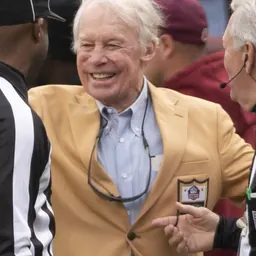



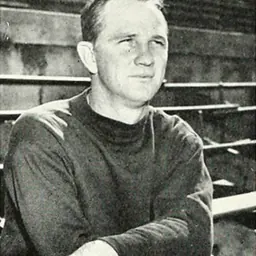
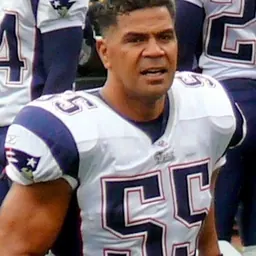
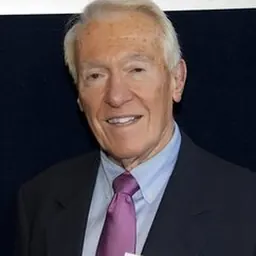

Related people
Same field, nearest in time




Contemporaries
People whose lives overlapped Bobby Ross's





Frequently asked questions
Who is Bobby Ross?
American football player and coach
When was Bobby Ross born?
Bobby Ross was born on 23 December 1936 in Richmond.
What is Bobby Ross's occupation?
Bobby Ross is an american football player, american football coach and basketball player.
What nationality is Bobby Ross?
Bobby Ross is American.
Sources & further reading
Cite this page
APA: Biography.guide. (2026). Bobby Ross. https://biography.guide/bobby-ross-american-football-player/
MLA: "Bobby Ross." Biography.guide, https://biography.guide/bobby-ross-american-football-player/.
Chicago: "Bobby Ross." Biography.guide. https://biography.guide/bobby-ross-american-football-player/.
Data last updated: 2026-09-26 · Spot an error? Report a correction.
Page generated 2026-09-27 05:14 UTC