
About Bob Tillman
Lived 1937 – 2000 (aged 63). Bob Tillman was an American baseball player.
John Robert Tillman (March 24, 1937 – June 23, 2000) was an American professional baseball player. He played in Major League Baseball as a catcher for the Boston Red Sox (1962–67), New York Yankees, and Atlanta Braves (1968–70). He threw and batted right-handed, stood tall and weighed . As a Nashville high school athlete in 1955, he was selected as the Most Valuable Player in baseball by the Nashville Interscholastic League, All-State in football at quarterback, and All-District in basketball.
Early life Tillman was born on March 24, 1937, in Nashville, Tennessee. Tillman graduated from Isaac Litton High School in Nashville, where he starred as a catcher, shortstop and pitcher on the school's baseball team. As a baseball player for Litton, he was the Nashville Interscholastic League's (NIL) Most Valuable Player in 1955. Tillman also led the Litton Lions to an Eastern Division championship, pitching a two-hitter in the championship game. He was named All-Nashville at shortstop. In November 1955, he was named the All-State quarterback in football, as well as All-Nashville.
He attended Middle Tennessee State University (MTSU) and Georgia Tech (the Georgia Institute of Technology). It has been reported that he originally attended Georgia Tech on a basketball scholarship, and then transferred to MTSU where he played on the football team. It has also been reported that he attended Georgia Tech on a football scholarship, and played quarterback on the freshman team in 1956, before transferring to MTSU where he lettered in both football and baseball. He was a backup quarterback at MTSU.
Professional career
Boston Red Sox George Digby, the Boston Red Sox famed baseball scout, signed Tillman for the Red Sox as an amateur free agent in January 1958. The Red Sox paid him a $10,000 signing bonus.
In 1959, he was promoted to the Single-A Allentown Red Sox of the Eastern League. In only 364 at bats he hit 25 home runs, with 72 RBIs, 55 runs and an .883 OPS. He had a .978 fielding percentage, with 16 errors and 21 passed balls at catcher. He was tied for fourth in home runs in the Eastern League, even though he had 100-200 less at bats than the players equal to or ahead of him in home runs.
In 1960, the Red Sox assigned Tillman to the Triple-A Minneapolis Millers of the American Association. He hit .256 with 24 home runs and 82 RBIs, and a .978 fielding percentage at catcher. Tillman worked out with the Red Sox in spring training before the 1961 season. He was given an opportunity to play first base because the Red Sox liked his power as a right-handed hitter for playing in Fenway Park, and the team had Russ Nixon and Jim Pagliaroni in place as catchers. Before that, Tillman's only experience as a first baseman was playing two games there in high school. Red Sox first baseman Vic Wertz and coach Rudy York (who had played over 1,000 major league games at first base) worked with Tillman on the position. During his subsequent major league career, Tillman never played first base.
Red Sox He made the 1962 Red Sox' roster out of spring training as one of Boston's three catchers (with Pagliaroni and Nixon). In his rookie season, Tillman started 59 games at catcher, chiefly splitting time with Pagliaroni who had 68 starts. Tillman had a .983 fielding percentage. Overall, Tillman played in 81 games, with 14 home runs and 38 RBIs in only 249 at bats, and a .229 batting average. He enjoyed his first year with the Red Sox, but he called all of his later seasons in Boston "pure drudgery".
In 1963, Tillman started 89 games at catcher for the Red Sox. He had a .992 fielding percentage (fourth best in the American League), but led all American League catchers in allowing 43 stolen bases. He hit .225, with eight home runs, 32 RBIs and a .653 OPS.
His finest offensive season came in , under his former Seattle manager Johnny Pesky. Tillman set personal bests in almost every offensive category, hitting .278 with 17 home runs, 18 doubles, 43 runs scored, 61 RBIs, 49 bases on balls and a .796 OPS, in 131 games played and 425 at bats. Defensively, he had a .989 fielding percentage, but allowed the most stolen bases of any catcher in the Major Leagues (61).
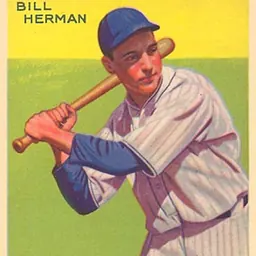
In 1965, he played in 20 fewer games, and hit only .215, with six home runs and 35 RBIs, under new manager Billy Herman. Tillman led the American League for the third consecutive year in allowing the most stolen bases (50). In 1966, Herman made Mike Ryan the starting catcher. Tillman hit .230, with three home runs and 24 RBIs in 204 at bats.
Dick Williams became the Red Sox manager in 1967, and played Ryan and Russ Gibson ahead of Tillman at catcher. Tillman spent the first four months of the Red Sox' pennant-winning season on the Boston roster, getting into 30 games, before his contract rights were sold to the New York Yankees on August 8.
Tillman caught two no-hitters during his Red Sox days: Earl Wilson's in 1962, and Dave Morehead's in 1965.
New York Yankees and Atlanta Braves Tillman played in 21 games for the Yankees, starting 15 at catcher. He hit .254 with two home runs and nine RBIs in 63 at bats.
Torre's finger was injured on a foul tip during the Braves home opener on April 12, 1968. Tillman entered the game and hit a game-winning two run home run. Torre returned to play after a few days, but on April 18 he was hit in the face by a Chuck Hartenstein pitch, suffering fractures in his cheekbone and palate. He did not return to play until May 19. On the season, Torre started 85 games catching and 28 at first base. Tillman started 66 games catching. Tillman hit .220, with five home runs and 20 RBIs in 236 at bats.
Before the start of the 1969 season, the Braves traded Torre to the St. Louis Cardinals for future Hall of Fame first baseman Orlando Cepeda. Tillman temporarily retired in training camp, before rejoining the team. Rookie Bob Didier became the starting catcher in Torre's place, with Tillman the backup catcher.
In 1969, Didier had a .256 batting average in 352 at bats, playing in 114 games for the Braves. In 1970, he started 48 games at catcher, but hit .149 in 57 total games for the Braves, and was sent down to the Triple-A Richmond Braves on July 12, with a .157 batting average; though recalled for some late season games. The majority of catching duties were split between Tillman (63 starts at catcher) and Hal King (51 starts). Tillman hit .238, with 11 home runs and 30 RBIs in 223 at bats.
On December 2, 1970, the Braves traded Tillman to the Milwaukee Brewers for Hank Allen, Paul Click and minor-league infielder John Ryan at the Winter Meetings. The Brewers released Tillman in February 1971, ending his Major League career.
In April 1984, at age 47, Tillman underwent heart surgery in Nashville's Baptist Hospital after suffering a heart attack.
He died of a heart attack at his home on June 23, 2000, in Gallatin, Tennessee, at the age of 63. A moment of silence was observed in his honor at an Atlanta Braves game.
Don’t just read it —
keep it.
Full-length biographies made to live with: read them, listen on the way to work, watch them tonight.
- E-book
- Audio
- Video
Instant download · yours to keep · every purchase keeps this site free
Important facts
People in Bob Tillman's life
Named in this biography and alive at the same time





Related people
Same field, nearest in time


Contemporaries
People whose lives overlapped Bob Tillman's

Frequently asked questions
Who was Bob Tillman?
American baseball player
When was Bob Tillman born?
Bob Tillman was born on 24 March 1937 in Nashville.
When did Bob Tillman die?
Bob Tillman died on 23 June 2000 in Gallatin.
What was Bob Tillman's occupation?
Bob Tillman was a baseball player.
What nationality was Bob Tillman?
Bob Tillman was American.
Sources & further reading
Cite this page
APA: Biography.guide. (2026). Bob Tillman. https://biography.guide/bob-tillman/
MLA: "Bob Tillman." Biography.guide, https://biography.guide/bob-tillman/.
Chicago: "Bob Tillman." Biography.guide. https://biography.guide/bob-tillman/.
Data last updated: 2026-09-20 · Spot an error? Report a correction.
Page generated 2026-09-27 05:32 UTC