
Black Dahlia
American murder victim
About Black Dahlia
Lived 1924 – 1947 (aged 22–23). Black Dahlia was an American waiter and domestic worker.
Elizabeth Short (July 29, 1924 – , 1947), posthumously known as the Black Dahlia, was an American woman found murdered in the Leimert Park neighborhood of Los Angeles, California, on January 15, 1947. Her case became highly publicized owing to the gruesome nature of the crime, which included the mutilation and bisection of her corpse.
A native of Boston, Short spent her early life in New England and Florida before relocating to California, where her father lived. It is commonly held that she was an aspiring actress, though she had no known acting credits or jobs during her time in Los Angeles. Short acquired the nickname of the Black Dahlia posthumously, as newspapers of the period often nicknamed particularly lurid crimes; the term may have originated from the film noir thriller The Blue Dahlia (1946). After the discovery of her body, the Los Angeles Police Department (LAPD) began an extensive investigation that produced over 150 suspects but yielded no arrests.
Short's unsolved murder and the details surrounding it have had a lasting cultural impact, generating various theories and public speculation. Her life and death have been the basis of numerous books and films, and her murder is frequently cited as one of the most famous unsolved murders in U.S. history, as well as one of the oldest unsolved cases in Los Angeles County. It has likewise been credited by historians as one of the first major crimes in postwar America to capture national attention.
Life Childhood Elizabeth Short was born on July 29, 1924, in the Hyde Park neighborhood of Boston, Massachusetts, the third of five daughters to Cleo Alvin Short Jr. (October 18, 1885 – January 19, 1967) and his wife, Phoebe May Sawyer (July 2, 1897 – March 1, 1992). Her sisters were Virginia May West (1920–1985), Dorothea Schloesser (1922–2012), Elnora Chalmers (1925–2022) and Muriel Short (1929–2023). Short's father was a United States Navy sailor from Gloucester Courthouse, Virginia, while her mother was a native of Milbridge, Maine. The Shorts were married in Portland, Maine, in 1918. before settling in Medford, Massachusetts, a suburb of Boston, that same year.
Short's father built miniature golf courses until he lost most of his savings in the 1929 stock market crash. In 1930, his car was found abandoned on the Charlestown Bridge, and it was assumed that he had jumped into the Charles River. Believing her husband to be deceased, Short's mother began working as a bookkeeper to support the family.
Troubled by bronchitis and severe asthma attacks, Short underwent lung surgery at age 15, after which doctors suggested she periodically relocate to a milder climate to prevent further respiratory problems. Her mother sent her to spend winters with family friends in Miami, Florida, for the next three years. Short dropped out of Medford High School during her sophomore year.
Relocation to California
In late 1942, Short's mother received a letter of apology from her presumed-deceased husband, which revealed that he was in fact alive and had started a new life in California. In December of that year, at age 18, Short relocated to Vallejo, California, to live with her father, whom she had not seen since age 6. At the time her father was working at the nearby Mare Island Naval Shipyard on San Francisco Bay. Arguments between Short and her father led to her moving out in January 1943.
Short took a job at the Base Exchange at Camp Cooke (now Vandenberg Space Force Base) near Lompoc, California, briefly living with a United States Army Air Force sergeant who reportedly abused her. She left Lompoc in mid-1943 and moved to Santa Barbara, where she was arrested on September 23 for drinking at a local bar while underage. Juvenile authorities sent her back to Massachusetts, but she returned instead to Florida, making only occasional visits to her family near Boston.
While in Florida, Short met Major Matthew Michael Gordon Jr., a decorated Army Air Force officer of the 2nd Air Commando Group, who was training for deployment to Southeast Asian theater of World War II. Short later told friends that Gordon had written to propose marriage while he was recovering from injuries from a plane crash in India. She accepted his offer, but Gordon died in a second crash on August 10, 1945. Short's sister Dorothea also served in the war and was assigned to decode Japanese messages.
In July 1946, Short relocated to Los Angeles to visit Army Air Force Lieutenant Joseph Gordon Fickling, an acquaintance from Florida, who was stationed at the Naval Reserve Air Base in Long Beach. Short spent the last six months of her life in southern California, mostly in the Los Angeles area; shortly before her death she had been working as a waitress and rented a room behind the Florentine Gardens nightclub on Hollywood Boulevard. Short has been variously described and depicted as an aspiring or "would-be" actress. According to some sources, she did in fact have aspirations to be a film star, though she had no known acting jobs or credits.
Murder Prior activities On January 9, 1947, Short returned to her home in Los Angeles after a brief trip to San Diego with Robert "Red" Manley, a 25-year-old married salesman she had been dating. Manley stated that he dropped Short off at the Biltmore Hotel in downtown Los Angeles, and that Short was to meet one of her sisters, who was visiting from Boston, that afternoon. By some accounts, staff of the Biltmore recalled having seen Short using the lobby telephone.Gini Graham Scott states in American Crime that Short was sighted at the Biltmore on January 9, though a Los Angeles Times article published in 1997 calls into question the validity of this, noting that mention of the Biltmore sighting "cannot be found in heated news accounts of the day, which reported on every conceivable contact anyone had with Short in the so-called 'missing week' before her death." Medical examiners determined that she had been dead for around ten hours prior to the discovery, leaving her time of death either sometime during the evening of January 14 or the early morning hours of January 15. The body apparently had been washed by the killer. Short's face had been slashed from the corners of her mouth to her ears, creating an effect known as the "Glasgow smile".
Autopsy and identification An autopsy of Short's body was performed on January 16, 1947, by Frederick Newbarr, the Los Angeles County coroner. Newbarr's autopsy report stated that Short was tall, weighed and had light blue eyes, brown hair and badly decayed teeth. (Short's autopsy notes her bottom teeth were in a significant state of decay.) In Severed, John Gilmore writes that Short allegedly plugged her cavities with wax, and this supposed fact was reprinted (albeit with pointed skepticism) in a 1997 Los Angeles Times article. It was only after prying as much personal information as they could from Phoebe that the reporters revealed that her daughter had in fact been murdered. Phoebe Short initially could not believe what the reporters had told her. She refused to believe that her daughter had been murdered until eventually she received confirmation from the Los Angeles Police through her local police department.
The Examiner also offered to pay Phoebe's airfare and accommodations if she would travel to Los Angeles to help with the police investigation; that was yet another ploy since the newspaper kept her away from police and other reporters to protect its scoop. The Examiner and another Hearst newspaper, the Herald-Express, later sensationalized the case, with one Examiner article describing the black tailored suit Short was last seen wearing as "a tight skirt and a sheer blouse." The media nicknamed her the "Black Dahlia", and described her as an "adventuress" who "prowled Hollywood Boulevard." Additional newspaper reports, such as one published in the Los Angeles Times on January 17, deemed the murder a "sex fiend slaying."
Investigation Initial investigation Letters and interviews On January 21, a person claiming to be Short's killer placed a phone call to the office of James Richardson, the editor of the Examiner, congratulating Richardson on the newspaper's coverage of the case and stating he planned on eventually turning himself in, but not before allowing police to pursue him further. Additionally, the caller told Richardson to "expect some souvenirs of Beth Short in the mail".
Three days later, a suspicious manila envelope was discovered, addressed to "The Los Angeles Examiner and other Los Angeles papers", with individual words that had been cut-and-pasted from newspaper clippings; additionally, a large message on the face of the envelope read: "Here is Dahlia's belongings[,] letter to follow." The envelope contained Short's birth certificate, business cards, photographs, names written on pieces of paper and an address book with the name Mark Hansen embossed on the cover. The packet had been carefully cleaned with gasoline, similarly to Short's body, which led police to suspect the packet had been sent directly by her killer. Despite efforts to clean the packet, several partial fingerprints were lifted from the envelope and sent to the FBI for testing; however, the prints were compromised in transit and thus could not be properly analyzed. The same day the packet was received by the Examiner, a handbag and a black suede shoe were reported to have been seen on top of a garbage can in an alley a short distance from Norton Avenue, from the crime scene. The items were recovered by police but had also been wiped clean with gasoline, destroying any fingerprints.
On March 14, an apparent suicide note scrawled in pencil on a bit of paper was found tucked in a shoe in a pile of men's clothing by the ocean's edge at the foot of Breeze Avenue in Venice. The note read: "To whom it may concern: I have waited for the police to capture me for the Black Dahlia killing, but have not. I am too much of a coward to turn myself in, so this is the best way out for me. I couldn't help myself for that, or this. Sorry, Mary." The pile of clothing was first seen by a beach caretaker, who reported the discovery to lifeguard captain John Dillon. Dillon immediately notified Captain L. E. Christensen of West Los Angeles police station. The clothes included a coat and trousers of blue herringbone tweed, a brown and white T-shirt, white jockey shorts, tan socks and tan moccasin leisure shoes, size about eight. The clothes gave no clue about the identity of their owner.
Police quickly deemed Mark Hansen, the owner of the address book found in the packet, a suspect. Hansen was a wealthy local nightclub and theater owner Since that time, over 500 people have confessed to the crime, some of whom had not even been born at the time of her death. Sergeant John P. St. John, an LAPD detective who worked the case until his retirement, stated, "It is amazing how many people offer up a relative as the killer."
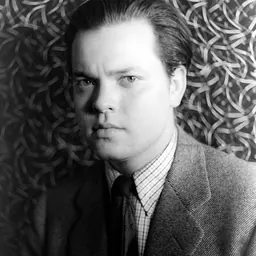
In 2003, Ralph Asdel, one of the original detectives on the case, told the Times that he believed he had interviewed Short's killer, a man who had been seen with his sedan parked near the crime scene in the early morning hours of January 15, 1947. A neighbor driving by that day stopped to dispose of a bag of lawn clippings in the lot when he saw a parked sedan, allegedly with its right rear door open; the driver of the sedan was standing in the lot. The neighbor's arrival apparently startled the owner of the sedan, who approached the neighbor's car and peered in the window before returning to the sedan and driving away. The owner of the sedan was followed to a local restaurant where he worked, but was ultimately cleared of suspicion. Artie Lane; Mark Hansen; Francis E. Sweeney; folk singer Woody Guthrie, who was briefly a suspect but cleared; mobster Bugsy Siegel and filmmaker Orson Welles, neither of whom were ever suspects in the murder; George Hodel; Hodel's friend Fred Sexton; George Knowlton; Robert M. "Red" Manley; Patrick S. O'Reilly; and Jack Anderson Wilson.
Although he was never formally charged in the crime, George Hodel came to wider attention after his death when he was accused by his son, LAPD homicide detective Steve Hodel, of killing Short and committing several additional murders. Prior to the Dahlia case, George Hodel was suspected, but not charged, in the death of his secretary, Ruth Spaulding, and was accused of raping his daughter Tamar, but acquitted. Hodel fled the country several times and lived in the Philippines between 1950 and 1990. Additionally, Steve Hodel has cited his father's training as a surgeon as circumstantial evidence.
The 2017 book Black Dahlia, Red Rose by Piu Eatwell focuses on Leslie Dillon, a bellhop who was a former mortician's assistant; his associates Mark Hansen and Jeff Connors; and Sergeant Finis Brown, a lead detective who had links to Hansen and was allegedly corrupt.
In 2000, Buz Williams, a retired detective with the Long Beach Police Department, wrote an article for the LBPD newsletter The Rap Sheet on Short's murder. His father, Richard F. Williams, was a member of the LAPD's Gangster Squad investigating the case. Williams' father reportedly believed that Dillon was the killer, and that when Dillon returned to his home state of Oklahoma he was able to avoid extradition to California because his ex-wife Georgia Stevenson was second cousins with Illinois Governor Adlai Stevenson II, who contacted the governor of Oklahoma on Dillon's behalf. Williams' article claimed that Dillon sued the LAPD for $3 million, but that the suit was dropped. Harnisch disputes this, stating that Dillon was cleared by police after an exhaustive investigation and that the district attorney's files positively placed him in San Francisco when Short was killed. Harnisch claims that there was no LAPD coverup, and that Dillon did in fact receive a financial settlement from the City of Los Angeles, but has not produced concrete evidence to prove this.
Theories and potentially related crimes Cleveland Torso Murders
Lipstick Murders Crime authors such as Steve Hodel and William Rasmussen have suggested a link between the Short murder and the 1946 murder and dismemberment of 6-year-old Suzanne Degnan in Chicago, Illinois. Captain Donahoe of the LAPD stated publicly that he believed the Black Dahlia and the "Lipstick Murders" in Chicago were "likely connected." Among the evidence cited is the fact that Short's body was found on Norton Avenue, three blocks west of Degnan Boulevard, Degnan being the last name of the girl from Chicago. There were also striking similarities between the handwriting on the Degnan ransom note and that of the "Black Dahlia Avenger." Both texts used a combination of capitals and small letters (the Degnan note read in part "BuRN This FoR heR SAfTY" ), and both notes contain a similar misshapen letter P and have one word that matches exactly. Convicted serial killer William Heirens served life in prison for Degnan's murder. Initially arrested at age 17 for breaking into a residence close to that of Degnan, Heirens claimed he was tortured by police, forced to confess and made a scapegoat for the murder. After being taken from the medical infirmary at the Dixon Correctional Center on February 26, 2012, for health problems, Heirens died at the University of Illinois Medical Center on March 5, 2012, at age 83.
Lone Woman Murders Between 1943 and 1949, over a dozen unsolved murders occurred in Los Angeles which involved the sexual mutilation of young attractive women. Authorities suspected at the time that they could have been the work of a single unidentified serial killer. In 1949, a Los Angeles County grand jury was tasked with investigating the failure on the part of law enforcement to solve the cases. As a result, further investigation was done on the homicides although none of them were solved.
On July 27, 1943, the son of a greenskeeper discovered the nude body of 41-year-old Ora Elizabeth Murray lying on the ground near the parking lot of the Fox Hills Golf Course. Murray had been severely beaten about her face and body, and the autopsy determined that her cause of death was due to "constriction of the larynx by strangulation". Murray was last seen on July 26, 1943, attending a dance at the Zenda Ballroom in downtown Los Angeles with her sister before leaving with an unidentified man. Her murder remains unsolved. John Gilmore's 1994 book Severed: The True Story of the Black Dahlia Murder, suggests a possible connection between Short's murder and that of 20-year-old Georgette Bauerdorf. At 11 a.m. on October 12, 1944, Bauerdorf's maid and a janitor arrived to clean her apartment in West Hollywood where they found her body face down in her bathtub. It is believed that Bauerdorf was attacked by a man who was waiting inside the apartment for her. Gilmore suggests that Short's employment at the Hollywood Canteen, where Bauerdorf also worked as a hostess, could be a potential connection between the two women. However, the claim that Short ever worked at the Hollywood Canteen has been disputed by other sources, such as the retired Times copy-editor Larry Harnisch. Regardless, Steve Hodel has still suggested that both women were killed by the same individual since in both cases the media received notes supposedly from the killer taunting the police and boasting of his skills. The murder of 44-year-old Jeanne "Nettie" French on February 10, 1947, was also considered by the media and detectives as possibly being related to Short's killing. French's body was discovered in West Los Angeles on Grand View Boulevard, nude and badly beaten. According to historian Jon Lewis, however, the scrawling actually read "P.D.", ostensibly standing for "police department." On March 12, 1947, the nude body of 43-year-old Evelyn Winters was found at 12:10 a.m. in a vacant lot of an abandoned rail yard in Norwalk, California, along the Los Angeles River. Winters had been bludgeoned and strangled to death. She was last seen by a male acquaintance, James Joseph Tiernan, who stated to authorities that he saw her leave the Albany Hotel in Los Angeles at 8:00 p.m. Dorothy Ella Montgomery, aged 36, was found at about 10:30 a.m. in a vacant field on May 4, 1947, under a pepper tree in Florence-Graham, California. Montgomery had died due to strangulation and was found nude and beaten. She had been missing since 9:30 p.m. the previous evening when she had left her home to pick up her daughter at a dance recital. On May 12, 1947, the body of 39-year-old Laura Eliza Trelstad was discovered by an oil company patrolman in an oil field on Long Beach Boulevard. Trelstad had been sexually assaulted, strangled with a belt and then thrown from a moving vehicle. According to her husband, they had both been playing cards the night prior at their home in 2211 Locust Avenue, Long Beach, with friends in the late afternoon. Trelstad's husband wanted to continue; but she had become bored and left to go to the Crystal Ballroom. She stated: "If the boys can play poker, we girls can go dance." She was not seen alive again. On July 8, 1947, the naked body of Rosenda Josephine Mondragon, aged 21, was discovered by a postal clerk in a gutter near Los Angeles City Hall. Mondragon had been strangled by a silk stocking. She was last seen by her estranged husband that morning, at 1 a.m., when he had been served by her with divorce papers at his residence. She then left entering a stranger's car. On the evening of October 2, 1947, Lillian Dominguez, aged 15, was walking home with her sister and a friend in Santa Monica, when a man approached them and proceeded to stab Dominguez in the heart with a stiletto blade, between her second and third ribs. One week later, on October 9, a note on the back of a business card was left under the door of a furniture store. The message was written in pencil and read: "I killed the Santa Monica Girl, I will kill others." On February 14, 1948, 42-year-old Gladys Eugenia Kern, a Los Angeles real estate agent, was found stabbed in the back with a hunting knife in a vacant house that she was showing in the Los Feliz district at 4217 Cromwell Avenue. That afternoon Kern was last seen with an unidentified man at the counter of a nearby drugstore. The murderer had stolen her appointment book and had cleaned the murder weapon before he left. Cosmetologist Louise Margaret Springer, aged 35, was found murdered on June 13, 1949, in the backseat of her husband's convertible sedan alongside a street in South Central Los Angeles. She had been garroted with a length of clothesline that had been knotted and a stick had been inserted into her anus. Springer's husband notified law enforcement of her disappearance that evening when he returned from an errand inside her shop to find both Springer and his vehicle missing. Mimi Boomhower, aged 48, was last heard from when she telephoned a friend from her home in the 700 block of Nimes Road in Los Angeles on August 18, 1949. Between 7:00 and 8:00 p.m., the call ended. Five days after she vanished, Boomhower's white handbag was discovered in a phonebooth at a grocery store in Los Angeles. Boomhower was never heard from again, and she was later declared legally dead. On the evening of October 7, 1949, 26-year-old Jean Spangler left her home in Los Angeles, telling her sister-in-law that she was going to meet with her ex-husband before going to work as an extra on a film set. She was last seen alive at a grocery store several blocks from her home at approximately 6:00 p.m. Two days later, Spangler's tattered purse was discovered in a remote area of Griffith Park, approximately from her home; inside was a letter addressed to a "Kirk," which mentioned seeing a doctor.
Rumors and factual disputes Numerous details regarding Short's personal life and death have been points of public dispute. according to Harnisch, the contemporaneous grand jury proved that there was no existing evidence that she was ever a prostitute. including a Chicago police officer who was a suspect in the case; FBI files on the case also contain a statement from one of Short's alleged lovers. Short's autopsy itself, which was reprinted in full in Michael Newton's 2009 book The Encyclopedia of Unsolved Crimes, notes that her uterus was "small"; however, no other information in the autopsy is provided that would suggest her reproductive organs were anything other than anatomically normal. The autopsy also states that Short was not and had never been pregnant, contrary to what had been claimed prior to and following her death. and Time magazine listed it as one of the most infamous unsolved cases in the world.
Short's life and death have been the basis of numerous books, television shows and films, both fictionalized and non-fiction. Among the most famous fictional accounts of Short's death is James Ellroy's 1987 novel The Black Dahlia, which, in addition to the murder, explored "the larger fields of politics, crime, corruption, and paranoia in post-war Los Angeles," according to cultural critic David M. Fine. Ellroy's novel was adapted into a 2006 film of the same name by director Brian De Palma: Short was played by actress Mia Kirshner.
Short was also portrayed in heavily fictionalized accounts by Lucie Arnaz in the 1975 television film Who Is the Black Dahlia?, by Jessica Nelson in Season Four, Episode 13 of Hunter, and by Mena Suvari in the series American Horror Story in 2011, featuring Short in the plot line of the episode "Spooky Little Girl", and again in 2018 with "Return to Murder House".
Don’t just read it —
keep it.
Full-length biographies made to live with: read them, listen on the way to work, watch them tonight.
- E-book
- Audio
- Video
Instant download · yours to keep · every purchase keeps this site free
Important facts
People in Black Dahlia's life
Named in this biography and alive at the same time






Related people
Same field, nearest in time



Contemporaries
People whose lives overlapped Black Dahlia's



Frequently asked questions
Who was Black Dahlia?
American murder victim (1924-1947)
When was Black Dahlia born?
Black Dahlia was born on 29 July 1924 in Hyde Park.
When did Black Dahlia die?
Black Dahlia died in 1947 in Los Angeles.
What was Black Dahlia's occupation?
Black Dahlia was a waiter and domestic worker.
What nationality was Black Dahlia?
Black Dahlia was American.
Sources & further reading
Cite this page
APA: Biography.guide. (2026). Black Dahlia. https://biography.guide/black-dahlia/
MLA: "Black Dahlia." Biography.guide, https://biography.guide/black-dahlia/.
Chicago: "Black Dahlia." Biography.guide. https://biography.guide/black-dahlia/.
Data last updated: 2026-09-22 · Spot an error? Report a correction.
Page generated 2026-09-27 05:31 UTC