
About Bjørn G. Andersen
Lived 1924 – 2012 (aged 87). Bjørn G. Andersen was a Norwegian writer, geologist, professor, association football player, glaciologist and quaternary geologist.
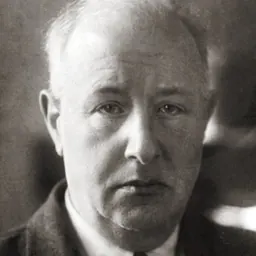
Bjørn Grothaug Andersen (23 March 1924, Stavanger, Norway – 12 January 2012, Asker, Norway) was a Norwegian professor of Quaternary geology and glaciology who made foundational contributions to glacial geology and the understanding of climate change. During his career he worked as a professor at Yale University and the Universities of Oslo and Bergen. His research contributed to understanding the Scandinavian landscape foundation.
Life and career
Andersen was the son of Knut Severin Andersen b. Grothaug (1882–1948), from Hornindal Municipality in Nordfjord, who was a gardener in Stavanger, and Elise Andersen b. Rafoss (1890–1987) from Stavanger (Kvinesdal Municipality). Because his father was a gardener they had a car, which was rare at the time, and using this they went skiing in the winter and fishing in the summer. He enjoyed going for long skiing tours in the mountains in Stavanger when he was young, and several times he crossed Trollgaren in Ryfylke, this marvelous moraine that is appropriate to its name. He wondered how it was formed, and was told by the local farmer that it was really Trolls that had set up the meandering fence of huge boulders, far above the tree line.
During the fieldworks for his Master's thesis "Om isens tilbaketrekking i området mellom Lysefjorden og Jøsenfjorden i Ryfylke" (On the glacial retreat in the area between the Lysefjorden and Jøsenfjorden in Ryfylke), with Werner Werenskiold as advisor, he found among other things that Trollgaren was a moraine, and that it was formed in the early Holocene, probably about 11,000 years ago. Here he met his youth curiosity. Andersen broke new ground both methodologically and theoretically with this work. He developed a method for stereoscopic analysis of aerial photos in the assessment of moraines. During the 1950s and 1960s he assessed the moraines in most of Norway, from Lindesnes to Troms. The assessment of the moraines of Jæren and the rest of the south coast of Norway was the basis of his PhD thesis "Sørlandet i sen- og postglacial tid" (The Norwegian South Coast in late and postglacial time), under guidance of Olaf Holtedahl, defended in 1960.
Andersen discovered an until then unknown area of Rogaland containing rock of the Cambrian-Silurian age on a much lower level than the surrounding bedrock. His collected fossiles from this area were deposited in the Paleontologic Museum at Tøyen in Oslo. In this material Professor Gunnar Henningsmoen discovered an until then unknown trilobite species, which was given the name (Ptychparia anderseni) for Andersen. During this fieldwork in the Lysefjord area, Andersen developed a method for determination of climatic conditions from the reconstruction of Ice Age glaciers which is still used by geologists and geographers.
Andersen's first paper
After retirement Andersen was a dedicated glaciologist all of his adult life. He accompanied a party of scientists doing field studies in Chile in 1991–99, and in New Zealand in 2000–08, led by the American Quaternary geologist Professor George H. Denton of the University of Maine. These studies led to a series of publications, among them papers in the prestigious international scientific journals Nature and Science. This was in addition to two books on glacial geology, one about the Ice Age in Norway: Istider i Norge, 2000, and an international textbook on the Ice Age World in 1997.
Late summer 2005, Andersen went on a trip to Greenland together with George Denton and a group of scientists. They wanted to measure the ice coverage in connection to climatic change.
In the summer of 2011 Andersen presented the results of the New Zealand research at a geological conference in Switzerland. There he also discussed the continuation of his Norwegian fieldwork, and in September–October joined a joint Norwegian-US exploratory expedition to Lysefjord led by Jan Mangerud and George Denton which investigated the application of a new dating method to the moraines he charted in the 1950s for his Master's.
Selected publications
Scientific publications B.G. Andersen, 1954: "Randmorener i Sørvest-Norge". Norwegian Journal of Geography 14(5–6): 273–342. B.G. Andersen, 1960: Sørlandet i sen- og postglacial tid. Norges geologiske undersøkelse 210. . B.G. Andersen, 1963: "Deuterium variations relatcd to snow pit stratigraphy in the Thiel Mountains, Antarctica". Polarforsch 1963 (1/2): 200–201. B.G. Andersen, 1968: Glacial geology of western Troms, North Norway. Norges geologiske undersøkelse 256. B.G. Andersen, 1972: Quaternary geology at Guolasjav'ri in Troms, North Norway. Universitetsforlaget, pp. 1–40. B.G. Andersen, 1975: Glacial geology of northern Nordland, North Norway. Norges geologiske undersøkelse 320.
B.G. Andersen, O.P. Wangen, S.R. Østmo 1987: "Quaternary geology of Jæren and adjacent areas, southwestern Norway". B.G. Andersen, & J. Mangerud, 1990: "The last interglacial–glacial cycle in Fennoscandia". Quaternary International 3–4: 21–29.
B.G. Andersen, G.H. Denton, & T.V. Lowell, 1999: "Glacial geomorphological maps of Llanquihue drift in the area of the southern Chilean Lake District". Geografiska Annaler 81A: 155–66, with map portfolio including 9 plates drawn by B.G. Andersen. D.J.A. Barrell, B.G. Andersen, & G.H. Denton, 2011: Glacial geomorphology of the central South Island, New Zealand. GNS Science monograph 27. including 5 large maps drawn by Andersen, his last maps.
G.H. Denton, J.G. Bockheim, R.H. Rutford, & B.G. Andersen, 1992: "Chapter 22: Glacial history of the Ellsworth Mountains, West Antarctica". Geological Society of America Memoirs 170: 403–432.
N.R. Golledge, A.N. Mackintosh, B.M. Andersona, K.M. Buckley, A.M. Doughtya, D.J.A. Barrellc, G.H. Denton, M.J. Vandergoes, B.G. Andersen, & Joerg M. Schaefer, 2012: "Last Glacial Maximum climate in New Zealand inferred from a modelled Southern Alps icefield". Quaternary Science Reviews 46: 30–45.
O. Holtedahl & B. G. Andersen, 1960: "Glacial map of Norway" in: O. Holtedahl et al., (1960). Geology of Norway. Norges geologiske undersøkelse 208.
M.R. Kaplan, J.M. Schaefer, G.H. Denton, A. M. Doughty, D.J.A. Barrell, T.J.H. Chinn, A.E. Putnam, B.G. Andersen, A. Mackintosh, R.C. Finkel, R. Schwartz, & B. Anderson 2013: "The anatomy of long-term warming since 15 ka in New Zealand based on net glacier snowline rise". Geology 41: 887–890.
A.E. Putnam, J.M. Schaefer, G.H. Denton, D.J.A. Barrell, R.C. Finkel, R. Schwartz, B.G. Andersen, T.J.H. Chinn, & A.M. Doughty, 2012: "Regional climate control of glaciers in New Zealand and Europe during the pre-industrial Holocene". Nature Geoscience 2012 (5): 627–630. A.E. Putnam, J.M. Schaefer, G.H. Denton, D.J.A. Barrell, S.D. Birkel, B.G. Andersen, M.R. Kaplan, R.C. Finkel, R. Schwartz, & A.M. Doughty, 2013: "The Last Glacial Maximum at 44°S documented by a 10Be moraine chronology at Lake Ohau, Southern Alps of New Zealand". Quaternary Science Reviews 62: 114–141. A.E. Putnam, J.M. Schaefer, G.H. Denton, D.J.A. Barrell, B.G. Andersen, T.N.B. Koffmanb, A.V. Rowan, R.C. Finkel, D.H. Roodh, R. Schwartz, M.J. Vandergoes, M.A. Plummer, S.H. Brocklehurst, S.E. Kelley, & K.L. Ladig, 2013: "Warming and glacier recession in the Rakaia valley, Southern Alps of New Zealand, during Heinrich Stadial 1". Earth and Planetary Science Letters 382: 98–110.
Books B. G. Andersen and L.-K. Königsson (eds.), 1991: Late Quaternary Stratigraphy in the Nordic Countries 150,000–15,000 B.P.: the XXIV Uppsala Symposium in Quaternary Geology. Striae 34. Uppsala : Societas Upsaliensis Pro Geologia Quaternaria. Bjørn G. Andersen and Harold W. Borns Jr., 1997: The Ice Age World: an introduction to quaternary history and research with emphasis on North America and Northern Europe during the last 2.5 million years. Oslo: Universitetsforlaget. Bjørn G. Andersen, 2000: Ice age Norway: landscapes formed by ice age glaciers. Oslo: Universitetsforlaget.
Don’t just read it —
keep it.
Full-length biographies made to live with: read them, listen on the way to work, watch them tonight.
- E-book
- Audio
- Video
Instant download · yours to keep · every purchase keeps this site free
Important facts
People in Bjørn G. Andersen's life
Named in this biography and alive at the same time




Related people
Same field, nearest in time


Contemporaries
People whose lives overlapped Bjørn G. Andersen's
Frequently asked questions
Who was Bjørn G. Andersen?
Norwegian professor of Quaternary geology and glaciology (1924-2012)
When was Bjørn G. Andersen born?
Bjørn G. Andersen was born on 23 March 1924 in Stavanger.
When did Bjørn G. Andersen die?
Bjørn G. Andersen died on 12 January 2012 in Asker.
What was Bjørn G. Andersen's occupation?
Bjørn G. Andersen was a writer, geologist, professor, association football player, glaciologist and quaternary geologist.
What nationality was Bjørn G. Andersen?
Bjørn G. Andersen was Norwegian.
Sources & further reading
· Wikipedia: Bjørn G. Andersen
Cite this page
APA: Biography.guide. (2026). Bjørn G. Andersen. https://biography.guide/bjorn-g-andersen/
MLA: "Bjørn G. Andersen." Biography.guide, https://biography.guide/bjorn-g-andersen/.
Chicago: "Bjørn G. Andersen." Biography.guide. https://biography.guide/bjorn-g-andersen/.
Data last updated: 2026-09-20 · Spot an error? Report a correction.
Page generated 2026-09-27 05:29 UTC