
Binkie Beaumont
British theatre manager
About Binkie Beaumont
Lived 1908 – 1973 (aged 64). Binkie Beaumont was a British theatrical producer.
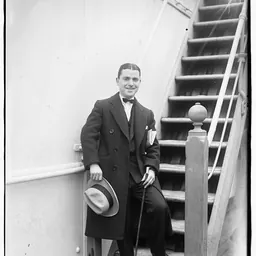
Hugh "Binkie" Beaumont (27 March 1908 – 22 March 1973) was a British theatre manager and producer, sometimes referred to as the "éminence grise" of the West End theatre. Though he shunned the spotlight so that his name was not known widely among the general public, he was one of the most successful and influential manager-producers in the West End during the middle of the 20th century.
Beaumont was brought up in Cardiff, where he joined the staff of a local theatre at the age of fifteen. From there he built a career in theatrical management. His company, H. M. Tennent, which he co-founded in 1936, was based at the old Globe Theatre (now the Gielgud Theatre) in Shaftesbury Avenue, London. His success was based on lavish productions, starry casts and plays calculated to appeal to a West End audience. Among those with whom he was closely associated were Noël Coward and John Gielgud. His successes included new plays, revivals of classics, and musicals.
With the rise of state-subsidised theatre and avant-garde plays from the mid-1950s onwards, Beaumont's genre of opulent productions of safe repertoire started to seem conventional. He recognised this by serving on the board of the new National Theatre during the last decade of his life.
Life and career Early years Throughout his life Beaumont was evasive about his background, given, as one biographer wrote, "to disseminating fanciful accounts of his origins". Morgan divorced his wife for adultery when the boy was two. Mary Morgan then married the co-respondent, William Sugden Beaumont, a Cardiff timber merchant, whom the young Beaumont was brought up believing to be his real father. The boy was formally known as Hugh, but was generally called "Binkie". William Beaumont died while Binkie was still a boy. Mary Beaumont then let rooms to a lodger, Major Harry Woodcock, a former Army Entertainments Officer and latterly general manager of the Cardiff Playhouse. He was subsequently business manager for Aubrey Smith's touring company and then of the Barnes Theatre in London for the producer Philip Ridgeway. The Barnes Theatre was famous for its productions of Chekhov and the other Russian classics, often directed by Theodore Komisarjevsky. During Beaumont's time with the company five of its productions transferred to the West End, giving him valuable managerial experience in five West End theatres. During his time with Ridgeway, Beaumont met John Gielgud for the first time.
Tennent's Beaumont was appointed assistant to Harry Tennent, a senior executive in the Moss Empires theatre chain. In 1933 Tennent engineered the creation of a joint-booking company – which lasted three years – for Moss Empires and Howard & Wyndham and became general manager. Tennent and Beaumont were unimpressed by the quality of many shows offered by producers for staging in the two groups' theatres. At Beaumont's instigation, he and Tennent went into production and management on their own account in 1936, setting up H M Tennent Limited.
Their first production, The Ante Room, by Kate O'Brien at the Queen's Theatre in 1936, was a failure. The firm suffered a series of further flops, running short of capital before finding success with the 1937 production of Gerald Savory's George and Margaret, which ran for 799 performances. This was followed by Dodie Smith's Dear Octopus (373 performances) and other long-running shows that established Tennent as a highly profitable concern.
Tennent died in 1941, leaving Beaumont in sole control, and for the next twenty years he was one of the most powerful men in British theatre. He maintained a low profile, shunning the limelight partly from natural reticence (saying, "I haven't the temperament to be a Cochran or a Diaghilev") and partly from his belief that he could operate more effectively behind the scenes. The first full-length biography of Beaumont, published in 1989, is subtitled "éminence grise of the West End theatre, 1933–1973".
Beaumont gained a strong commercial advantage over his rivals by setting up a subsidiary company to present classic plays: he successfully maintained that this operation qualified as "educational", and was thus exempt from tax. With productions such as The Importance of Being Earnest, with Gielgud and Edith Evans, and Hamlet, with Gielgud and Peggy Ashcroft, Beaumont made large profits from this ostensibly charitable enterprise. Gielgud was a strong influence on Beaumont's aesthetic development, and they maintained a mutually beneficial association which survived despite a personal crisis when Gielgud's then partner John Perry fell for and moved in with Beaumont. Perry remained personally and professionally involved with Beaumont for the rest of the latter's life, and all three remained on close terms. Another close associate was Noël Coward. In his play Present Laughter, he caricatured himself and his friends, including Beaumont, portrayed as "Henry Lyppiatt", the shrewd man of business. Despite the heavy entertainment tax paid on productions by the main Tennent organisation, Beaumont made substantial profits from such new plays as Coward's Blithe Spirit, which ran for 1,997 performances.
Postwar Beaumont was always careful to balance innovation and box-office appeal. He combined both in the London premiere of Oklahoma! in 1947, which ran at Drury Lane for 1,543 performances. He continued to have enormous successes: in 1958, he presented the first British productions of both West Side Story (1040 performances) and My Fair Lady (2281 performances). He also continued to run H M Tennent until his death. His last production for Tennent's was a 1973 revival of Maugham's The Constant Wife, starring Ingrid Bergman, directed by Gielgud, which opened after Beaumont's death.
Beaumont died at his house in Lord North Street, Westminster, at the age of 64.
Don’t just read it —
keep it.
Full-length biographies made to live with: read them, listen on the way to work, watch them tonight.
- E-book
- Audio
- Video
Instant download · yours to keep · every purchase keeps this site free
Important facts
People in Binkie Beaumont's life
Named in this biography and alive at the same time



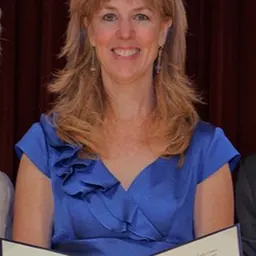
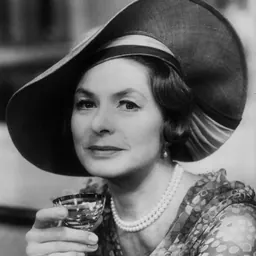



Related people
Same field, nearest in time
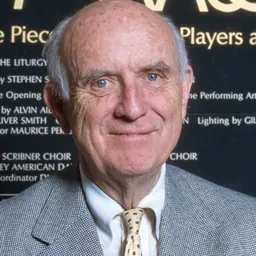

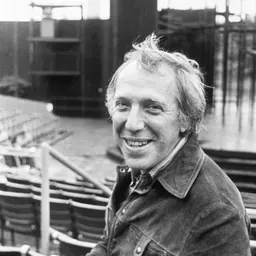
Contemporaries
People whose lives overlapped Binkie Beaumont's





Frequently asked questions
Who was Binkie Beaumont?
British theatre manager (1908–1973)
When was Binkie Beaumont born?
Binkie Beaumont was born on 27 March 1908 in Hampstead.
When did Binkie Beaumont die?
Binkie Beaumont died on 22 March 1973.
What was Binkie Beaumont's occupation?
Binkie Beaumont was a theatrical producer.
What nationality was Binkie Beaumont?
Binkie Beaumont was British.
Sources & further reading
Cite this page
APA: Biography.guide. (2026). Binkie Beaumont. https://biography.guide/binkie-beaumont/
MLA: "Binkie Beaumont." Biography.guide, https://biography.guide/binkie-beaumont/.
Chicago: "Binkie Beaumont." Biography.guide. https://biography.guide/binkie-beaumont/.
Data last updated: 2026-09-20 · Spot an error? Report a correction.
Page generated 2026-09-27 05:22 UTC