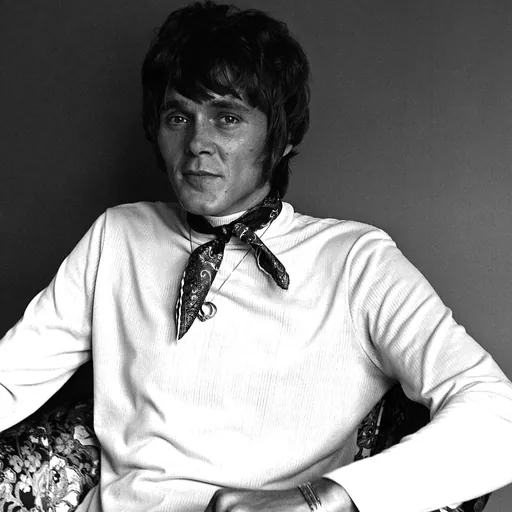
About Billy Fury
Lived 1940 – 1983 (aged 42). Billy Fury was a British singer, singer-songwriter, rock singer and musician.
Early years Fury was born Ronald Wycherley at Smithdown Hospital (later known as Sefton General Hospital, since demolished) on Smithdown Road in Liverpool on 17 April 1940. He commenced music lessons on the piano before he was a teenager and was bought his first guitar by the age of 14. Wycherley fronted his own group in 1955 but simultaneously worked full-time on a tugboat and later as a docker. He entered and won a talent competition and by 1958 had started composing his own songs. hoping to interest one of Parnes' protégés, singer Marty Wilde, in some of the songs he had written. Instead, in an episode that has since become pop music legend, Parnes pushed young Wycherley up on stage right away.
However, his early sexual and provocative stage performances received censure, and he was forced to tone them down.
He released his first hit single for Decca, "Maybe Tomorrow", in 1959. They were offered the job for £20 a week on condition that they sacked their bassist Stuart Sutcliffe. John Lennon refused and the band left after Lennon had secured Fury's autograph.
UK chart and film success Fury concentrated less on rock and roll and more on mainstream ballads, such as "Halfway to Paradise" and "Jealousy" It was Decca's decision to mould Fury into a teen idol after his last self-penned song, "My Christmas Prayer", had failed to chart. Chartwise the years 1961 through 1963 were Fury's best. In 1962, he appeared in his first film, Play It Cool, modelled on the Elvis films. It featured Helen Shapiro, Danny Williams, Shane Fenton and Bobby Vee, who appeared with the Vernons Girls. The hit single from the film was "Once Upon a Dream". There were other notable performances by several British actors and performers such as Richard Wattis, Lionel Blair and Dennis Price.
Fury's We Want Billy! (1963) was one of the first live albums in UK rock history. It featured renditions of his hits and cover versions of several R&B songs such as "Unchain My Heart".
In 1965 he appeared in the film I've Gotta Horse, however, at the request of his mother, only four of them were broadcast.
Personal life Fury was a keen birdwatcher. He lived with businesswoman Lee Everett Alkin, better known as "Lady Lee" Middleton, from 1959 to 1967.
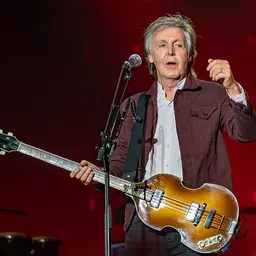
During this time, he had a short relationship with actress Amanda Barrie, his co-star in I've Gotta Horse. Fury went from Liverpool to London (like the Beatles) and he lived in Number 1 Cavendish Avenue, the same street as Paul McCartney. He is remembered and honoured with a Blue Plaque there.
Fury married Judith Hall in May 1969, but left her for heiress Lisa Voice. They lived together in London, and sometimes on Fury's farm in Wales, from 1971 until his death, although they led separate lives for the last two years.
Death
After returning from a recording session in the early hours of 28 January 1983, Fury collapsed from a heart attack at his home in London. His manager, Tony Read, found him unconscious the next morning. He was taken to St Mary's Hospital in Paddington, but died in the afternoon, aged 42. Rheumatic fever, which he first contracted as a child, damaged his heart and ultimately contributed to his death. A week after his death, a funeral service was held at the St John's Wood Church in London, for which his body was embalmed by Desmond Henley. Among the mourners were Larry Parnes, Marty Wilde, Jess Conrad, Eden Kane, Tony Read, Hal Carter and Mick Green, in addition to family members, friends and fans. The choir sang a special version of Billy's Decca hit "I'm Lost Without You". After the service Fury's body was buried at Mill Hill cemetery, in North London. A song issued posthumously entitled "Forget Him" became his final chart hit.
Legacy
In 1999, a TV documentary about Fury called Halfway to Paradise was broadcast on the BBC channel, narrated by Ian Dury. Between 1999 and 2000, the song "Wondrous Place", a favourite of Fury's (he re-recorded it at least three times during his career), later received wide airplay on British television when it was used as the theme for a Toyota Yaris car advertisement. In 2005, Spencer Leigh from BBC Radio Merseyside published a biography book about Fury called Wondrous Face – The Billy Fury Story. In 2008, a biographical documentary film Billy Fury: His Wondrous Story was released on DVD. He had recorded at the nearby Decca Studios. The alleyway was decorated with a large mural of his face (at the West Hampstead end), which was unveiled and blessed on 29 July 2011.
Eight of Fury's EMI recordings remained unreleased on mainstream CD until June 2010, when they appeared on a 29-track issue, The Complete Parlophone Singles, released by Peaksoft (PEA009). The singer's estate licensed the tracks to benefit his memorial fund, which finances equipment purchases for hospital heart units. In November 2011, further co-operation between the estate and Peaksoft resulted in the issuing of a second CD, The Lost Album (PEA014), which attempted to construct the format of an album recorded by Fury in 1967–71, but which was never released.
Fury's backing band from 1970 until 1976, when he stopped touring due to ill health, were Fury's Tornados, named by Fury and his then manager Hal Carter. They continue to tour in the theatre show Halfway to Paradise: The Billy Fury Story. Fury is also remembered in the work of tribute bands such as another theatre show called The Billy Fury Years. The film Play It Cool was first released on DVD on 10 February 2014.
References in popular culture
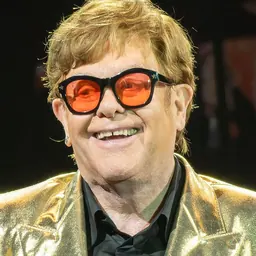
Fury's life was dramatised for BBC Radio 4 in 1994 as a play called The Sound of Fury, written by Mike Walker and starred Anton Lesser as Fury. Rock band Devilish Presley recorded a song "Billy Fury is Dead" on their 2008 album Flesh Ride. They were interviewed about it in the "Tributes" section of the official Fury website. Bernie Taupin included the song "Billy Fury" on his album Tribe, released in 1986. Sound effects at the beginning of the song gave the impression that it is being played on a jukebox, the "imaginary" vocalist sang about his desire to "be like Billy Fury" and have the trappings of a rock singer. Long-time Taupin collaborator Elton John appeared towards the end of the song, contributing some backing vocals. In 1987, Fury was featured on the cover of the Smiths' last single, "Last Night I Dreamt That Somebody Loved Me". Mark Knopfler mentions Fury in "We Can Get Wild" from his 2007 album Kill to Get Crimson. In the 2009 film Telstar: The Joe Meek Story, Fury was played by Jon Lee.
Discography
The Sound of Fury (1960) Billy Fury (1960) Halfway to Paradise (1961) Billy (1963) The Golden Years (1979), re-released in 1983 as Memories The One and Only (1983)
Don’t just read it —
keep it.
Full-length biographies made to live with: read them, listen on the way to work, watch them tonight.
- E-book
- Audio
- Video
Instant download · yours to keep · every purchase keeps this site free
Important facts
People in Billy Fury's life
Named in this biography and alive at the same time






Related people
Same field, nearest in time




Contemporaries
People whose lives overlapped Billy Fury's


Frequently asked questions
Who was Billy Fury?
British rock and roll singer (1940–1983)
When was Billy Fury born?
Billy Fury was born on 17 April 1940 in Liverpool.
When did Billy Fury die?
Billy Fury died on 28 January 1983 in Paddington.
What was Billy Fury's occupation?
Billy Fury was a singer, singer-songwriter, rock singer and musician.
What nationality was Billy Fury?
Billy Fury was British.
Sources & further reading
Cite this page
APA: Biography.guide. (2026). Billy Fury. https://biography.guide/billy-fury/
MLA: "Billy Fury." Biography.guide, https://biography.guide/billy-fury/.
Chicago: "Billy Fury." Biography.guide. https://biography.guide/billy-fury/.
Data last updated: 2026-09-20 · Spot an error? Report a correction.
Portrait: Wikimedia Commons · author & licence
Page generated 2026-09-27 04:57 UTC