
Bhagya Reddy Varma
Indian social activist
About Bhagya Reddy Varma
Lived 1888 – 1950 (aged 62). Bhagya Reddy Varma was an Indian.
Bhagya Reddy Varma (22 May 1888 – 18 February 1939), born Madari Bagaiah, was a political leader, social reformer and activist known for advocating against untouchability in Hyderabad State and for the abolition of the Jogini and Devdasi systems. He launched the Adi-Hindu movement in the Hyderabad region of British India, beginning in 1912, and later established the Adi-Hindu Social Service League in 1924, which promoted social reform for the Depressed Classes in Nizam's Hyderabad (modern-day Telangana).
Early life Bhagya Reddy Varma was born as Madari Bagaiah on 22 May 1888 in Hyderabad State, British India. He belonged to the Mala community among the Scheduled Castes of India. He pursued education and developed an early awareness of social inequalities in his homeland. His upbringing exposed him to the discriminatory caste system that has been prevalent in India since millennia.
Influenced by reformist movements and progressive thinkers, Varma pursued education and became actively involved in social activism. In 1912, he launched the Adi-Hindu movement in Hyderabad State to assert the rights and identity of the Depressed Classes and to challenge caste-based discrimination. These early experiences formed the foundation for his later efforts towards his advocacy of social reforms, including the abolition of the Jogini and Devadasi systems.
Movements
Inspired by figures such as B. R. Ambedkar and Jyotirao Phule, Varma started his movement, standing against discrimination by upper castes. Eventually, he established the Adi Hindu ("Original Hindu"), a social organization, to bring awareness to the Dalits. In 1906, he formed a group called Jagan Mitra Mandali, which involved Dalits and Malas, and started telling stories using Harikatha (popular folklore). It was one of the pioneering organisations for depressed classes in Hyderabad State. In 1910, he started to educate Dalit children, and in a short span of time he was able to run 25 centers with 2,000 students. In 1911, Adi Hindu social services started, and in 1912 he began promoting Buddhism.
In 1917, in a conference in Vijayawada, the Pratam Andhra - Adi Hindu meeting was held. In the same year, Varma’s speech gained M.K Gandhi's attention at the 'Akhila Bharata Hindu' Round Table Conference in Calcutta. In 1919, a meeting was held with Jangamulu, Dasulu and Mulnavasi, for the Adi Hindu beneficial program. The purpose of this event was to resolve the internal issues in the Dalit community; he even insisted that the panchayat court system be rebuilt. The first Adi Hindu conference was held in 1921 in Hyderabad, led by T.J. Papanna.
In 1925, a conference was led by N.M.R. Mukund Reddy. In the same year, the Adi Hindu Hand Skills Exhibition was held to showcase the Dalits' skills. Varma also campaigned on many social issues, including child marriage, black magic, women’s education, and alcohol prohibition. His work spread to the neighboring states of Karnataka, Tamil Nadu, Maharashtra, and Andhra; from there some well-known people joined and followed the revolution.
In an historical speech in 1930, he announced bringing Dalit issues to British notice in the upcoming All India Round Table Conference at Lucknow in the same year. He proposed to send Dr. B. R. Ambedkar to lead the group. The agenda was to recognise Dalits as Adi Hindu, rather than untouchables, Mala or Madiga.
In 1931, the Nizam government came forward to meet Varma’s demands and registered Dalits as Adi Hindus in the general elections. Nizam Osman Ali Khan, Asaf Jah VII praised Varma for his social work, and recognised it with an award. Later, the Nizam appointed Varma as the chief adviser to his government. Adi Hindu Bhavan at Chadarghat, Hyderabad had been the platform for many revolutionary meetings. It is said that he gave nearly 3,348 speeches.
The Bhagya Memorial Girls High School at Esamia Bazar, Koti, Hyderabad, Telangana, which he started in 1913, is still functioning today.
Varma launched a movement against the devadasi pratha, forcing the Nizam to declare it a crime.
Honours In 1913, Arya Samaj organised a function to honour Varma with the title Varma.
During the Telangana Movement in 2017, the students of the Telangana region wanted to rename the G. M. C. Balayogi Athletic Stadium at Gachibowli as Bhagya Reddy Varma Stadium.
Don’t just read it —
keep it.
Full-length biographies made to live with: read them, listen on the way to work, watch them tonight.
- E-book
- Audio
- Video
Instant download · yours to keep · every purchase keeps this site free
Important facts
People in Bhagya Reddy Varma's life
Named in this biography and alive at the same time
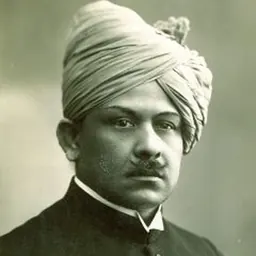

Contemporaries
People whose lives overlapped Bhagya Reddy Varma's

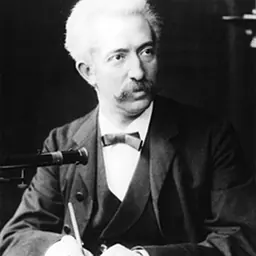


Frequently asked questions
Who was Bhagya Reddy Varma?
Indian social activist
When was Bhagya Reddy Varma born?
Bhagya Reddy Varma was born on 22 May 1888 in Hyderabad State.
When did Bhagya Reddy Varma die?
Bhagya Reddy Varma died on 2 July 1950 in Hyderabad.
What nationality was Bhagya Reddy Varma?
Bhagya Reddy Varma was Indian.
Sources & further reading
· Wikipedia: Bhagya Reddy Varma
Cite this page
APA: Biography.guide. (2026). Bhagya Reddy Varma. https://biography.guide/bhagya-reddy-varma/
MLA: "Bhagya Reddy Varma." Biography.guide, https://biography.guide/bhagya-reddy-varma/.
Chicago: "Bhagya Reddy Varma." Biography.guide. https://biography.guide/bhagya-reddy-varma/.
Data last updated: 2026-09-22 · Spot an error? Report a correction.
Page generated 2026-09-27 05:31 UTC