
About Beverly B. Douglas
Lived 1822 – 1878 (aged 56). Beverly B. Douglas was an American politician, lawyer and attorney at law.
Beverly Browne Douglas (December 21, 1822 – December 22, 1878) was a Democrat who served two terms as U.S. representative from Virginia from 1875 to 1878. He also served as in the Virginia Senate representing King William, King and Queen and Essex Counties (1852-1865) and as a Confederate cavalry officer during the American Civil War.
Early life Born at Providence Forge in New Kent County, Virginia, to Elizabeth, the wife of planter William Douglas. Young Beverley Douglas attended Rumford Academy across the river in King William County. In his college years, he attended the College of William and Mary in Williamsburg, Virginia, as well as Yale College, and the University of Edinburgh, Scotland. At some point he studied law at a school operated by Judge Beverly Tucker. Upon returning to the United States, Douglas reentered William and Mary, and graduated from the law department in 1843.
Career Lawyer and planter Admitted to the bar in 1844, Douglas began his legal practice in his native New Kent County, as well as Norfolk, Virginia. By 1846 he had moved his legal practice to King William County, Virginia.
Douglas owned 20 slaves in King William County in 1850, and 33 slaves in 1860.
Virginia politician In 1850 Douglas began his political career by winning an election to become one of five delegates to the Virginia Constitutional Convention of 1850. Together with Francis W. Scott, Corbin Braxton, Eustace Conway and Edward W. Morris, he represented Caroline, Spotsylvania, King William and Hanover counties. That Convention drafted a new state constitution which increased representation of increasingly populated western Virginia counties in part by redrawing districts in Tidewater Virginia. Thus, while King William and King and Queen counties had been jointly represented in the Virginia Senate by John W. C. Catlett together with three counties mostly to the east (Gloucester, Mathews and Middlesex counties) in the 1850-1851 legislative session, those two counties were now combined with Essex county to the west (Essex had previously been combined with Spotsylvania and Caroline counties in a state senatorial district represented by Austin M. Trible).
Following the convention, Douglas won election from the new senatorial district, and continued to win re-election to the Senate of Virginia during the period 1852–1865. Douglas for five years served as chairman of the powerful finance committee, and also served as presidential elector for the Democratic ticket of Breckinridge and Lane in 1860.
Civil War officer
As the Civil War began, Douglas continued to serve as state senator, and even chaired the committee on military affairs, but also volunteered to join the Confederate States Army.
On June 24, 1862, the day before General Richard E. Lee (Col. Lee's father) began complex maneuvers which launched his Seven Days offensive, Douglas was promoted to the rank of major, but transferred to the newly reorganized 5th Virginia Cavalry. That regiment had been composed of companies drawn from southern Tidewater counties and had protected coastal areas south of the James River (including North Carolina). However, on April 18, Federal troops had landed at Elizabeth City, so during the next month those companies guarded Williamsburg and Yorktown before a complete reorganization at the end of May. Captain Henry Clay Pate of the Petersburg Rangers (a/k/a Letcher Mounted Guards, who had gained fame as a slavery advocate in Kansas and fought in western Virginia in the war's early months), had envisioned a cavalry unit of men from every Virginia county to protect the Confederate capital, Richmond. On May 25, 1862 Pate organized the 2nd Battalion Virginia Cavalry, which on June 23 General J.E.B. Stuart reorganized as the 5th Virginia Cavalry following the dismemberment of the previous unit. Pate became the regiment's Lieutenant Colonel under Col. Thomas L. Rosser, and Douglas became Major in the unit, with Pate's brother Otho K. Pate as adjutant. As part of Stuarts's cavalry, the unit saw considerable action in northern Virginia from Manassas in Prince William County to Fairfax, Loudoun and Hampshire Counties (in what became West Virginia) and even into Maryland that summer. Douglas briefly took command at Piedmont on November 3, as Stuart's cavalry resisted the Federal advance into northern Virginia and Col. Williams C. Wickham of the 4th regiment was wounded in the action. However, Douglas resigned on January 8, 1863 to return to the Virginia legislature.
Postwar legislator Following the conflict, Douglas' Confederate service limited his political activity, and Virginia could not be readmitted to the union without discarding its 1850 Constitution, which explicitly allowed slavery. Upon reorganizing the Virginia legislature, Mathews, Gloucester and Middlesex Counties were combined with King and Queen, King William and Essex counties in a senatorial district whose voters elected Warner T. Taliaferro of Gloucester County. Then after adoption of the Virginia Constitution of 1869, King William was combined with Caroline and Essex Counties and that district's voters elected Edmund W. Massey, who had represented them at the latest constitutional convention. However, Douglas's political career had not ended. In 1868 he was a delegate to the Democratic convention which nominated Seymour and Blair, who lost to the Republican presidential ticket in the general election.
In 1874 voters elected Douglas as a Democrat to the Forty-fourth Congress and would re-elect him to the Forty-fifth Congress. He defeated the incumbent Republican, James Beverley Sener of Fredericksburg, despite Sener's having sponsored legislation to create the Steamboat Inspection Service (although Sener would later become Chief Justice of the Wyoming Territory). Douglas served from March 4, 1875, until his death in Washington, D.C. on December 22, 1878. However, he did not hold congressional positions of importance, his most important post being as chairman of the committee investigatigating the demise of the Freedman's Savings Bank.
Death Beverly Browne Douglas and his wife were among those interred in the Pollard family burying ground at "Zoar," with his gravestone bearing the epitaph, "an honest politician". Although the town of Aylett below Zoar burned during the American Civil War, Pollard family members continued to farm Zoar (and acquire nearby land) until Albert H. Stoddard III deeded 373.5 acres to Virginia's Department of Forestry in 1987. In addition to planting a memorial oak and maintaining the cemetery and remaining outbuildings, the Department of Forestry converted the last dwelling house on the site into offices. The Department of Forestry also makes the area available for recreational activities and wildlife habitat, as well as some agricultural use and sales of forest products.
Elections 1874; Douglas was first elected to the U.S. House of Representatives with 50.69% of the vote, defeating Republican James Beverley Sener. 1876; Douglas was re-elected with 56.53% of the vote, defeating Republican L.C. Boiston.
Don’t just read it —
keep it.
Full-length biographies made to live with: read them, listen on the way to work, watch them tonight.
- E-book
- Audio
- Video
Instant download · yours to keep · every purchase keeps this site free
Important facts
People in Beverly B. Douglas's life
Named in this biography and alive at the same time
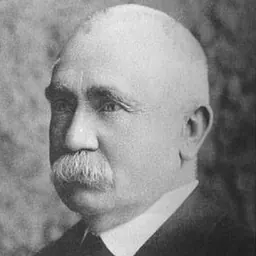


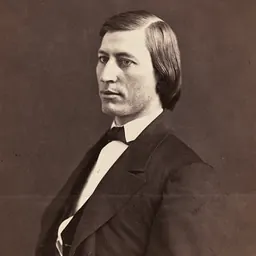


Related people
Same field, nearest in time

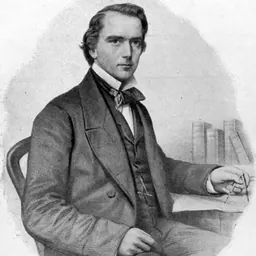


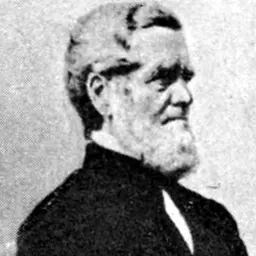

Contemporaries
People whose lives overlapped Beverly B. Douglas's

Frequently asked questions
Who was Beverly B. Douglas?
American politician (1822-1878)
When was Beverly B. Douglas born?
Beverly B. Douglas was born on 21 December 1822 in Providence Forge.
When did Beverly B. Douglas die?
Beverly B. Douglas died on 22 December 1878 in Washington, D.C..
What was Beverly B. Douglas's occupation?
Beverly B. Douglas was a politician, lawyer and attorney at law.
What nationality was Beverly B. Douglas?
Beverly B. Douglas was American.
Sources & further reading
· Wikipedia: Beverly B. Douglas
Cite this page
APA: Biography.guide. (2026). Beverly B. Douglas. https://biography.guide/beverly-b-douglas/
MLA: "Beverly B. Douglas." Biography.guide, https://biography.guide/beverly-b-douglas/.
Chicago: "Beverly B. Douglas." Biography.guide. https://biography.guide/beverly-b-douglas/.
Data last updated: 2026-09-20 · Spot an error? Report a correction.
Page generated 2026-09-27 05:27 UTC