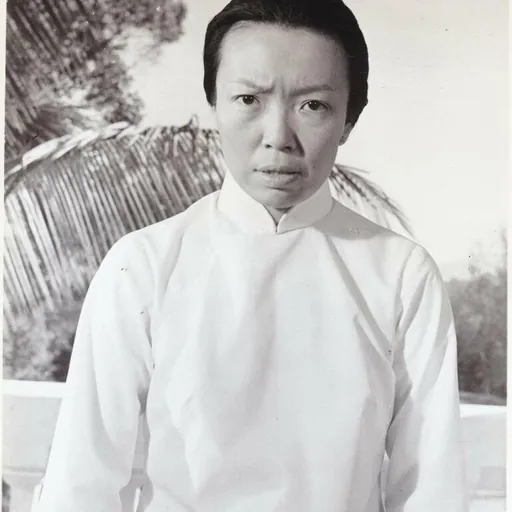
About Beulah Quo
Lived 1923 – 2002 (aged 79). Beulah Quo was an American stage actor, film actor and television actor.
Beulah Quo (née Ong) (April 17, 1923 – October 23, 2002) was an American actress and activist born in Stockton, California. The spelling of her last name changed from Kwoh to Quo because she was constantly asked if KWOH was a radio station. She was also an advocate of more and better screen roles for Asian actors, and founded several organizations in pursuit of that goal.
Early life Beulah Quo was born Beulah Ong in Stockton, California, as the only child of two Chinese immigrants. She received a bachelor's degree in social welfare from UC Berkeley and a master's degree from the University of Chicago. While completing her master's degree, Quo met her husband, Edwin Kwoh, who was then a Chinese doctoral student at Columbia University. She also published her master's thesis entitled “The Occupational Status of American-Born Chinese Male College Graduates” in the American Journal of Sociology.
Both Quo and her husband were involved in Chinese Christian activism throughout their studies.
In the late 1940s, while she was working in China as a teacher, Quo escaped Communism on a U.S. destroyer along with her husband and infant son. After resettling, she also worked at the Chinese YWCA building, which is now the Chinese American National Museum and Learning Center.
Television and film career
While teaching sociology at a community college in Los Angeles, California, director Henry King was looking for an Asian dialect coach and instead hired Quo to play a small role in Love is a Many-Splendored Thing (1953). She played over 100 roles in television movies and series, as well as film. One of her notable television roles was in General Hospital, where she stayed for six years and played a housekeeper and confidante named Olin starting in 1985. Uncredited appearances that she made throughout her career in her earlier work included her first film, Love is a Many-Splendored Thing, Two Weeks In Another Town (1962), and Gypsy (1962). Her final featured film role was in Forbidden City in 2001 as Mrs. Lee; her last television appearance was in a 2002 episode of Law and Order: Criminal Intent.
Quo co-starred in a made-for-television drama, An Apple, An Orange a story of two immigrants and their differences in cultural, sociological and philosophical viewpoints while in midlife. The program, produced by Maryland Public TV in association with Baltimore's Center Stage was telecast nationally in prime time on PBS. It aired on Oregon Public Broadcasting. The author and dramatist, Diane Johnson, won an O. Henry Award for the story on which it was based.
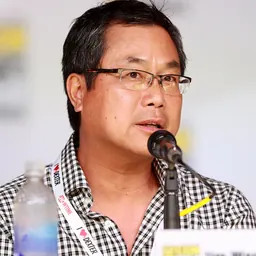
Activism In 1965, The East West Players, the first Asian-American repertory theater in the U.S., was co-founded by Quo and eight other actors, including James Hong. The East West Players continues to advocate for diverse representation and elimination of stereotypes of Asian-Americans in Hollywood and across mass media.
Quo was heavily involved in the high-profile and racially driven Vincent Chin case, producing a play to honor him entitled Carry The Tiger To The Mountain in July 1998. It was based on a true story of a Chinese-American man who was beaten to death in Detroit, Michigan, in 1982 by two white men who had mistaken him for a Japanese man. It premiered in West Virginia; Quo played Chin's mother, Lily Chin. The play was later performed in Los Angeles by the East West Players.
In 1997, Quo commissioned a musical project called "Heading East: California Asian Pacific American Experience" to promote and commemorate the history of Asian-Pacific Americans in California for the past 150 years.
Quo continued to dismiss any statements that Asians in leading roles are not "bankable", pointing out that Haing S. Ngor, cast in The Killing Fields (1984), won the Oscar for best supporting actor, while Pat Morita was nominated for the same award for his role in The Karate Kid (1984).
Awards, nominations and honors 1978: Nominated for an Emmy for Outstanding Single Performance by a supporting actress in Meeting of Minds. Quo also co-narrated the audiobook version.
1990: "The Jimmie" Lifetime Achievement Award by the Asian Pacific American Artists, for her outstanding work on The Sand Pebbles (1966), MacArthur (1977), and Chinatown (1974). She also won a local Emmy award for her achievements on "James Wong Howe – The Man and His Movies", a documentary on the award-winning cinematographer James Wong Howe.
Death On October 23, 2002, Beulah Quo died of heart failure during emergency cardiac surgery in La Mesa, California at the age of 79.
The East West Players have a Beulah Quo and Edwin Kwoh Endowment set up to promote theater education.
Filmography Films and television appearances are from IMDb.
Year Title Role Notes 1955 Love Is a Many-Splendored Thing Third Aunt Film, Uncredited 1961 Ada Wife of Chinese Restaurant Proprietor Film, Uncredited 1961 Flower Drum Song Woman Film, Uncredited 1961 Hawaiian Eye Grandmother Tsu-Yin TV 1962 Two Weeks in Another Town Chinese Woman Film, Uncredited 1962 Gypsy Waitress Film, Uncredited 1963 Girls! Girls! Girls! Madam Yung Film 1964 The 7th Dawn Ah Ming Film 1964 Kentucky Jones Mrs. Tea-Store Fu TV series (Episode "Mail Order Bride") 1966 The Sand Pebbles Mama Chunk Film 1970–1971 The Bill Cosby Show Second Teacher / Mrs. Rogers TV series 1971 The Rome with Love Mrs. Okada TV series 1971 If Tomorrow Comes Midori TV movie 1972 The Smith Family Anna TV series 1973 Voyage of the Yes Native Nurse TV movie 1973 Hawaii Five-O Madame Souvang TV series 1973 Genesis II Primus Lu-Chan TV movie 1974 Love, American Style Lu See TV series 1974 Chinatown Maid Film 1973–1974 Adam-12 Mrs. Tohito / Mrs. Hong Toy TV series 1975 Police Story The Supervisor TV series 1975 The Last Survivors Mrs. Peters TV movie 1973–1975 Kung Fu Madam Chun / Mai Chi / Soong's Wife TV series 1976 S.W.A.T. Madame Yang TV series 1976 City of Angels unknown TV series 1977 Starsky and Hutch Dr. Quo TV series 1977 Baretta Mrs. Chu TV series 1977 MacArthur Ah Cheu Film 1977 Black Market Baby Mrs. Yamato TV movie 1978 Meeting of Minds Tz'u-Hsi / Empress Tz'u-Hsi TV series 1978 The Immigrants So-Toy TV movie 1979 How the West Was Won Ah Kam TV series 1979 Samurai Hana Mitsubishi Cantrell TV movie 1980 The Children of An Lac Madame Ngai TV movie 1981 The Incredible Hulk Huyn TV series 1982 The Letter Ong's Mother TV movie 1982 Yes, Giorgio Mei Ling Film 1982 Quincy M.E. Mrs. Inoko TV series 1982 Magnum, P.I. Mrs. Iko Tamura TV series 1982–1983 Marco Polo Empress Chabi TV mini-series 1985 Airwolf Mae's Mother TV series 1985 Street Hawk Auntie Pearl TV series 1985 Into the Night Mrs. Yakamura Film 1985 The Lady from Yesterday Mai Ling Luong TV movie 1985–1991 General Hospital Olin TV series 1986 MacGyver Mrs. Chung TV series 1986 Scarecrow and Mrs. King unknown TV series 1986 Alfred Hitchcock Presents Herbalist TV series 1986 Beverly Hills Madam Lil's maid TV movie 1986 American Geisha Kangoro's Mother TV movie 1987 Daniel and the Towers Lynn Chow TV movie 1987 Le palanquin des larmes Mime Chen Film 1988 Hunter Mrs. Chin TV series 1990 Forbidden Nights Vice Dean Yin TV movie 1994 Bad Girls Chinese Herbalist Film 1995 Bless This House Old Woman TV series 1996 Suddenly Susan Dr. Ni TV series 1998 Brimstone Landlady TV series 1999 ER Grandma Fong TV series 1999 Brokedown Palace Guard Velie Film 2000 Chicago Hope Grandmother Wang TV series 2000 The Michael Richards Show Mai TV series 2001 Forbidden City Mrs. Lee Short 2002 Law & Order: Criminal Intent Cecilia Wang TV series, (final appearance)
Don’t just read it —
keep it.
Full-length biographies made to live with: read them, listen on the way to work, watch them tonight.
- E-book
- Audio
- Video
Instant download · yours to keep · every purchase keeps this site free
Important facts
Family & relationships
People in Beulah Quo's life
Named in this biography and alive at the same time





Related people
Same field, nearest in time


Contemporaries
People whose lives overlapped Beulah Quo's

Frequently asked questions
Who was Beulah Quo?
Chinese-American actress and activist
When was Beulah Quo born?
Beulah Quo was born on 17 April 1923 in Stockton.
When did Beulah Quo die?
Beulah Quo died on 23 October 2002 in La Mesa.
What was Beulah Quo's occupation?
Beulah Quo was a stage actor, film actor and television actor.
What nationality was Beulah Quo?
Beulah Quo was American.
Sources & further reading
Cite this page
APA: Biography.guide. (2026). Beulah Quo. https://biography.guide/beulah-quo/
MLA: "Beulah Quo." Biography.guide, https://biography.guide/beulah-quo/.
Chicago: "Beulah Quo." Biography.guide. https://biography.guide/beulah-quo/.
Data last updated: 2026-09-22 · Spot an error? Report a correction.
Portrait: Wikimedia Commons · author & licence
Page generated 2026-09-27 05:02 UTC