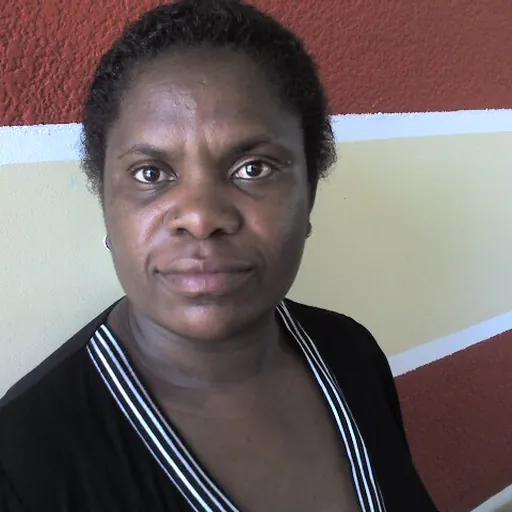
About Betty Makoni
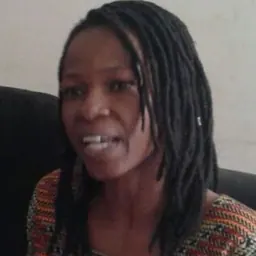
Born 1971. Betty Makoni is a Zimbabwean activist, director, teacher, poet, board member and author, known for Feminism.
Hazviperi Betty Makoni is a Zimbabwean women's rights activist who in 1999 founded the Girl Child Network, a charity which supports Zimbabwe's young sex abuse victims. The network has since expanded to the US, Europe, and various countries in Africa.
She earned two degrees from the University of Zimbabwe, and has been awarded numerous national and international awards. Orphaned as a child and sexually abused, Makoni is the principal subject in the documentary film, Tapestries of Hope.
Early life Makoni's life began in St Mary's in the poor suburb of Chitungwiza, Zimbabwe. She spent much of her early life watching her father beat her mother almost every night, and carrying over both her parents would beat her and her five siblings. Makoni was pushed at a very young age to find work and support her five other siblings. At age six, at the last customer stop of her day of work, Makoni entered the shop with her friends and was locked inside. The shopkeeper proceeded to rape her and all of her friends, believing that raping virgins would bring luck. Three years later her mother died in a domestic violence accident, at the hands of her father, while pregnant and soon after she was sent to a boarding school notorious for beating children.
Career In 2000 she began created the Girl Child Network, with the hope to support girls rights and build strength between them. to the USA, Europe and parts of Africa to support girls across the globe. With its flourishing, so has Betty Makoni's career, where she now serves as the Chief Executive Officer of Girl Child Network Worldwide.
Empowerment Villages ("safe homes") As her work grew, Makoni expanded the Girl Child Network to become a nationwide system which included "empowerment villages", safe houses designed for girls fleeing sexual abuse and domestic violence. GCN facilities such as these offer emergency shelters, medical referrals, psychological counseling, legal assistance, and reintegration support for survivors. These empowerment villages also double as facilities for young women to receive mentoring, life skills education, leadership development, and academic support. According to news articles, thousands of these young women pass through safe homes, hundreds of them returning to school or beginning new, independent lives and careers following this rehabilitation.
Accolades In 2003 the Women's World Summit Foundation awarded Makoni with the Prize for Women's Creativity in Rural Life. In 2007, Makoni won the World's Children's Prize for the Rights of the Child. In 2008, Amnesty International awarded her its Ginetta Sagan Award for her work with the GCN. In 2009, Makoni received the CNN Heroes award for protection of the powerless She was named a Global Decades Child Rights Hero alongside notable figures such as Nelson Mandela and Graca Michel In 2006 Makoni and The Girl Child Network received the coveted United Nations Red Ribbon award for addressing gender inequalities that fuel the HIV/AIDS epidemic Betty Makoni was named among Hillary Clinton and numerous world leaders as 150 women who shake the world The Women In Film and Television Awards-Los Angeles –USA Giraffe Heroes Project Award 2009
Personal life Makoni left Zimbabwe in 2008, after receiving numerous death threats connected to her work defending girls from sexual abuse. In interviews, she has explained that much of her advocacy has led her to create powerful enemies, including individuals with political influence, and that she became the subject of a defamation campaign accusations of financial misconduct. Later on, and independent audit by KPMG cleared her of all accusations. During this time, she reported receiving repeated death threats over the phone and was warned by Zimbabwe secret service that her life was in danger. Following this, Makoni decided to flee to South Africa before relocating with her family to England where she lives now and continues her work in safety. She is now living married with her husband Irvine Nyamapfene and three children.
Don’t just read it —
keep it.
Full-length biographies made to live with: read them, listen on the way to work, watch them tonight.
- E-book
- Audio
- Video
Instant download · yours to keep · every purchase keeps this site free
Important facts
People in Betty Makoni's life
Named in this biography and alive at the same time



Related people
Same field, nearest in time


Contemporaries
People whose lives overlapped Betty Makoni's



Frequently asked questions
Who is Betty Makoni?
Zimbabwean activist
When was Betty Makoni born?
Betty Makoni was born on 22 June 1971 in Zimbabwe.
What is Betty Makoni's occupation?
Betty Makoni is an activist, director, teacher, poet, board member and author.
What is Betty Makoni known for?
Betty Makoni is known for Feminism.
What nationality is Betty Makoni?
Betty Makoni is Zimbabwean.
Sources & further reading
Cite this page
APA: Biography.guide. (2026). Betty Makoni. https://biography.guide/betty-makoni/
MLA: "Betty Makoni." Biography.guide, https://biography.guide/betty-makoni/.
Chicago: "Betty Makoni." Biography.guide. https://biography.guide/betty-makoni/.
Data last updated: 2026-09-21 · Spot an error? Report a correction.
Portrait: Wikimedia Commons · author & licence
Page generated 2026-09-27 05:00 UTC