
About Betico Croes
Lived 1938 – 1986 (aged 48). Betico Croes was a Dutch politician.
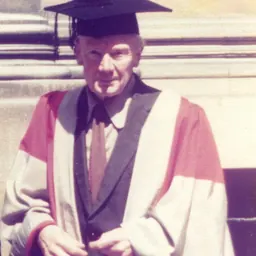
Gilberto François "Betico" Croes (; 25 January 1938 – 26 November 1986) was an Aruban political activist who was a proponent for Aruba's separation from the Netherlands Antilles. This eventually occurred in 1986, but following a car accident on 31 December 1985 (the night of status aparte), Croes lapsed into a coma and never became conscious to see his accomplishment. He is best remembered as "Libertador" (liberator) and as the father of the Aruban people.
Biography and career A monument on Plaza Betico Croes in Oranjestad, Aruba, showing "Betico" Croes holding an Aruban flag.
Croes was born on 25 January 1938, in Santa Cruz. After finishing high school, he studied in the Netherlands at the Teacher's Training College in Hilversum and received his headmaster's certificate in 1959. He resigned in July 1970 after the AVP had decided not to give a seat to the UNA.
In February 1971, Croes founded the political party People's Electoral Movement (Movimiento Electoral di Pueblo), and was elected to the island council. In 1973, the MEP won 5 of the 8 seats for Aruba in the Estates of the Netherlands Antilles. In 1976 he was the person responsible for the Seal Flag and National Anthem of the island of Aruba. It was co-written by renowned Padu Del Caribe (Padu Lampe), and Rufo Wever, who also composed the anthem. Aruba is the second most populous island, however, Curaçao is the largest and most populous island. Aruba had 8 seats in the Estates of the Netherlands Antilles, Curaçao had 12 seats, Bonaire had one seat, and Saba, Sint Eustatius, and Sint Maarten shared a single seat. The Capital of the Netherlands Antilles was Willemstad, Curaçao. The Aruban Patriotic Party (PPA) announced a boycott of the referendum, and the Government of the Netherlands Antilles declared the referendum illegal, and announced, prior to the referendum, that it was not willing to accept the results. In the March 1977 referendum, 95% of the voters were in favor of independence.
In June 1977, Boy Rozendal of the Democratic Party of Curaçao won a clear victory in the elections in the Netherlands Antilles. No former was assigned to create a new cabinet instead Rozendal, who was an opponent of Aruban autonomy, installed his coalition without consulting the MEP. Croes announced demonstrations and a boycott of Curaçaoan products.
In February 1981, at the Round Table Conference, Croes formally set Aruba's Independence for 1991, however the Round Table Conference of 1983, resulted in a proposed new Charter for the Kingdom of the Netherlands in which Aruba would have a Status Aparte making it a constituent country within the Kingdom in 1986, and possible independence in 1996.
On 24 April 1983, Croes was shot in the stomach by police officer Libier. Libier was transferred to Bonaire in June, In November, the Public Prosecution Service decided not to charge him, because there was no proof that he had aimed at Croes.
In July 1985 the charter, as agreed in March 1983, in Aruba's Decolonization and Independence Agreement, was unanimously approved by the island council of Aruba, however, the PPA boycotted the vote. The Status Aparte would take effect on 1 January 1986.
In the 1980s Croes recommended that Aruba should target tourism in order to diversify the economy since it depended mainly on the refinery. He was also responsible for major projects for the people of Aruba, like the housing company FCCA, and the transportation company Arubus,
1985 elections and death In November 1985, the MEP lost the election, and Henny Eman of the Aruban People's Party (AVP) would become the first Prime Minister of Aruba.
On 31 December 1985, Croes was in a traffic accident and lapsed into a coma. An estimated 40,000 people attended his funeral (Aruba had an estimated 65,000 inhabitants in 1985).
A famous quote from him is "Si mi cai na caminda, gara e bandera y sigui cu e lucha" (If I fall along the way, grab the flag and continue the battle).
Both of Croes' sons served as Ministers and Glenbert is as of 2021 in office as Minister of Labor, Integration and Energy.
Legacy is celebrated on his birthday of 25 January as a national holiday. The 18 Maart Plein in Oranjestad was renamed Plaza Betico Croes. Caya G. F. Betico Croes is named after him and is the main shopping street of Oranjestad, the Aruban capital.
Don’t just read it —
keep it.
Full-length biographies made to live with: read them, listen on the way to work, watch them tonight.
- E-book
- Audio
- Video
Instant download · yours to keep · every purchase keeps this site free
Important facts
People in Betico Croes's life
Named in this biography and alive at the same time

Related people
Same field, nearest in time



Contemporaries
People whose lives overlapped Betico Croes's




Frequently asked questions
Who was Betico Croes?
Aruban politician (1938–1986)
When was Betico Croes born?
Betico Croes was born on 25 January 1938 in Aruba.
When did Betico Croes die?
Betico Croes died on 26 November 1986 in Aruba.
What was Betico Croes's occupation?
Betico Croes was a politician.
What nationality was Betico Croes?
Betico Croes was Dutch.
Sources & further reading
Cite this page
APA: Biography.guide. (2026). Betico Croes. https://biography.guide/betico-croes/
MLA: "Betico Croes." Biography.guide, https://biography.guide/betico-croes/.
Chicago: "Betico Croes." Biography.guide. https://biography.guide/betico-croes/.
Data last updated: 2026-09-26 · Spot an error? Report a correction.
Page generated 2026-09-27 05:16 UTC