
About BethAnn McLaughlin
BethAnn McLaughlin was a researcher and neurologist.
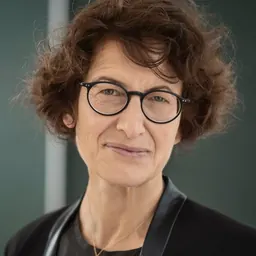
BethAnn McLaughlin is an American neuroscientist, activist, and hoaxer. She is a former assistant professor of neurology at Vanderbilt University. Her research at Vanderbilt focused on neural stress responses and brain injury.
McLaughlin worked at MeTooSTEM, the non-profit organization she founded in order to advise scientists who are victims of sexual harassment.
McLaughlin was suspended from Twitter in August 2020 for running a "years-long Twitter identity scam, wherein she allegedly pretended to be a bisexual, Native American anthropology professor at Arizona State University." McLaughlin soon after admitted responsibility for the hoax. She had an early interest in nature and science but was not as engaged in "formal science classes", in contrast to her brother who took to academic studies more readily. McLaughlin describes her brother as gifted, particularly in math, but the academic pressure "looked miserable" so she leaned more towards sports. During high school, McLaughlin was involved with the school newspaper and worked as a waitress. During this time she spent a year in Africa studying wildlife management which inspired her to advocate for nature through organising campus events for Earth Day; she credits the success of this event as the point when she became "...hopelessly committed to causing good trouble."
Career In 2002, McLaughlin joined Vanderbilt University as a research assistant professor at the Vanderbilt University Medical Center, a non tenure track position. In 2005, McLaughlin received a new appointment at the same institution as an assistant professor, a tenure track position. The McLaughlin Lab also looked into identifying new genes that affect vulnerability to injury and the reasons behind cell death. Their research focused on stroke, Parkinson's disease, Alzheimer's disease and autism. Specifically, McLaughlin focused on understanding cell loss post hypoxic and ischemic insults (often in cardiac arrest and stroke).
McLaughlin has collaborated with researchers in physics and chemistry to study organoids for drug screening, cholesterol in the brain, and sensitive sensors for metabolic signalling.
McLaughlin applied for tenure in 2015, but Vanderbilt delayed a decision on her application for two years while a disciplinary investigation was conducted. She was denied tenure at Vanderbilt in 2017. She appealed the decision by filing a grievance with the university, and started a petition garnering social media support for her tenure. However, the decision to deny tenure was upheld, and her employment at Vanderbilt ended in July 2019.
Activism against sexual harassment in science In June 2018, McLaughlin and Julie Libarkin McLaughlin states that she believes listing abusers and speaking out will reduce the pressure on academics to self-investigate potential sexual harassers, such as "...vet[ting] your new boss through the whisper net to see if they have sexually assaulted someone because there is no public record of most of these things."
In November 2018 McLaughlin used social media to highlight efforts from university professors to bar a computer scientist from speaking at a conference because of known sexual harassment allegations. This included Sherry Marts, who shared the 2018 MIT Disobedience Award with McLaughlin, writing that she experienced "bullying and intimidation". After McLaughlin's suspension from Twitter, she wrote in a statement that she is "stepping away from all activities" with the organization.
Twitter hoax
On July 31, 2020, McLaughlin posted on Twitter that her colleague, "@Sciencing_bi", supposedly a female Indigenous anthropology professor at Arizona State University (ASU), had died of COVID-19. She claimed the woman contracted COVID-19 after "he was forced by her university to continue teaching in person until April", though ASU had suspended classes in March 2020. The anonymous account was created in 2016 and had been heavily involved with MeTooSTEM. On August 3, 2020, McLaughlin's Twitter account was suspended for violation of its "spam and platform manipulation policies" which prohibit maintaining fraudulent personas on the platform. Shortly afterwards, the @Sciencing_bi account was suspended under the same policy.
On August 4, 2020, the New York Times published a statement from McLaughlin provided by her lawyer in which she admitted responsibility for the hoax, and would be "stepping away" from MeTooSTEM. She was subsequently removed from the editorial board of the Journal of Neuroscience.
McLaughin was also subsequently removed from the MIT Media Lab 2018 MIT Disobedience Award, which she had originally shared with biologist Sherry Marts and founder of the #MeToo movement Tarana Burke.
Recognition In 2018 she received the Society for Neuroscience Louise Hanson Marshall Special Recognition Award for her work on the advancement of women in neuroscience.
Don’t just read it —
keep it.
Full-length biographies made to live with: read them, listen on the way to work, watch them tonight.
- E-book
- Audio
- Video
Instant download · yours to keep · every purchase keeps this site free
Important facts
Related people
Same field, nearest in time





Frequently asked questions
Who was BethAnn McLaughlin?
Neurologist and STEM anti-harassment campaigner
When was BethAnn McLaughlin born?
BethAnn McLaughlin was born in Boston.
What was BethAnn McLaughlin's occupation?
BethAnn McLaughlin was a researcher and neurologist.
Sources & further reading
· Wikipedia: BethAnn McLaughlin
Cite this page
APA: Biography.guide. (2026). BethAnn McLaughlin. https://biography.guide/bethann-mclaughlin/
MLA: "BethAnn McLaughlin." Biography.guide, https://biography.guide/bethann-mclaughlin/.
Chicago: "BethAnn McLaughlin." Biography.guide. https://biography.guide/bethann-mclaughlin/.
Data last updated: 2026-09-20 · Spot an error? Report a correction.
Page generated 2026-09-27 05:34 UTC