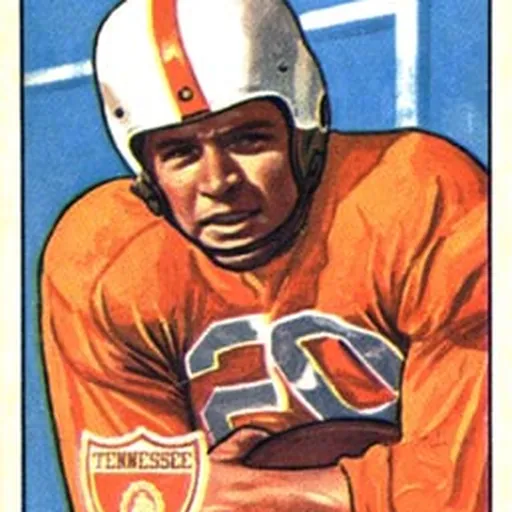
About Bert Rechichar
Lived 1930 – 2019 (aged 89). Bert Rechichar was an American american football player.
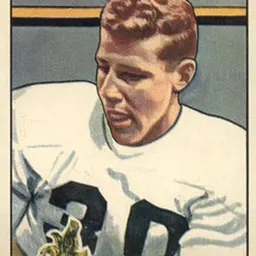
Albert Daniel Rechichar (Pronounced: "Rech-i-SHAR") (July 16, 1930 – July 19, 2019) was an American professional football player who was a defensive back, halfback, and kicker in the National Football League (NFL). He played college football for the Tennessee Volunteers, whom he captained during their 1951 national championship season. His performance over his last two seasons led Volunteers head coach Bob Neyland to proclaim Rechichar "probably the best all-around player in Tennessee football history."
Selected in the first round of the 1952 NFL draft, Rechichar had a 10 year career in professional football playing for the Cleveland Browns, Baltimore Colts, and Pittsburgh Steelers of the NFL and the New York Titans of the AFL.
While playing for the Colts in 1953, Rechichar kicked a successful 56-yard field goal, setting an NFL distance record that stood for 17 years. He was selected for the NFL Pro Bowl three times.
Biography Early life
Bert Rechichar was born on July 16, 1930, in Belle Vernon, Pennsylvania, the youngest of ten children.
He attended Rostraver High School in Rostraver Township, Pennsylvania, for whom he played football in his sophomore, junior, and senior seasons — playing halfback on offense and safety on defense. Playing both sides of the ball was not uncommon in this era of the single platoon system and limited substitution, although Rechichar was unusual in playing all 60 minutes of the game without respite.
College football career
In 1948, Rechichar enrolled at the University of Tennessee — a school which was segregated by law until 1960. He played varsity football for the Volunteers from 1949 to 1951 (freshmen being prohibited from varsity play due to NCAA rules).
The Nashville Tennessean was effusive in its praise of the 19-year old Rechichar ahead of the 1949 season, listing him as a "wingback" (flanker) and declaring him "tops on the squad" as a pass receiver, a "hard, fast, and shifty" runner, and "probably the best kick-off and extra point man the Vols have had in a decade."
His performance as a defender was judged even more highly, with the Tennessean declaring, "where this boy really shines is on defense — he is a rocking sure tackler and covers passes like a vet." In the 1951 season he would be the only Tennessee player used on both sides of the ball by head coach Bob Neyland, playing as a wingback (flanker) on the offense and as a safety on defense.
Rechichar helped the Volunteers go 10–0, en route to a New Year's Day matchup with undefeated Maryland in the 1952 Sugar Bowl. Entering the game ranked #1 in the Associated Press coaches' poll, the Volunteers lost to the third-ranked Terripins by a score of 28–13, thereby ending their quest for an undisputed national title. Rechichar scored a touchdown in garbage time of the fourth quarter on a 5-yard pass from reserve quarterback Harold Payne, inserted into the game to replace ineffective All-American Hank Lauricella.
Despite a divided claim to the national title following the Sugar Bowl loss, the 1951 season was wildly successful for Tennessee, with Bert Rechichar's stellar play both offensively and defensively frequently noted as the linchpin of the team's success. Vols head coach Bob Neyland proclaimed Rechichar "the best since Bob Foxx, and probably the best all-around player in Tennessee football history."
He won a second letter for baseball for the Volunteers in the 1952 season, playing center field and leading the team in home runs.
At the end of the 1952 college baseball season Rechichar signed a contract with the Cleveland Indians and was assigned to their farm system, beginning with the Reading Indians of the Class A Eastern League. According to Mike McNally, director of the Indians' farm system, by the time Rechichar joined the team the club's lineup was already set so he was used infrequently and "did not get a thorough trial." Rechichar was consequently invited by the Indians to their spring training tryouts in Daytona Beach, Florida for a better look. He was picked up by the Rock Hill Chiefs of the same league and immediately marched out to test his mettle as a pitcher against his former team. The Browns obtained the pick used to select Rechichar in a trade with the Detroit Lions.
Browns defensive back Cliff Lewis quit football after the 1951 season, opening up the starting position at safety and a path for Rechichar to immediately be inserted in the lineup. Future Hall of Fame head coach Paul Brown was immediately won over by Rechichar's defensive prowess. After giving him extensive work in practice, Brown observed that Rechichar had quick reactions and recovered from mistakes quickly. "It's very evident Bert has had a lot of experience back there," Brown said.
On March 25, 1953, Rechichar was involved in a massive 15 player trade with the Baltimore Colts — a straight 10-for-5 swap of contracts in which no additional money changed hands. Joining Rechichar in making the move from the mighty Browns to the expansion Colts were such future starters as defensive backs Don Shula and Carl Taseff, end Art Spinney, as well as veteran guard Ed Sharkey. Colts assistant coach Otis Douglas suddenly remembered the powerful leg that Rechichar had shown in practice and hastily pulled McPhail from the game. According to observers, the ball was placed barely outside the 55 yard line for the record-setting kick, but official scorer Mel Schilling ruled it a 56-yarder and as such it entered the NFL record books. Rechichar also intercepted a pass and ran it back for what would be his only NFL touchdown in the Colts 13–9 victory over the visiting Chicago Bears.
Trade to Pittsburgh
As he aged and his speed declined, Rechichar's playing opportunities with the ascending Colts diminished and his dissatisfaction grew. The 30-year old would again be plagued by injury, this time a torn leg muscle that ended his season in November after seeing action in just six games. He would be waived by the Steelers in July 1961, ahead of the team's training camp for their 1961 season. Rechichar was added to the Titans' coaching staff as well with a player-coach contract inked in August. Rechichar would ultimately only see game action in two contests for the Titans,
Death and legacy
Rechichar had two sons and a daughter.
He died at age 89 in his hometown of Belle Vernon, Pennsylvania, from various ailments, including Alzheimer's.
Rechichar is also remembered as one of the fiercest competitors in Colts history — "an old school tough guy."
Don’t just read it —
keep it.
Full-length biographies made to live with: read them, listen on the way to work, watch them tonight.
- E-book
- Audio
- Video
Instant download · yours to keep · every purchase keeps this site free
Important facts
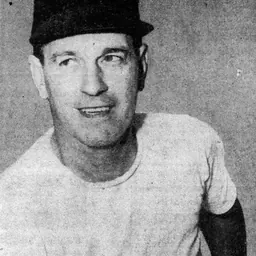
People in Bert Rechichar's life
Named in this biography and alive at the same time


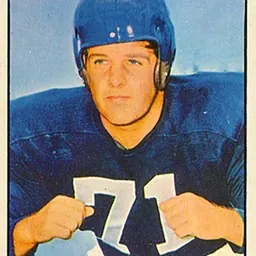



Related people
Same field, nearest in time

Contemporaries
People whose lives overlapped Bert Rechichar's


Frequently asked questions
Who was Bert Rechichar?
American football player (1930-2019)
When was Bert Rechichar born?
Bert Rechichar was born on 16 July 1930 in Belle Vernon.
When did Bert Rechichar die?
Bert Rechichar died on 19 July 2019.
What was Bert Rechichar's occupation?
Bert Rechichar was an american football player.
What nationality was Bert Rechichar?
Bert Rechichar was American.
Sources & further reading
Cite this page
APA: Biography.guide. (2026). Bert Rechichar. https://biography.guide/bert-rechichar/
MLA: "Bert Rechichar." Biography.guide, https://biography.guide/bert-rechichar/.
Chicago: "Bert Rechichar." Biography.guide. https://biography.guide/bert-rechichar/.
Data last updated: 2026-09-20 · Spot an error? Report a correction.
Portrait: Wikimedia Commons · author & licence
Page generated 2026-09-27 04:57 UTC