
About Bert Andrews
Lived 1901 – 1953 (aged 52). Bert Andrews was an American journalist.
Bertrand Albert Andrews Jr. (June 2, 1901 – August 21, 1953) was a Washington-based reporter for the New York Herald Tribune who won the Pulitzer Prize in 1948 for his article "A State Department Security Case."
Background
Bertrand Albert ("Bert") Andrews Jr. was born on June 2, 1901, in Colorado Springs. His father was Bertrand A. Andrews and mother Laura Whitaker. When still a boy, the family moved to San Diego. Andrews studied at Stanford University but dropped out in 1924. ).
Washington Witch Hunt
In June 1947, the State Department dismissed ten (10) employees–"none of them of top policy-making rank"–on unspecified grounds of disloyalty, as reported by Joseph Alsop and Stewart Alsop.
On November 2, 1947, Andrews published "A State Department Security Case" in the Herald Tribune after securing a secret transcript. In the article, he described "Mr. Blank," an unnamed State Department official among seven discharged without specific charges. Articles continued for some days almost daily by Andrews. The Washington Post reacted the next day with concern: "Without access to what the FBI reported, there is no way of knowing whether Mr. Blank was a doubtful security risk." In a comment, New Yorker magazine compared Mr. Blank's story to Franz Kafka's book The Trial. In an article co-written by Yale Law School professor Thomas I. Emerson, its journal questioned the propriety of the story by noting: "The courts have never tolerated the failure to produce in open hearing any part of the evidence upon which the deciding official relies in an administrative adjudication requiring a fair hearing" and cited a decision by the U.S. Supreme Court.
Andrews befriended newly elected U.S. Representative Richard M. Nixon (who came into office in January 1947). When Nixon became convinced that Whittaker Chambers was telling the truth to HUAC about Alger Hiss, Andrews was among those whom he consulted for verification and encouragement.
Chambers wrote about Andrews in his 1952 memoir:
On August 7, 1953, Andrews was covering U.S. President Dwight D. Eisenhower during a retreat in Denver when he suffered a heart attack. President Eisenhower called Andrews a "personal friend" who "always presented news developments fairly and honestly."
1948: Pulitzer Prize for National Reporting Heywood Broun Memorial Award
Works
Andrews published only one book during his lifetime; his son finished a second book for him posthumously:
Washington Witch Hunt (1948) A Tragedy of History: A Journalist's Confidential Role in the Hiss-Chambers Case, with son Peter Andrews (1962)
The Kirkus Reviews for A Tragedy of History reads: Bert Andrews was the chief of the New York Herald Tribune Washington Bureau... and his book is for the most part a transcript of the long hearings involved in the Hiss case. Andrews has very little to contribute on his own to the famous trial which wavered between perjury and treason and led to discreditization. The publisher's claim that Andrews was "In effect, a trusted confidant and participant" is as unsubstantiated as a great many of the things that went on in this "tragedy of history," a hazy if attention-getting caption. His not so private intelligence of the case seems to be limited to a three-hour interview with Chambers he shared with Nixon. Well, once again, from Hiss as seen by Chambers, and Chambers as seen by Hiss (i.e., the deadbeat Crosley) is the long testimony from the time when Chambers first appeared before the House Committee on American Activities, through the hearings, the libel suit, the indictment and the two trials. These annals have been previously and more fully recorded; Andrews concentrates on the Ford car and the pumpkin papers, skimps on the Woodstock typewriter and the prothonotary warbler. He has no opinions nor conclusions to offer–leaves it in its continuum of contradiction and supposition (to Andrews the mystery is not why Hiss went to jail, but how he managed to stay out for so long). This hardly seems to warrant its revival now particularly in view of the stimulating interpretations which have appeared from Alistair Cooke's version shortly after the proceedings to Fred Cook's more recent re-examination (1958).
Don’t just read it —
keep it.
Full-length biographies made to live with: read them, listen on the way to work, watch them tonight.
- E-book
- Audio
- Video
Instant download · yours to keep · every purchase keeps this site free
Important facts
People in Bert Andrews's life
Named in this biography and alive at the same time
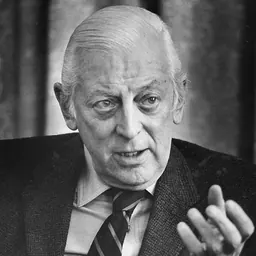

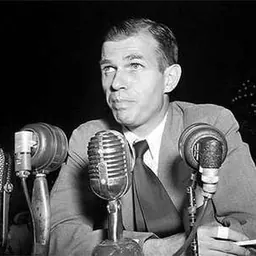
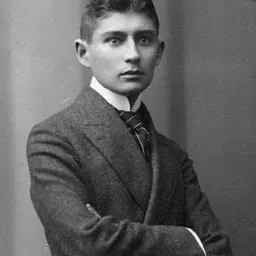
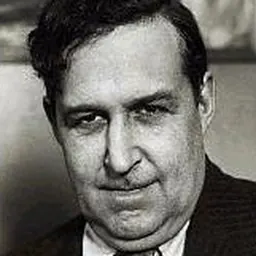



Related people
Same field, nearest in time



Contemporaries
People whose lives overlapped Bert Andrews's


Frequently asked questions
Who was Bert Andrews?
journalist
When was Bert Andrews born?
Bert Andrews was born on 2 June 1901 in Colorado Springs.
When did Bert Andrews die?
Bert Andrews died on 21 August 1953 in Denver.
What was Bert Andrews's occupation?
Bert Andrews was a journalist.
What nationality was Bert Andrews?
Bert Andrews was American.
Sources & further reading
· DBpedia: Bert Andrews (journalist)
Cite this page
APA: Biography.guide. (2026). Bert Andrews. https://biography.guide/bert-andrews/
MLA: "Bert Andrews." Biography.guide, https://biography.guide/bert-andrews/.
Chicago: "Bert Andrews." Biography.guide. https://biography.guide/bert-andrews/.
Data last updated: 2026-09-22 · Spot an error? Report a correction.
Page generated 2026-09-27 05:02 UTC