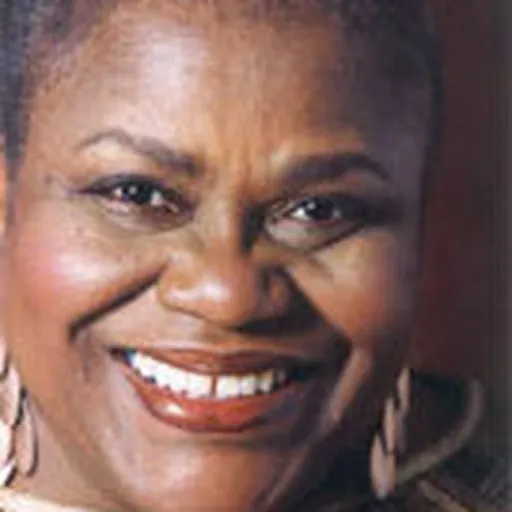
About Bernice Johnson Reagon
Lived 1942 – 2024 (aged 81). Bernice Johnson Reagon was an American singer, composer, historian, songwriter and scientist.
Bernice Johnson Reagon (October 4, 1942 – July 16, 2024) was an American song leader, composer, professor of American history, curator at the Smithsonian, and social activist. In the early 1960s, she was a founding member of the Freedom Singers, organized by the Student Non-violent Coordinating Committee (SNCC) in the Albany Movement for civil rights in Georgia. In 1973, she founded the all-black female a cappella ensemble Sweet Honey in the Rock, based in Washington, D.C. She was the founder/the 1st member of Sweet Honey in the Rock from 1973 to 2006. Reagon, along with other members of the SNCC Freedom Singers, realized the power of collective singing to unify the disparate groups who began to work together in the 1964 Freedom Summer protests in the South.
The Albany Singing Movement became a vital catalyst for change through music in the early 1960s protests of the Civil Rights era. Reagon devoted her life to social justice through music via recordings, activism, community singing, and scholarship.
She earned her Ph.D. from Howard University, becoming a cultural historian, centered on the role of music. She was professor emerita in the Department of History at the American University. She had also been a scholar-in-residence at Stanford and received an honorary doctorate of music from Berklee College of Music.
Early life and education Bernice Johnson was born in 1942 in Dougherty County, Georgia, United States. She was the daughter of Beatrice Wise Johnson, and Jeese Johnson Sr. a Baptist minister. She was born and raised in southwest Georgia, where church and school were an integrated part of her life, with music heavily intertwined in both of those settings. Reagon was the third oldest kid out of the other 7 siblings, the order of all 8 siblings were: Fannie Johnson, Jordan Johnson, Bernice Johnson Reagon, Mae Frances Johnson, Aaron Johnson, Deloris Johnson, Jesse Johnson Jr, Mamie Johnson. In her family, began school at the age of three when she was asked by her teacher to attend early, and she passed that first year. By the time she was in the 4th, 5th, and 6th grade, she was requested to tutor students in the 1st, 2nd, and 3rd, and she said it was because there had only been one teacher.
In 1959, she entered Albany State College (since July 1996 called Albany State University), where she began her study of music. She also became active in the local NAACP chapter and then the SNCC. After being expelled from Albany State because of an arrest as an activist, she briefly attended Spelman College.
Later, she returned to Spelman to complete her undergraduate degree in 1970. She received a Ford Foundation fellowship to do graduate study at Howard University, where she was awarded the Ph.D. degree in 1975.
Career Activism Reagon's first demonstration had been in protest against the arrest of Bertha Gober, and Blanton Hall, organized by SNCC along with the initial arrest of the two individuals, for they planned to be arrested in a discussion during a SNCC meeting.
Academic In 1974, Reagon was appointed as a cultural historian in music history at the Smithsonian Institution, where she directed a program called Black American Culture in 1976, and was later a curator of music history for the National Museum of American History. Ida Jones from the Smithsonian Institution had stated, "Dr. Reagon collected photographs, sheet music, and other primary and secondary sources chronicling the development of African American sacred music tradition from its birth during the period of slavery through the creation of concert spiritual, gospel music, jazz, and the performance of protest song in the century following Emancipation," with relation to Reagon's initial job at the museum. After Reagon retired from singing with Sweet Honey in the Rock in 2006, she continued to work at the Smithsonian in African American Songs of Protest as a Curator Emerita.
She also held an appointment as Distinguished Professor of history at American University (AU) in Washington DC from 1993 to 2003. Reagon was later named professor emerita of history at AU, and held the title of Curator Emerita at the Smithsonian.
Music
Reagon grew up in a church without a piano, so her early music was a cappella, and her first instruments were her hands and feet, and she explained, "that's the only way I can deal comfortably with creating music." When Reagon spoke about her upbringing in the musical culture, she explained that even her early schooling was heavily involved with music, not just the church. Reagon said that her teacher would lead the students outside to play games that entailed singing with their hands and feet, as well as their voices. There were also competitions among the students, and Reagon won first place as a child when running against the older students reciting Langston Hughes' poem "I've Known Rivers". She was the conceptual producer and narrator of the Peabody Award-winning radio series, Wade in the Water, African American Sacred Music Traditions. Reagon claimed: "These days, I come as a 'songtalker', one who balances talk and song in the creation of a live performance conversation with those who gather within the sound of my voice."
Reagon joined her first and only gospel choir when she was 11 years old, which was organized by her sister at the Mt. Early Baptist Church. She and the choir would listen to the local radio station WGPC to learn black gospel for the choir to recite. As a child, the Five Blind Guys was her favorite quartet. Reagon stated that her role models in terms of music are Harriet Tubman, Sojourner Truth, and Bessie Jones, because they assisted her understanding of traditional singing and the fight for justice. Reagon also saw as important to her work Deacon Reardon, a historian studying African-American sacred worship traditions, and she stated that he impacted both her spiritual and musical development.
Reagon's work as a scholar and composer was reflected in her publications on African-American culture and history, including: a collection of essays entitled If You Don't Go, Don't Hinder Me: The African American Sacred Song Tradition (University of Nebraska Press, 2001); We Who Believe in Freedom: Sweet Honey in the Rock: Still on the Journey (Anchor Books, 1993); and We'll Understand It Better By and By: Pioneering African American Gospel Composers (Smithsonian Press, 1992).
Reagon recorded several albums on Folkways Records, including Folk Songs: The South, Wade in the Water, and Lest We Forget, Vol. 3: Sing for Freedom.
In 1973, Reagon founded a six-member, all-female a cappella group called Sweet Honey in the Rock. In addition to Reagon, the original 4 women in the group were: Bernice Johnson Reagon, Louise Robinson, Carol Lynn Maillard, Mie Fredericks. The only instrument they used was their voices, along with shekere and tambourine. They have toured internationally, including to Europe, Japan, Mexico, and Australia. The group's fan base is of different ethnic backgrounds, religions, and sexual orientations. Reagon's musical roots came from the rural South Baptist Church. She advocated "music's informational and transformative power to ask" and the strong effects that music has had on the Civil Rights Movement.
Personal life and death On Sep 30, 1963, Reagon married Cordell Hull Reagon, another member of The Freedom Singers. Before divorcing in 1967, two children were born to this union: a daughter, Toshi, and a son, Kwan. Toshi Reagon is also a singer-songwriter. Kwan Tauna Reagon is a chef.
Reagon's sister Mae Frances Johnson was diagnosed with an inoperable cancer in her early thirties, the treatment of the time, cobalt, greatly reduced the tumor, but also resulted in paralysis and she lived the rest of her life using a wheelchair for mobility. Reagon wrote a song with Sweet Honey in the Rock called the same name as her sister's name, ("Mae Frances" aka "Woman Hold My Hand", which appears on Sweet Honey in the Rock's album "The Other Side"), and when Reagon sent the song to Mae Frances, she said "Thank you, I was needing a hand to hold onto." One month later, Mae Frances died on September 10, 1985, but Reagon said "Mae Frances' spirit continues to flow strongly in my life."
In 2003, upon receiving the prestigious Heinz Award, Reagon spoke in her acceptance speech of the decision she and her long-time partner, Adisa Douglas, made that their "different and related work and struggle would move better were we joined in life partnership—and so it has been—joined and better." The two women remained together as life partners up until Reagon's death in 2024.
Reagon died in Washington, D.C. on July 16, 2024, at the age of 81. Her death was confirmed by her daughter, Toshi Reagon, and by Courtland Cox, chairman of the Student Nonviolent Coordinating Committee's Legacy Project. In 1994, a Peabody Award for a 26-part NPR documentary called Wade in the Water. In 1995, a Charles Frankel Prize for her contributions to the public understanding of the humanities. The award was presented at the White House by President Bill Clinton. In 1996, the Isadora Duncan Award for the score of Rock, a ballet directed by Alonzo King. In 2000, the First National Leeway Laurel Award at the Leeway Foundation in Philadelphia. In 2003, the 9th Annual Heinz Award in the Arts and Humanities. In 2006 awarded the degree of Doctor of Humane Letters, honoris causa, by Gallaudet University for her sustained efforts for the inclusion of deaf people. In 2009, an honorary doctoral degree from the Berklee College of Music.
Don’t just read it —
keep it.
Full-length biographies made to live with: read them, listen on the way to work, watch them tonight.
- E-book
- Audio
- Video
Instant download · yours to keep · every purchase keeps this site free
Important facts
People in Bernice Johnson Reagon's life
Named in this biography and alive at the same time



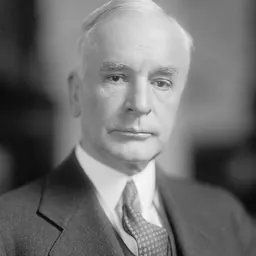
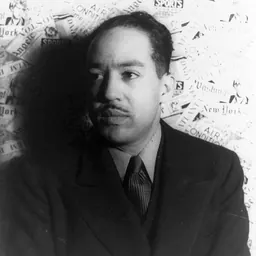


Related people
Same field, nearest in time

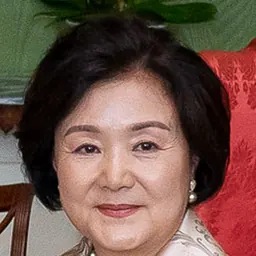



Contemporaries
People whose lives overlapped Bernice Johnson Reagon's


Frequently asked questions
Who was Bernice Johnson Reagon?
American singer, composer, and activist (1942–2024)
When was Bernice Johnson Reagon born?
Bernice Johnson Reagon was born on 4 October 1942 in Dougherty County.
When did Bernice Johnson Reagon die?
Bernice Johnson Reagon died on 16 July 2024 in Washington, D.C..
What was Bernice Johnson Reagon's occupation?
Bernice Johnson Reagon was a singer, composer, historian, songwriter and scientist.
What nationality was Bernice Johnson Reagon?
Bernice Johnson Reagon was American.
Sources & further reading
· Wikipedia: Bernice Johnson Reagon
· DBpedia: Bernice Johnson Reagon
Cite this page
APA: Biography.guide. (2026). Bernice Johnson Reagon. https://biography.guide/bernice-johnson-reagon/
MLA: "Bernice Johnson Reagon." Biography.guide, https://biography.guide/bernice-johnson-reagon/.
Chicago: "Bernice Johnson Reagon." Biography.guide. https://biography.guide/bernice-johnson-reagon/.
Data last updated: 2026-09-24 · Spot an error? Report a correction.
Portrait: Wikimedia Commons · author & licence
Page generated 2026-09-27 05:08 UTC